
Sales teams are under constant pressure to move faster, manage more leads, and maintain stronger relationships. Yet research shows that sales representatives spend only about 28–30% of their time actually selling, while the majority goes to tasks such as CRM updates, reporting, and internal coordination.
Sales automation inside CRM systems is designed to fix this imbalance. By automating repetitive workflows, such as lead routing, follow-ups, and activity tracking, CRMs help sales representatives reduce manual work and focus on revenue-generating activities.
The result is a sales process that moves faster, stays organized, and scales more easily.
Let’s explore how CRM sales automation works, the workflows that deliver the biggest impact, and how modern platforms like Rings AI are helping teams close more deals with less manual effort.
What is Sales Automation in CRM?
Sales automation in CRM refers to the use of workflow rules, triggers, integrations, and AI to automatically perform routine sales tasks. The CRM automatically executes actions based on predefined conditions.
For example:
When a new lead enters the system, it can be automatically assigned to the right sales rep.
When a meeting is completed, the CRM can create a follow-up task.
When a proposal is sent, the deal stage can update automatically.
These automated workflows ensure that the sales pipeline remains organized and that important steps in the sales process are not overlooked.
The value of this shift is measurable. Research from McKinsey suggests that about one-third of sales activities can be automated, allowing sales representatives to spend significantly more time engaging with customers.
Early adopters of sales automation also report improvements in operational efficiency of 10–15%, and potential sales uplift of up to 10%.
Benefits of Sales Automation in CRM
When implemented effectively, sales automation improves both productivity and pipeline visibility. Some of its key benefits include:
More time for selling: Automating administrative tasks, such as activity logging, lead routing, and reporting, allows sales representatives to focus on conversations and relationship-building.
Faster lead response times: Automated lead assignment ensures new inquiries are routed instantly to the appropriate salesperson, reducing delays that can cause opportunities to go cold.
Improved pipeline accuracy: Automation keeps deal stages, activities, and contact updates consistent, giving sales leaders a clearer picture of pipeline health.
Consistent follow-ups: Automated reminders and email sequences ensure prospects receive timely communication throughout the sales cycle.
Better forecasting and reporting: With automated data capture and pipeline updates, CRM analytics become more reliable and easier for leadership teams to interpret.
Scalable sales processes: Automation allows sales teams to manage larger volumes of leads and opportunities without increasing administrative workload.
Key CRM Workflows Sales Teams Automate First
Sales automation delivers the most immediate impact when applied to repetitive processes that occur across every deal.
Here are some of the core workflows most sales teams automate first.
Lead assignment and routing
When new leads enter the CRM from marketing campaigns, website forms, or referrals, they need to be directed to the right sales representative quickly. Manual assignment can create delays and increase the risk of leads going unattended.
CRM sales automation addresses this by automatically routing leads based on predefined rules such as territory, industry, company size, or product interest. This ensures that every opportunity is assigned instantly, ensuring prospects receive timely follow-up.
Deal stage updates
Sales pipelines are only useful when the information within them is accurate. However, when deal stage updates depend on manual input, pipelines often become outdated or inconsistent.
Automation ensures that deals move through pipeline stages based on specific triggers. For example, scheduling a discovery call, sending a proposal, or signing a contract can automatically update the deal’s status within the CRM.
This keeps pipeline data reliable, improves forecasting accuracy, and allows sales leaders to monitor deal progress in real time.
Activity tracking and logging
Maintaining a clear history of interactions is essential for effective sales engagement, but manually logging every call, email, or meeting can quickly become burdensome.
Modern CRM platforms address this by automatically capturing communication activity and allowing teams to attach notes, documents, and other relevant details directly to contacts or deals.
This creates a centralized record of conversations, insights, and key materials, ensuring that important context is preserved and easily accessible throughout the sales process.
Advanced CRM Automation Strategies
As organizations mature their CRM usage, they often expand automation beyond basic workflows to include more sophisticated capabilities powered by AI and external data.
These advanced strategies help sales teams identify opportunities faster and engage prospects more effectively.
AI lead prospecting
AI-powered prospecting tools analyze large datasets to identify companies and contacts that match an organization’s ideal customer profile. Sales teams receive recommendations for potential leads based on signals such as:
Industry trends
Hiring patterns
Funding announcements
Product launches
Digital engagement signals
This helps teams focus their outreach on companies that are more likely to convert. According to Gartner, AI in sales can reduce the time spent on prospecting and meeting preparation by over 50%.
Data enrichment
Poor CRM data quality costs organizations an estimated 15–25% in lost revenue, yet maintaining accurate records is often overlooked. CRMs with automated data enrichment help address this by continuously updating key information, such as job title changes, company growth metrics, funding rounds, and industry classifications.
Keeping this data current gives sales teams better context for outreach and enables more informed targeting and engagement decisions.
For teams selling into European markets, a data provider like Cognism can support this enrichment layer by adding verified B2B contact and company data into the CRM.
Cognism helps revenue teams enrich records with accurate business emails, phone-verified mobile numbers, company details, and account-level insights, so sales reps are not relying on outdated or incomplete CRM fields when running automated workflows.
This matters because CRM automation is only as useful as the data behind it. If territories, job titles, phone numbers, or company details are wrong, automated lead routing and follow-up sequences can quickly become inefficient.
Relationship insights
In many industries, deals are influenced by networks of relationships rather than simple lead lists. Relationship intelligence analyzes communication patterns and contact networks to reveal connections between individuals, companies, and investors.
These insights help sales teams:
Identify warm introductions
Understand who influences buying decisions
Navigate complex deal structures
For organizations operating in relationship-driven industries, this visibility can significantly improve deal sourcing and conversion.
Top CRM Tools for Sales Automation
Several CRM platforms offer automation capabilities designed to improve sales productivity. While each platform approaches automation differently, they generally aim to reduce administrative work and improve pipeline management.
Below are three widely used CRM platforms that support sales automation.
1. Rings AI
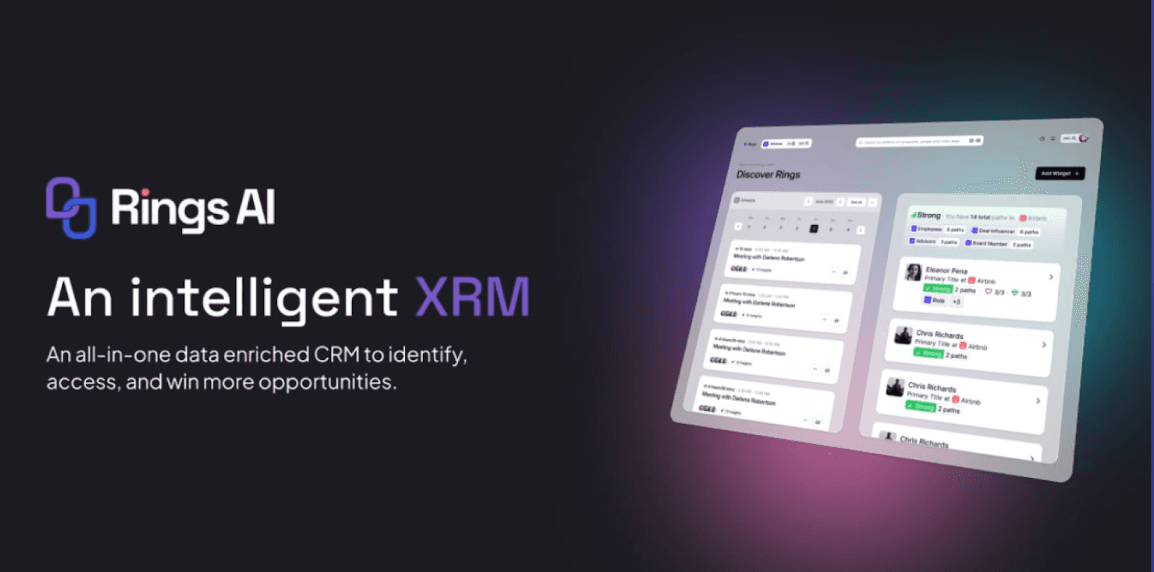
Rings AI is an AI-native CRM designed for teams that rely heavily on networks and deal flow. In addition to traditional sales CRM automation, Rings focuses on helping organizations understand how relationships connect across companies, investors, and stakeholders.
The platform automatically captures interactions from email and calendar activity while mapping connections between contacts and organizations.
Rings AI enriches CRM data using over 100 million data points updated daily and integrates with 7,000+ tools and platforms, enabling teams to centralize their sales workflows.
Some of its key capabilities include:
Automated activity tracking
AI-powered lead discovery
Opportunity prioritization based on relationship strength
By combining CRM sales automation with relationship intelligence, Rings AI helps teams identify warm introductions, uncover hidden opportunities, and approach deals more strategically.
2. Salesforce
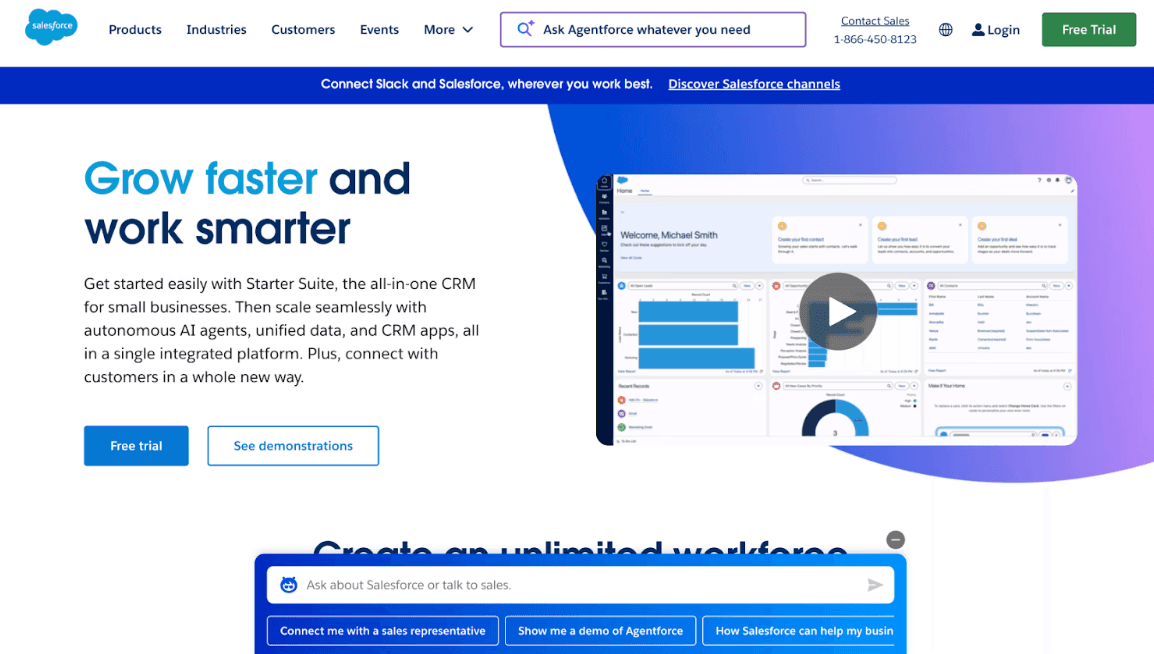
Salesforce is one of the most widely used enterprise sales CRM platforms and offers extensive automation capabilities through its workflow and process automation tools. Organizations can automate tasks such as lead assignment, approval workflows, deal stage updates, internal notifications, and more.
Salesforce’s flexibility makes it suitable for large enterprises with complex sales processes, though it often requires significant configuration and administration.
3. Pipedrive
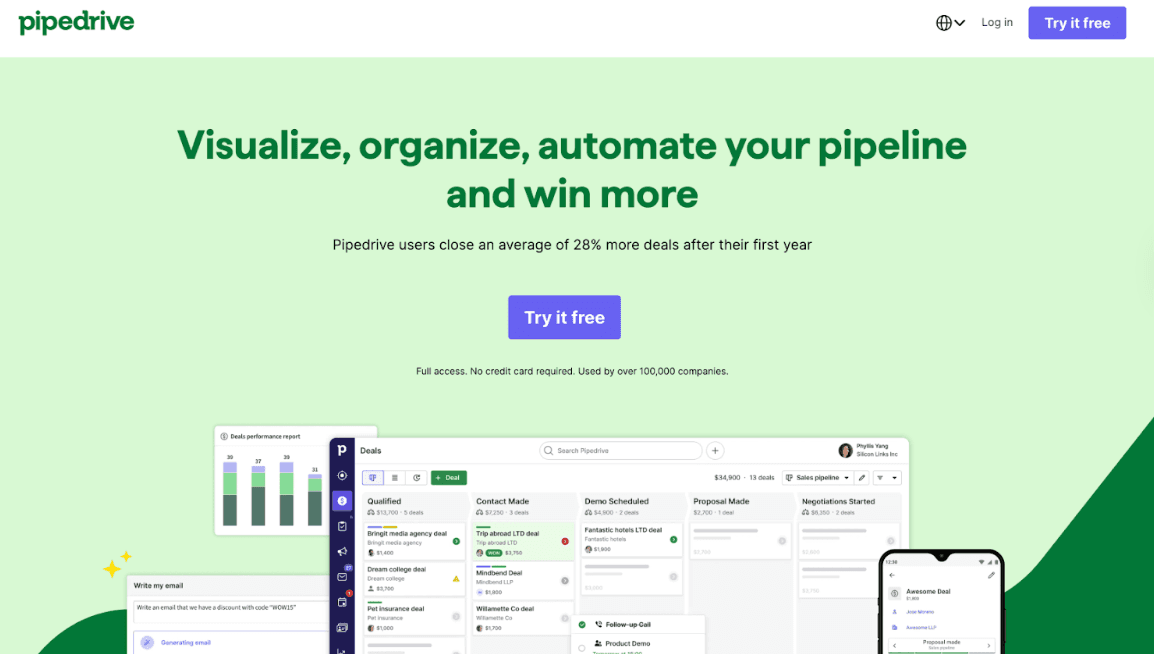
Pipedrive is a sales-focused CRM built around visual pipelines and intuitive workflows.
The platform includes automation features that allow teams to trigger actions based on deal movement within the pipeline. These actions can include lead routing, activity reminders, and notifications to keep deals moving forward.
Pipedrive’s simplicity makes it a popular choice for small and midsize sales teams looking for straightforward pipeline management.
A Smarter Approach to Sales Automation with Rings AI
Sales automation has become an essential capability for modern sales organizations. By reducing administrative work and improving pipeline visibility, automation allows sales teams to focus on the activities that drive revenue: building relationships, understanding customer needs, and advancing deals.
The next generation of sales CRM platforms combines workflow automation with relationship intelligence to reveal the networks and connections that influence deals.
Platforms like Rings AI illustrate this shift by integrating CRM automation with AI-driven prospecting and relationship mapping.
For organizations that depend on strong relationships and strategic introductions, this approach can significantly improve how opportunities are identified and pursued.
Book a demo with Rings AI to explore how it can streamline your sales workflows while uncovering new opportunities within your network.