
Deal intelligence is the structured understanding of everything that surrounds a deal. It connects relationships, conversations, notes, history, and team context into a single, reliable source of truth. It goes beyond pipeline tracking. It gives you visibility into who knows whom, what was said, what changed, and what matters now. Instead of seeing a deal as a stage in a funnel, deal intelligence treats it as a living relationship that evolves.
When you operate with that level of clarity, your team moves with greater confidence. Investment committee discussions rely on documented history rather than memory. Handoffs between team members feel seamless because the background is already there. Follow-ups become more thoughtful because you can see the full relationship, not just the latest interaction. Most traditional CRMs were designed around sales cycles and short-term opportunities, which leaves long-term investing workflows underserved.
Rings AI was built for relationship-led teams who need lasting institutional memory around every company and every person. If you want to see how deal intelligence should actually work in practice, book a demo.
What is Deal Intelligence?
Deal intelligence is the discipline of capturing, organizing, and interpreting everything that shapes a deal over time. It connects relationship depth, prior conversations, internal notes, and external signals into a single, coherent view. Instead of relying on scattered emails or individual memory, your team works from a shared context that compounds with every interaction.
In investing and complex dealmaking, decisions rarely follow a straight line. Conversations pause and restart. Stakeholders change. Conviction builds slowly. Research from Harvard Business Review shows that better decisions depend on access to structured information and institutional memory, not just individual judgment. Deal intelligence formalizes that memory so it survives turnover, long timelines, and shifting priorities.
This is where it differs from basic CRM reporting. Traditional systems emphasize stage tracking and activity logging. They show movement, but they rarely explain the relationship dynamics or accumulated context behind that movement. Deal intelligence ensures that what your team knows does not disappear between meetings or across funds.
Why Traditional CRMs Fall Short on Deal Intelligence
Most CRMs were built for sales teams managing short, linear cycles. They assume every opportunity moves forward or closes. That model works for transactional revenue. It does not reflect how investing or complex dealmaking actually unfolds.
In long-cycle environments, context compounds slowly. Relationships pause and restart. Stakeholders shift. Conviction builds over multiple conversations. Traditional CRM structures struggle to preserve that continuity because they organize information around pipeline stages instead of long-lived relationships.
Common gaps include:
Notes and emails stored inside a single “opportunity” rather than at the enduring company or person level
Limited visibility into who on the team truly knows a relationship best
Fragmented history when deals restart months or years later
Pipeline reports that show movement but not relationship depth
Research from McKinsey & Company has repeatedly shown that siloed knowledge reduces decision quality and organizational performance. The same principle applies to CRM systems that fail to structure shared memory effectively.
Deal intelligence demands continuity across time, people, and conversations. Traditional CRMs were not designed with that foundation in mind.
5 CRM Tools Used for Deal Intelligence
Rings AI
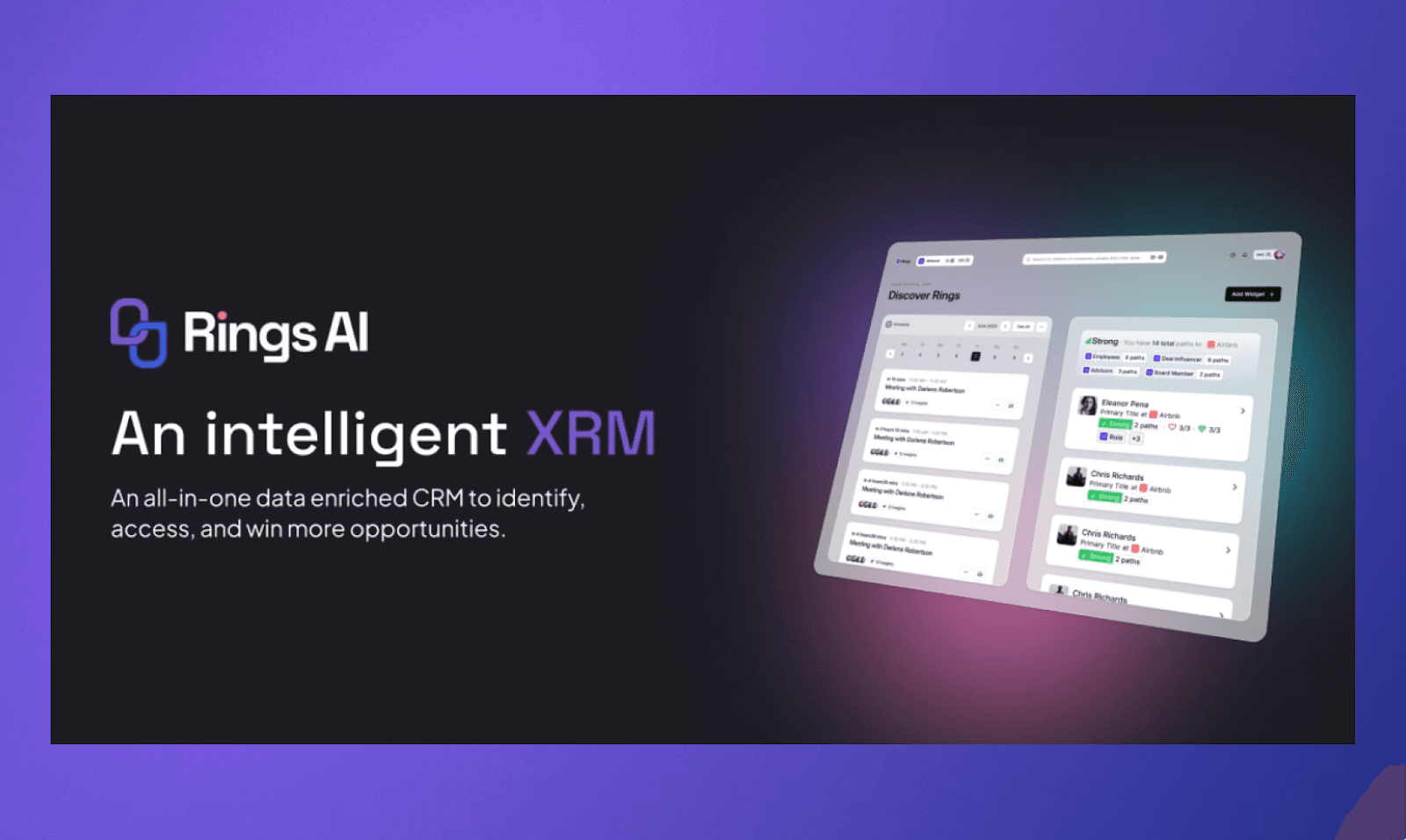
Rings AI was built specifically for investors and relationship-led teams. It structures data at the person and company level first, then connects deals, fundraising activity, notes, and communication history around that foundation. The result is a system where context compounds instead of fragmenting.
Core deal intelligence capabilities include:
Automatic capture of email and meeting history at the person and company level
Team-wide relationship visibility with measurable depth indicators
Centralized notes and files linked across deals, companies, and contacts
AI-powered search and summarization across years of conversations
Integrated deal and fundraising workflows inside the same system
Real-time visibility into network strength across your firm
Rings AI brings deal intelligence together inside a system designed for how investors actually operate. By structuring data around enduring relationships and layering AI on top of real interaction history, it turns scattered information into shared institutional memory that compounds over time.
Salesforce
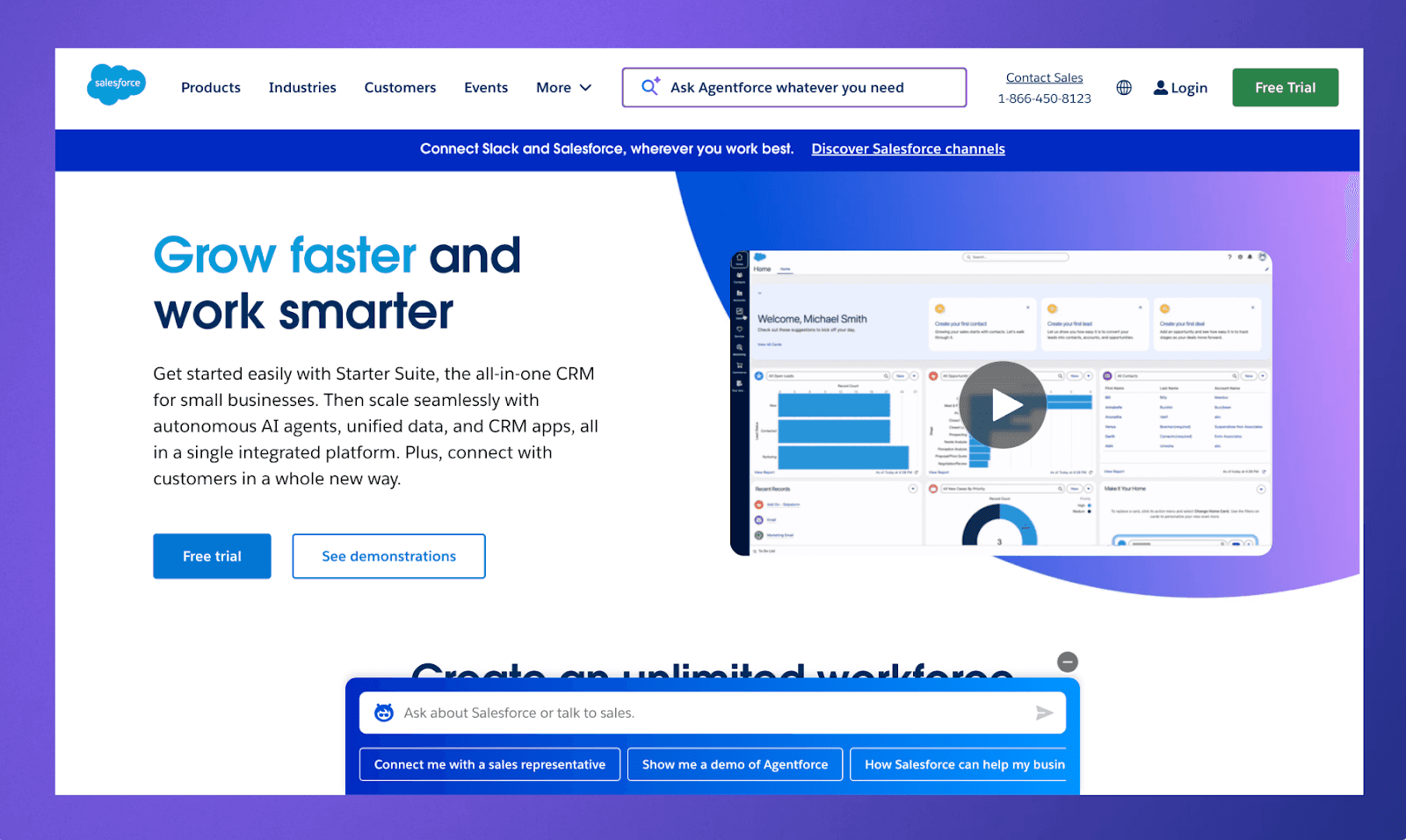
Salesforce is one of the most established enterprise CRM platforms in the market. It offers deep customization, extensive reporting, and a broad ecosystem of integrations that allow large organizations to tailor workflows to highly specific processes. For firms willing to invest in configuration and internal administration, it can serve as a powerful operational backbone.
Key capabilities include:
Highly customizable objects, fields, and workflows
Advanced reporting and dashboard functionality
Large integration marketplace and third-party ecosystem
Scalable architecture suited for complex organizations
Its approach to deal intelligence depends largely on how extensively the system is configured to connect relationship data, communication history, and pipeline activity into a unified view.
Affinity
Affinity is a relationship intelligence CRM designed primarily for venture capital and private equity firms. It focuses on automatically capturing communication data and mapping professional networks to help teams understand who knows whom and how frequently they interact. For firms centered on sourcing and relationship tracking, it provides structured visibility into network activity.
Key capabilities include:
Automatic email and calendar syncing
Relationship strength scoring based on interaction frequency
Shared firm-wide contact database
Pipeline tracking tailored to investment teams
Its deal intelligence strength centers on network visibility and interaction data, with broader context depending on how teams structure and maintain their internal information.
Attio
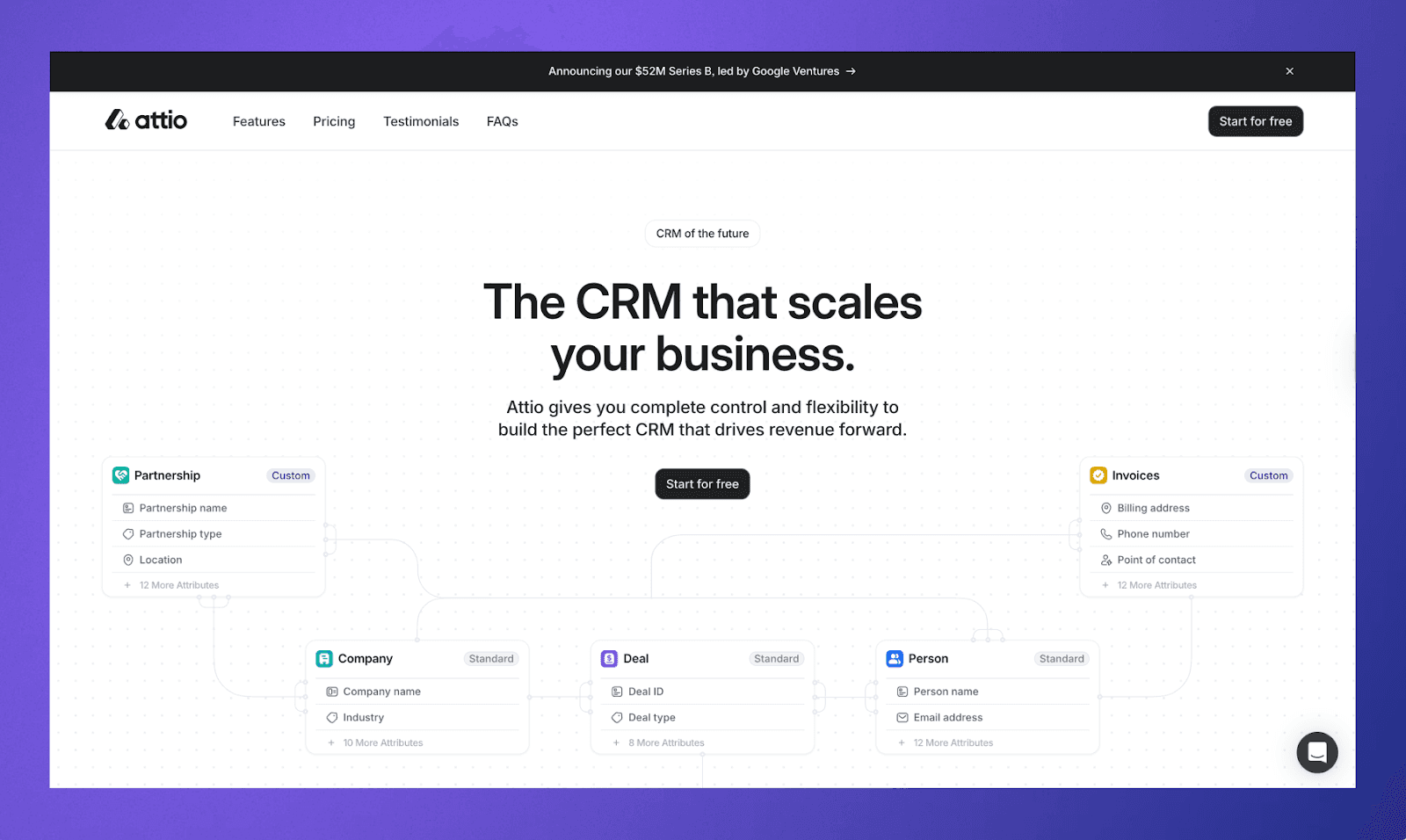
Attio is a modern CRM platform built around flexible data modeling and customizable workflows. It allows teams to design their own objects, fields, and processes, making it adaptable to a wide range of use cases beyond traditional sales pipelines. For firms that value control over how their data is structured, Attio offers a clean and configurable foundation.
Key capabilities include:
Customizable data structures and record types
Flexible workflow automation
Real-time collaboration across teams
API-first architecture for integrations
Its deal intelligence capability depends on how teams design and maintain their data model, as the system provides flexibility rather than a predefined investment-focused structure.
HubSpot
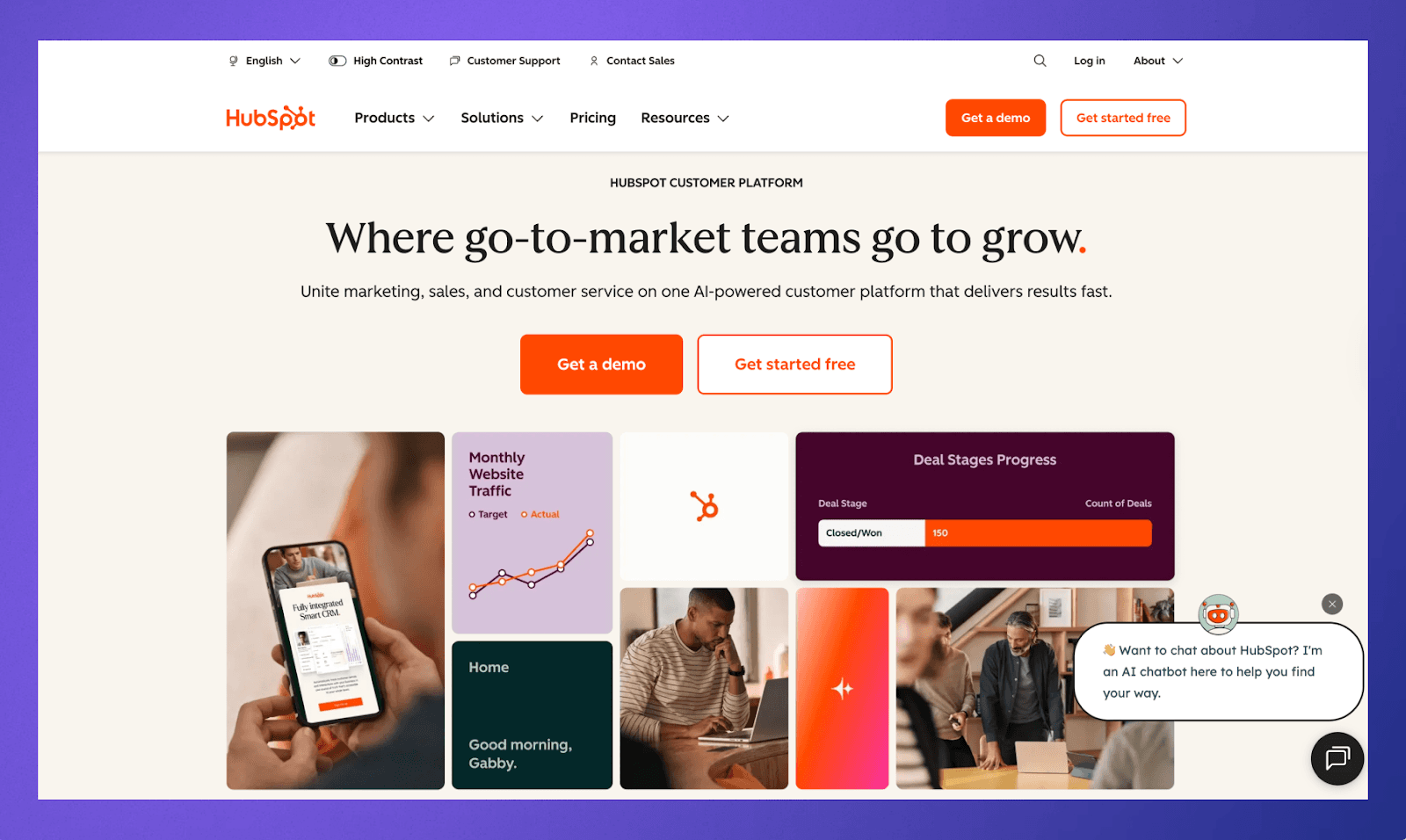
HubSpot is a widely adopted CRM platform that combines contact management with marketing, sales, and service tools. It was designed to support revenue teams through structured pipelines, campaign tracking, and customer lifecycle management. For organizations that operate with clear sales processes and integrated marketing activity, HubSpot provides an accessible and unified system.
Key capabilities include:
Contact and company management with activity tracking
Sales pipeline management and forecasting
Marketing automation and campaign analytics
Reporting dashboards across revenue functions
Its deal intelligence capacity is strongest within structured sales environments, where pipeline activity, engagement data, and communication history are organized around defined lifecycle stages.
Key Benefits of Deal Intelligence for Investment Teams
When deal intelligence is structured correctly, it changes how an investment team operates day to day. Context becomes shared, decisions become grounded, and relationships feel continuous rather than episodic. The benefits below reflect what happens when institutional memory is built into the system instead of left to individuals.
Faster, More Grounded Investment Decisions
When every prior interaction, note, and internal discussion is structured and searchable, investment decisions rely on documented context rather than individual recall. Deal intelligence ensures IC conversations build on shared history instead of fragmented memory.
Cleaner Internal Alignment Across the Team
Investment teams are small, but context still gets lost between partners, associates, and platform leads. A connected CRM foundation prevents information from living inside isolated opportunities. Everyone works from the same relationship record.
Stronger Sourcing Through Network Awareness
Sourcing improves when you know who truly has depth with a founder or operator. Relationship intelligence surfaces real interaction history rather than assumed familiarity. That visibility turns a broad network into an actionable one.
More Disciplined Follow-Ups Over Long Timelines
Deals often pause for months or years. Without structured memory, follow-ups depend on personal reminders or scattered inbox searches. Deal intelligence keeps prior conversations visible, making long-cycle engagement intentional rather than reactive.
Compounding Institutional Memory Across Funds
Over time, patterns emerge across sectors, operators, and LP conversations. When that history is centralized and retrievable, it compounds. Organizations that manage knowledge effectively outperform those with siloed information. Deal intelligence formalizes that knowledge, so it strengthens with every cycle instead of resetting.
Higher-Quality LP and Stakeholder Conversations
Fundraising and deal activity often draw from the same underlying relationships. When communication history, prior updates, and engagement context live in one system, conversations with LPs and other stakeholders feel informed and continuous. Instead of reconstructing updates from scattered notes, teams can reference a shared record that reflects the full relationship over time.
Bring Deal Intelligence into One System with Rings AI
Your team probably has the information it needs. It’s just distributed across emails, meeting notes, and separate systems, which makes it harder to see the full picture when it matters.
Deal intelligence requires a system built around long-lived relationships, not short-term opportunities. Rings AI structures every interaction at the person and company level, connects it to deals and fundraising activity, and makes the full history searchable in seconds. Your team sees who truly knows a relationship, what was discussed, and how conviction has evolved across time.
If you want your firm’s institutional memory to compound instead of reset, book a demo.