
Venture capital today runs on speed, access, and judgment. But behind all three is infrastructure: specifically, the venture capital software that helps firms track deals, manage relationships, and make decisions with clarity.
Spreadsheets and disconnected tools break down quickly once deal flow increases. Conversations get lost, introductions go cold, and portfolio visibility becomes fragmented. That’s why most modern firms rely on purpose-built venture capital software to centralize their workflows.
This guide covers what to look for and the best venture capital tools available today, based on how VC firms actually operate.
What is Venture Capital Software?
Venture capital software is a category of tools designed to help firms manage the full investment lifecycle, ranging from sourcing deals to tracking portfolio performance.
At a practical level, these tools help you:
Track founders, investors, and companies
Maintain relationship history and interactions
Identify warm introductions and network overlaps
Monitor portfolio performance
Instead of storing information, modern venture capital software surfaces insight that helps you understand who to talk to, when to follow up, and which opportunities matter most.
As venture capital relies heavily on networks and timing, relationship visibility becomes as important as financial data.
Generic CRMs vs Purpose-Built Venture Capital Software
To understand why specialized tools matter, it helps to compare how traditional CRMs differ from venture capital workflows.
Aspect | Generic CRM Approach | Venture Capital Software |
Deal flow | Linear pipeline with defined stages | Non-linear, network-driven deal flow |
Focus | Individual deals and conversions | Long-term relationships across ecosystems |
Sourcing | Direct outreach and lead generation | Warm introductions and referrals |
Timeline | Short to medium sales cycles | Long, unpredictable investment cycles |
Data structure | Contact and deal records | Interconnected networks of people and firms |
Because of this gap, many VC firms start with general-purpose CRMs but quickly run into limitations.
What to Look for in Venture Capital Software
Not all tools labeled as “VC CRM” or “venture capital software” are built equally. Some are adapted from sales CRMs, while others are purpose-built for investors.
Here are the features that actually matter:
Relationship intelligence
Venture capital is driven by networks. The right software maps connections across founders, investors, and intermediaries, helping you identify warm introductions and hidden opportunities. Instead of just storing contacts, it shows how people are connected and where your strongest relationship leverage exists.
Deal flow management
You need a clear, structured pipeline: Sourced → Meeting → Due Diligence → IC → Closed. But more importantly, you need context around each deal: notes, interactions, referrals, and internal discussions. This ensures that every deal is evaluated with a full background, not just status updates.
Automated data capture
Manual data entry is one of the biggest failure points in CRM adoption. Good venture capital software automatically syncs with email, calendar, and LinkedIn to capture interactions in real time. This ensures your data stays complete and accurate without adding extra work for the team.
Portfolio tracking
After the investment, the focus shifts to portfolio monitoring and support. Effective tools track company performance, key metrics, founder updates, and milestones in one place. This gives investors a clear view of portfolio health and helps identify when to step in or prepare for an exit.
AI and insights
Modern platforms go beyond organizing information; they help prioritize it. Features like opportunity scoring, company signals (such as hiring or funding activity), and pre-meeting insights guide where to focus. This is where venture capital software moves from passive tracking to active decision support.
Top Venture Capital Software to Consider
Once you know what to look for, the next step is choosing the right tool. Below are some of the most widely used venture capital software platforms and where they fit.
1. Rings AI
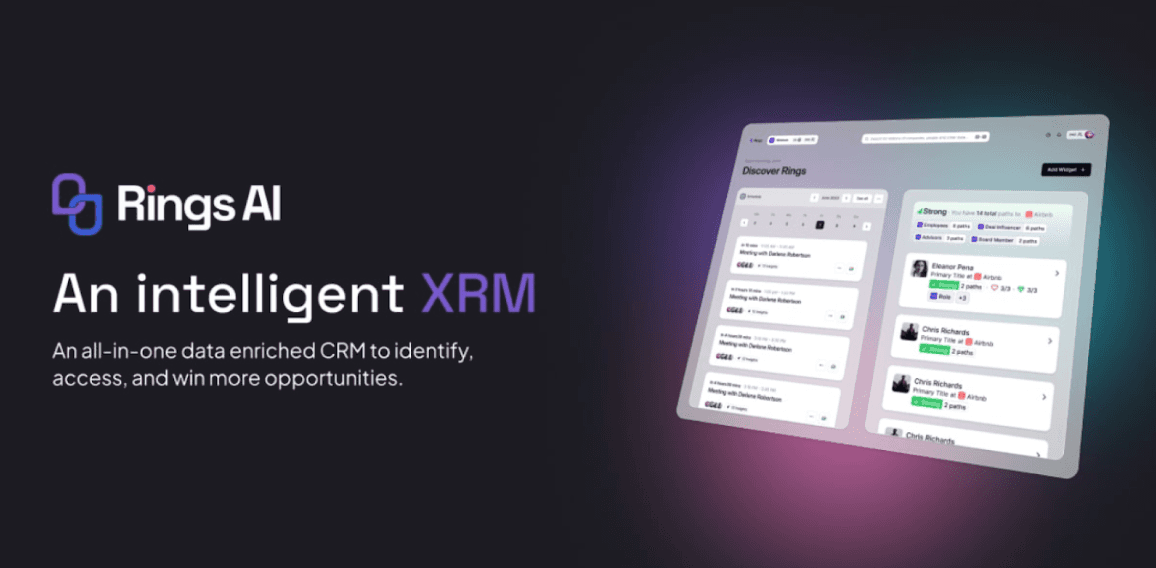
Rings AI is designed specifically for relationship-driven industries like venture capital, private equity, and investment banking. Instead of acting as a traditional CRM, it focuses on relationship intelligence and deal visibility.
Some of its key features include:
Maps relationships across your entire network (multi-degree connections)
Pulls data from email, calendar, and external sources automatically
AI-powered opportunity scoring and prioritization
Real-time company and contact insights
Portfolio-level visibility and forecasting
7,000+ integrations for workflow flexibility
Unlike generic tools, Rings is built around how deals actually happen, i.e., through people, not just pipelines.
It also solves a common problem: most firms don’t know where their best opportunities are hidden. Rings AI surfaces them by analyzing relationship strength and activity across your network.
Best for: VC firms that rely heavily on networks, warm intros, and high-quality deal flow.
2. Affinity
Affinity is a widely used venture capital software that automates relationship tracking and pipeline management. It focuses on reducing manual work while maintaining visibility across deals and interactions.
Key features
Automatic data capture from email and calendar
Relationship scoring and contact enrichment
Deal pipeline management
Activity tracking and reminders
Reporting and analytics
Pros
Easy to adopt for VC teams
Strong automation for contact tracking
Well-established in the VC ecosystem
Cons
Limited AI-driven insights
Less advanced network visualization
Can feel rigid for complex workflows
Best for: Early to mid-sized VC firms looking for a structured CRM with automation.
3. Airtable
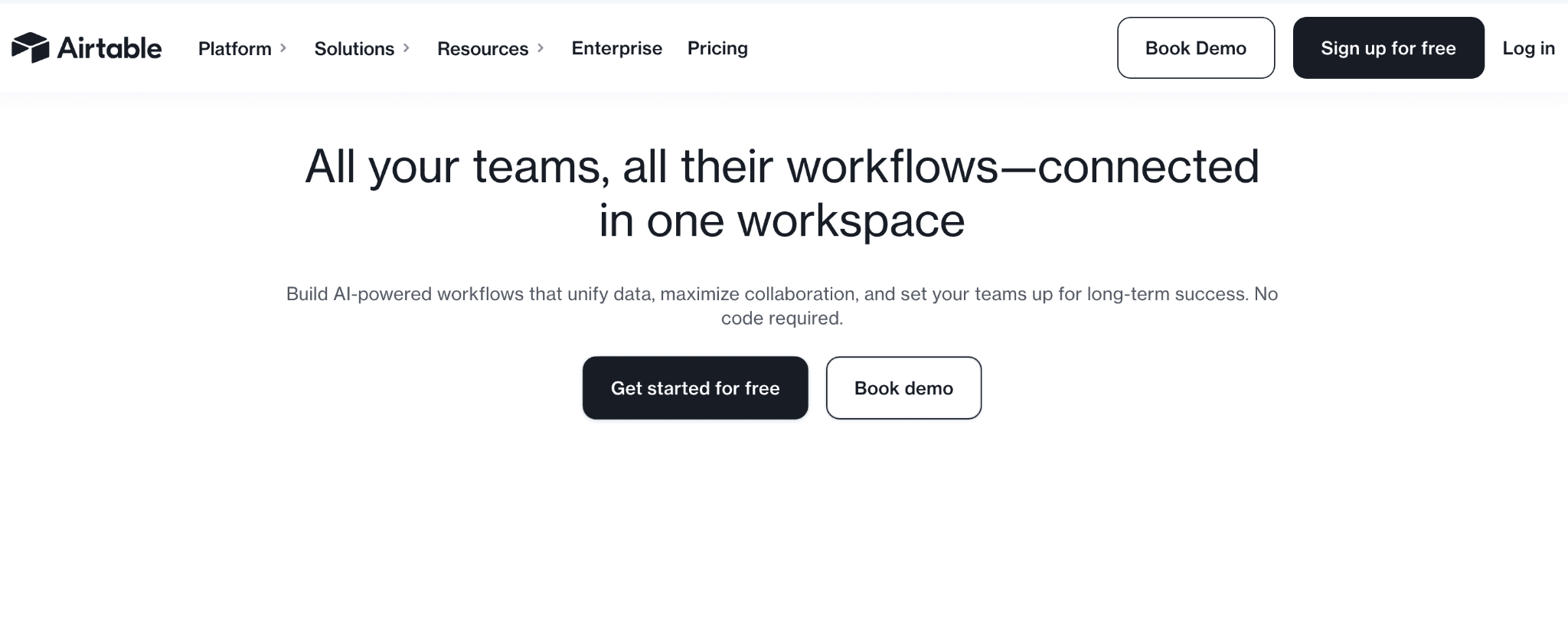
Airtable is a flexible no-code database that many VC firms use to build custom deal tracking systems. It combines spreadsheet simplicity with relational database capabilities.
Key features
Customizable tables and relational databases
Multiple views (grid, Kanban, calendar, timeline)
Automation workflows and integrations
Forms and data collection
API access for custom setups
Pros
Highly flexible and customizable
Easy to use for non-technical teams
Works well for internal workflows
Cons
Lacks native relationship intelligence
Requires manual setup and maintenance
Can become complex and costly at scale
Best for: Small teams or firms that want a customizable system without needing deep VC-specific features.
4. Attio
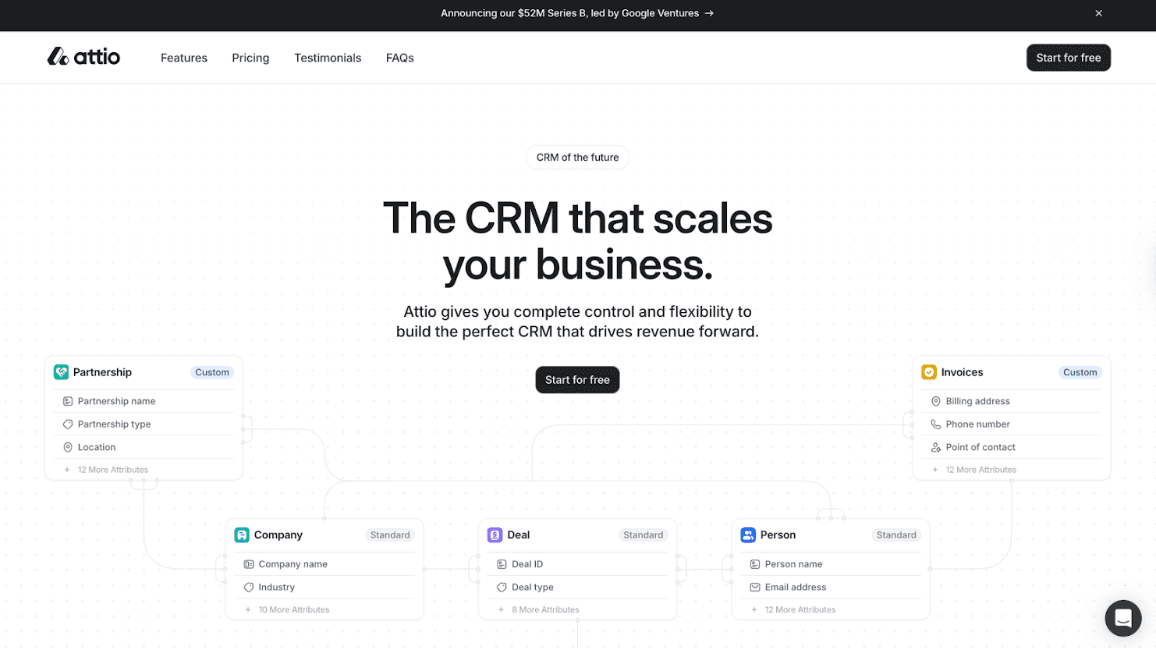
Attio is a modern, flexible CRM that combines a database-like structure with relationship management. It’s designed for teams that want to build their own workflows instead of adapting to rigid CRM systems. We have done a detailed review of Attio CRM to see where it fits into the VC infrastructure.
Key features
Fully customizable data models, objects, and workflows
Real-time collaboration with shared views, comments, and updates
Flexible pipeline and relationship tracking across use cases
Contact and company enrichment
API-first architecture for custom integrations and workflows
Pros
Highly customizable CRM without heavy technical setup
Clean, modern UI with strong usability
Flexible enough to adapt to different workflows
Cons
Limited native relationship intelligence
Requires setup to match VC-specific needs
Reporting and analytics are still evolving
Best for: Early-stage VC firms or teams that want a flexible, modern CRM and can tailor it to their workflow.
5. Salesforce
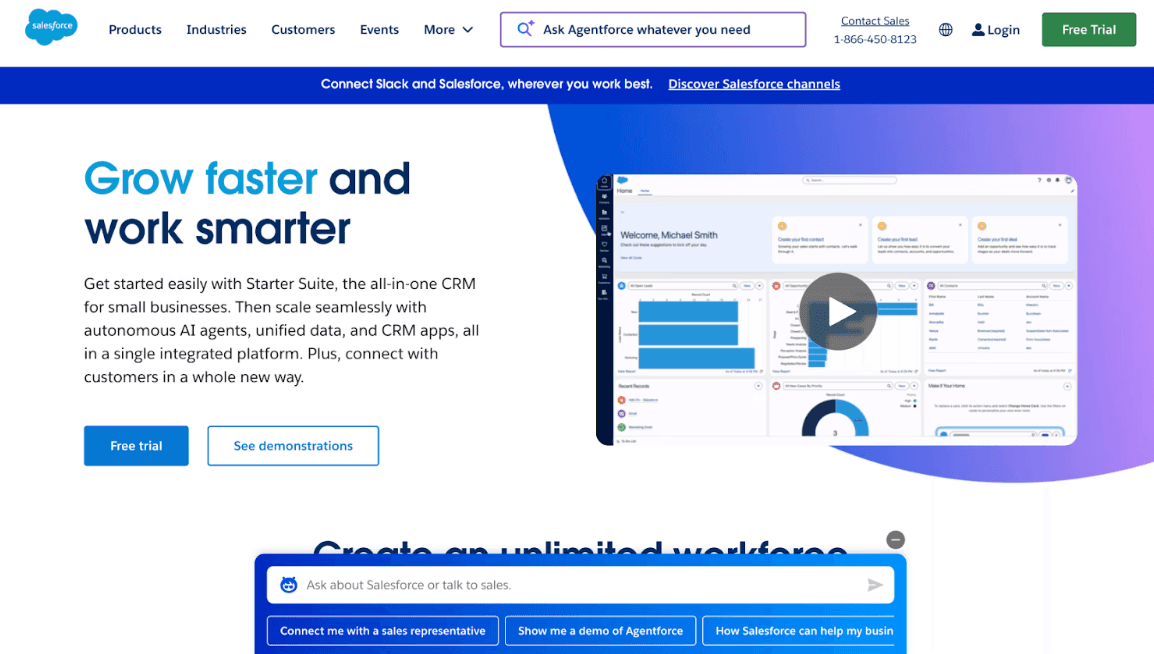
Salesforce is an enterprise-grade CRM software known for its flexibility and scalability. It can be customized for venture capital, though it requires significant setup.
Key features
Highly customizable CRM architecture
Advanced reporting and dashboards
Workflow automation and integrations
Role-based access and permissions
App ecosystem and extensions
Pros
Extremely powerful and scalable
Strong analytics and reporting
Flexible for complex organizations
Cons
Expensive and resource-heavy
Requires customization for VC use cases
Steep learning curve
Best for: Large VC firms with dedicated operations teams and complex requirements.
How AI is Changing Venture Capital Software
Venture capital software is moving from simple tracking to active intelligence.
Earlier tools focused on organizing pipelines and storing contacts. Today, the expectation is different. Firms want systems that help them decide faster and act with more clarity. That means answering questions like:
Which founders should we prioritize right now?
Who in our network can unlock a warm introduction?
Which companies are showing meaningful signals (hiring, funding, momentum)?
Where are we overlooking high-quality opportunities?
This is where AI-driven venture capital software changes the equation. Instead of reacting to inbound deal flow or manually scanning networks, teams can proactively identify where to focus and why.
Platforms like Rings AI combine relationship intelligence, AI-driven insights, and automated data capture to help firms manage and improve their deal flow. Book a demo with Rings AI to see how it works in practice.