
Small businesses do not need bloated software. They need clarity in relationship management, deal visibility, and workflows that scale without becoming complicated. \
The right customer relationship management (CRM) platform should help you:
Track deals without friction
Understand who matters in your network
Automate repetitive work
Scale without rebuilding your entire system
This article highlights seven CRMs designed specifically for small businesses, each positioned around relationship and sales management to fit different team needs and workflows.
1. Rings AI
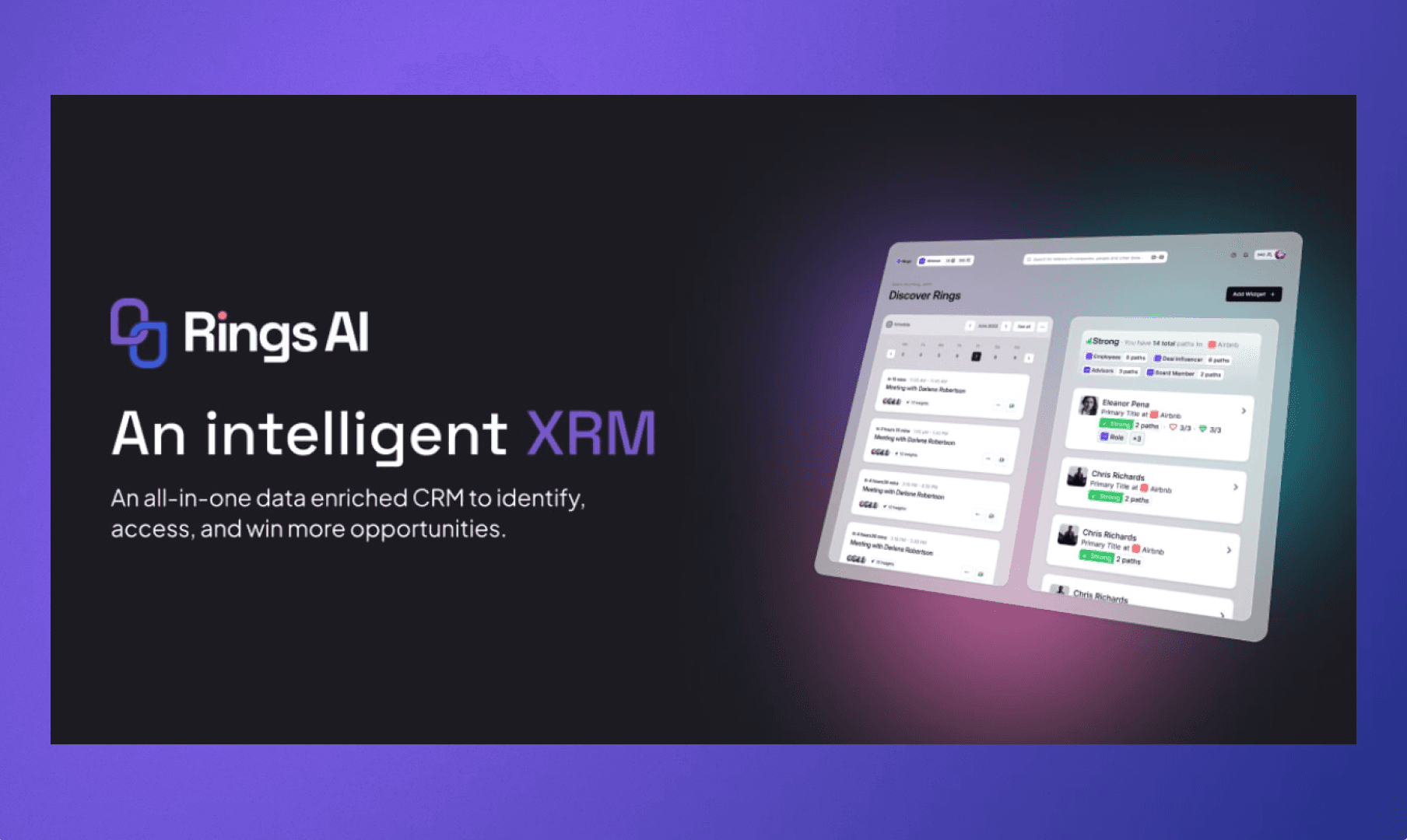
Rings AI is a modern XRM designed to give small businesses full visibility into their external relationships, across prospects, partners, investors, and customers, in one unified system. It centralizes interactions, surface-level data, and engagement history so nothing falls through the cracks.
Instead of focusing only on pipelines, it maps the people behind deals: showing who knows whom, where warm introductions exist, and how relationships evolve.
For small businesses that rely on referrals, partnerships, and network-driven growth, this creates a meaningful edge and helps close deals faster. It delivers enterprise-grade relationship visibility without enterprise-level complexity.
Key features of Rings AI
Automatically syncs notes, files, and AI-generated meeting summaries into a single, centralized workspace
Visualizes multi-degree connections so teams can identify warm paths to prospects and decision-makers
Combines pipeline tracking with relationship scoring to improve prioritization and increase win rates
Streamlines operations across event management, recruiting, introductions, and ongoing relationship tracking
Its AI co-pilot provides real-time insights, opportunity signals, and pre-meeting intelligence
Integrates seamlessly with 7,000+ third-party tools, including major CRM and other productivity tools, without complex setup
Pricing
Rings AI uses an annual, per-seat pricing model built for growing teams, providing enterprise-grade relationship intelligence at a more accessible cost.
2. Attio
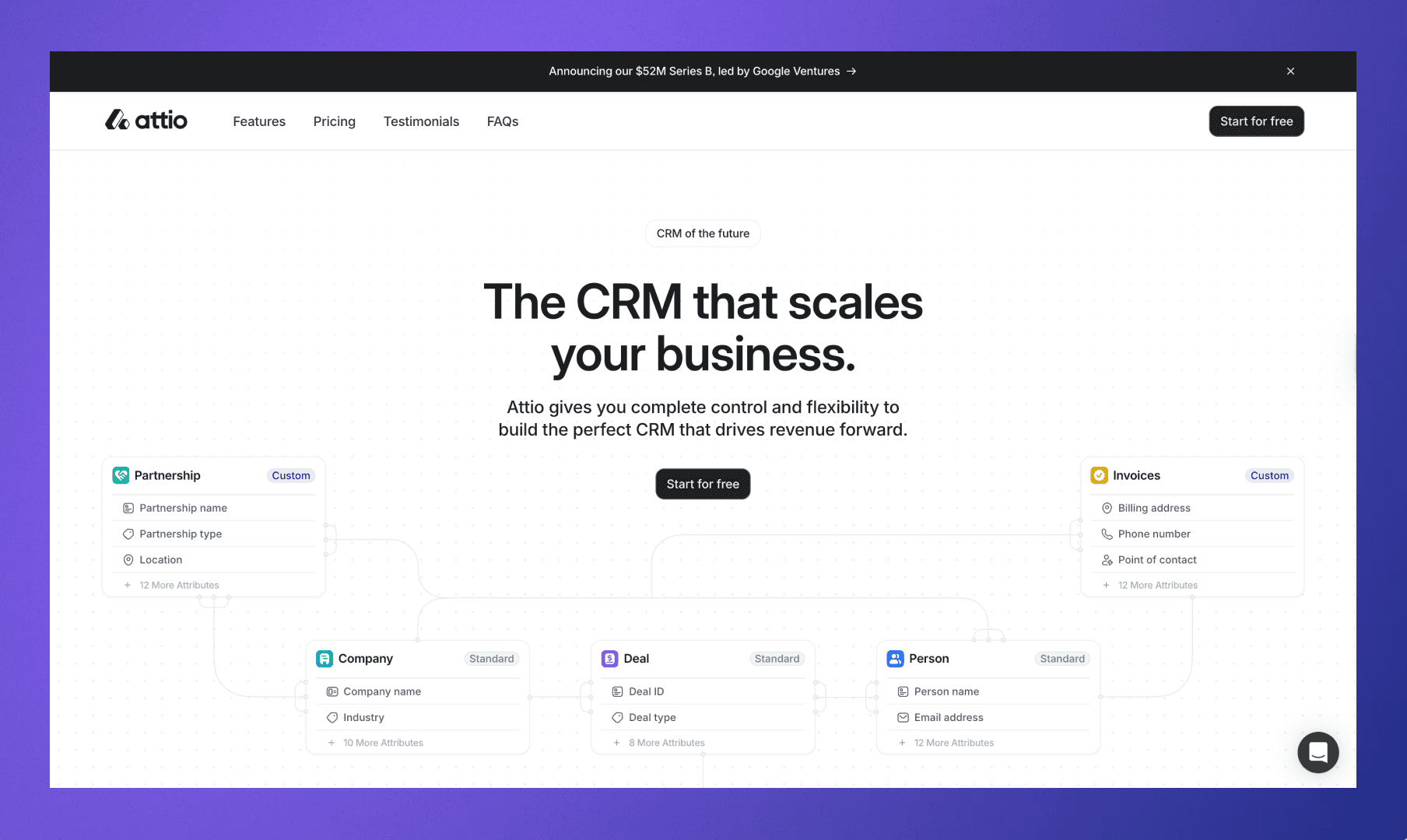
Attio positions itself as a highly flexible, automation-heavy CRM. It allows small businesses to build workflows that mirror their exact sales process rather than forcing them into rigid templates.
For teams that value control and structured automation, Attio is compelling. Where Rings focuses on relationship depth, Attio focuses on system design freedom.
Key features of Attio
Allows full customization of objects, workflows, and data structures
Supports advanced automation triggers across pipeline stages
Offers collaborative contact records with dynamic fields
Includes real-time data enrichment for contact profiles
Integrates natively with common business tools and APIs
Enables instant data visualization for quick GTM strategy refinement
Pricing
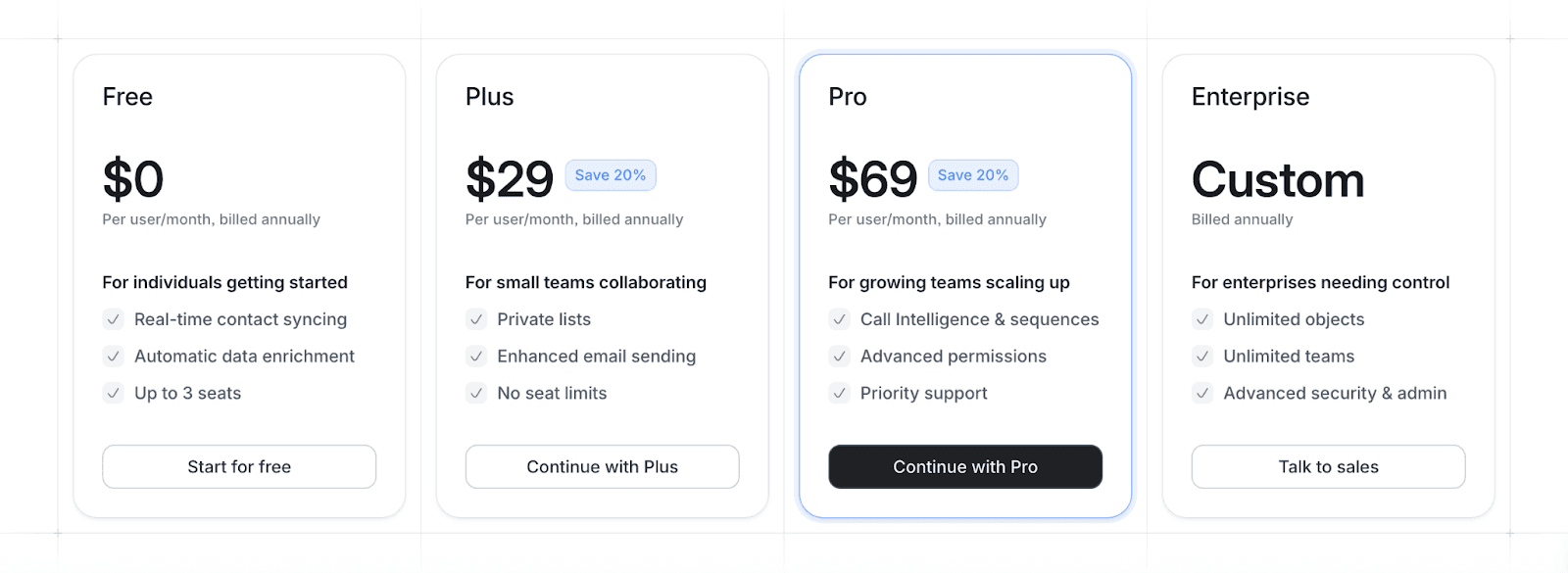
Attio offers a free tier for small teams, with paid plans scaling based on features and usage.
Free plan
Plus: $29 per user per month, billed annually
Pro: $69 per user per month, billed annually
Enterprise: Custom
3. Pipedrive
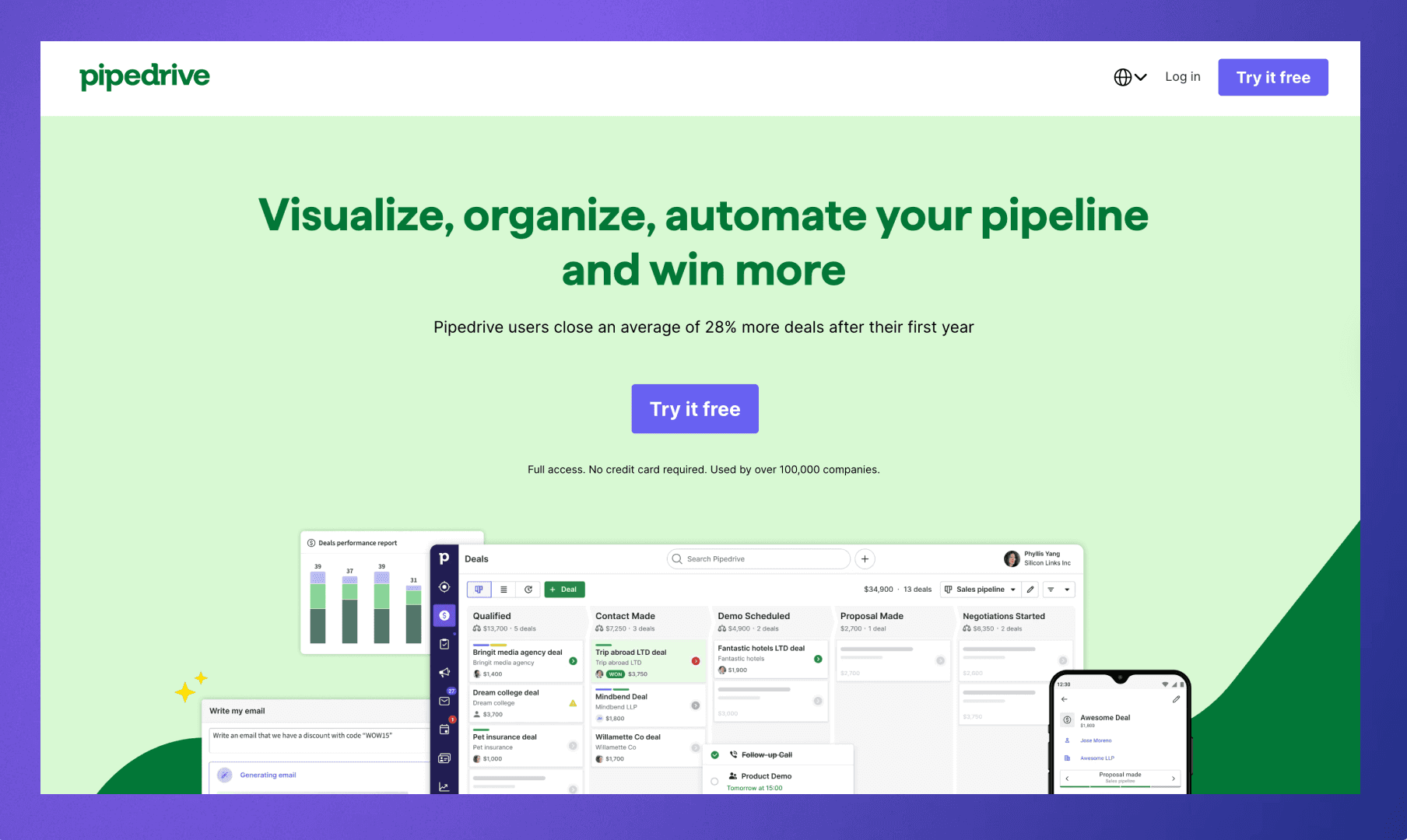
Pipedrive is built for clarity. Its visual drag-and-drop pipeline makes deal tracking simple and intuitive. Small businesses that need straightforward sales management without heavy marketing modules often gravitate toward Pipedrive.
It prioritizes execution over complexity.
Key features of Pipedrive
Provides customizable visual pipelines for deal tracking
Includes activity reminders to keep reps accountable
Supports email sync with tracking and templates
Offers workflow automation for lead routing and follow-ups
Delivers pipeline reporting and forecasting dashboards
Includes AI-driven sales suggestions on higher tiers
Pricing
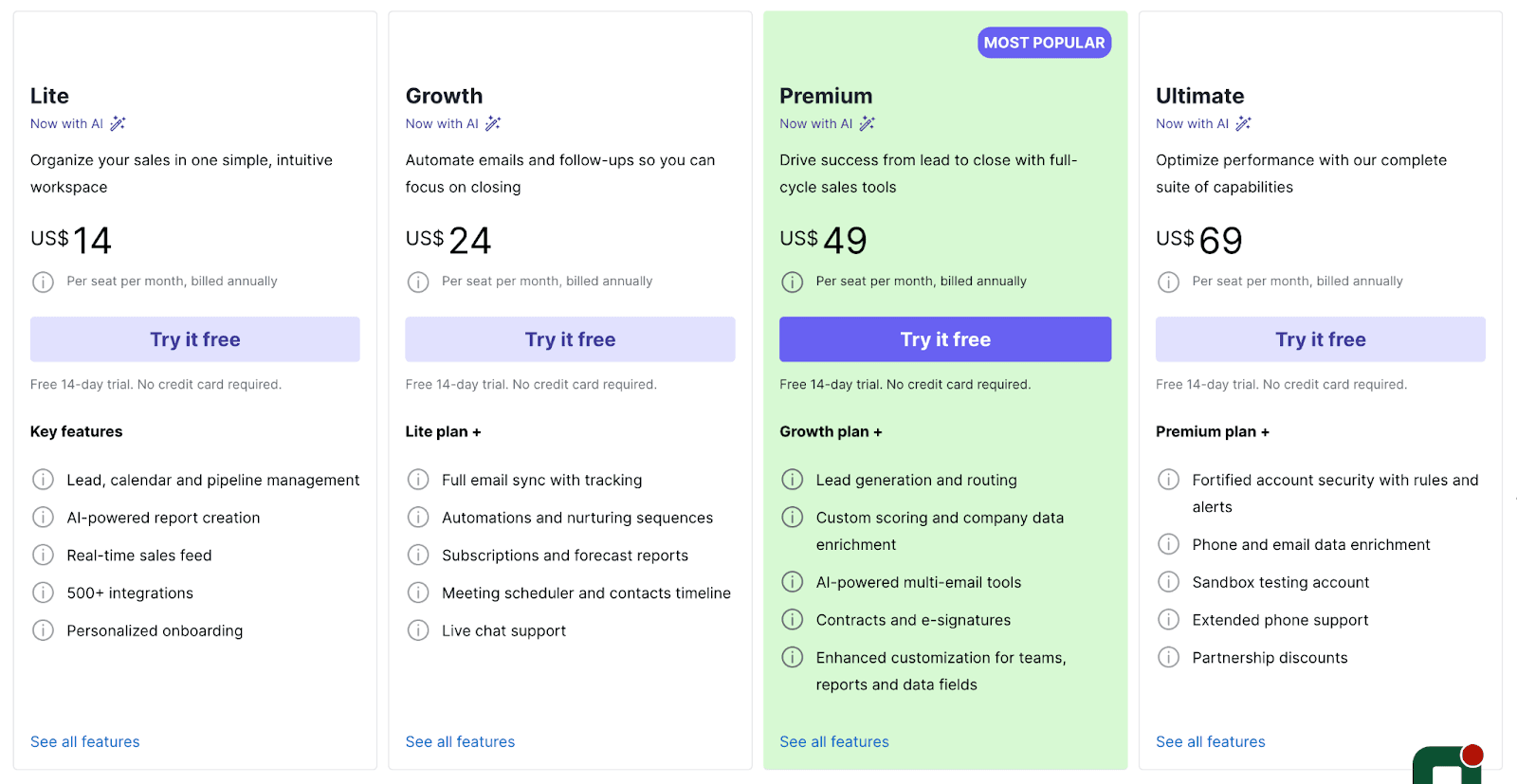
Pipedrive has no free plans but comes with a 14-day free trial period. It offers three paid plans with advanced features unlocked at higher tiers.
Lite: $14 per seat per month, billed annually
Growth: $24 per seat per month, billed annually
Premium: $49 per seat per month, billed annually
Ultimate: $69 per seat per month, billed annually
4. HubSpot
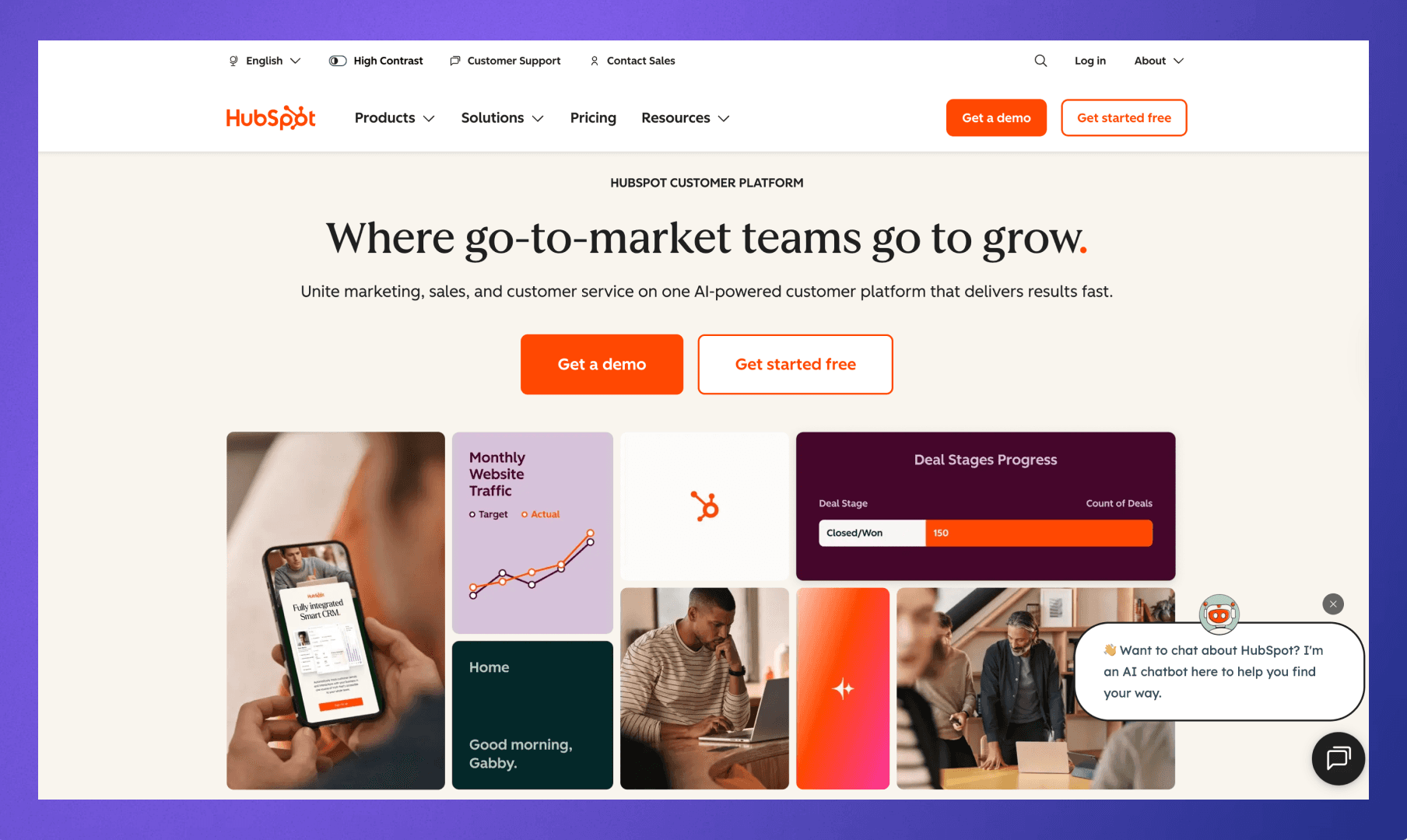
HubSpot is a growth-focused CRM built for small businesses that want more than just pipeline tracking. It connects sales, marketing, and customer service into one platform, making it easier to manage the entire customer journey, ranging from first website visit to closed deal and post-sale support.
HubSpot’s free CRM makes it accessible for early-stage teams. However, as businesses expand and require multiple hubs, advanced workflows, or larger contact limits, total costs can increase quickly.
Key features of HubSpot
Offers a free CRM with contact and deal management
Includes built-in email marketing and automation tools
Provides pipeline tracking with reporting dashboards
Supports marketing campaigns, landing pages, and forms
Integrates sales and customer service hubs in one system
Delivers detailed analytics across departments.
Pricing
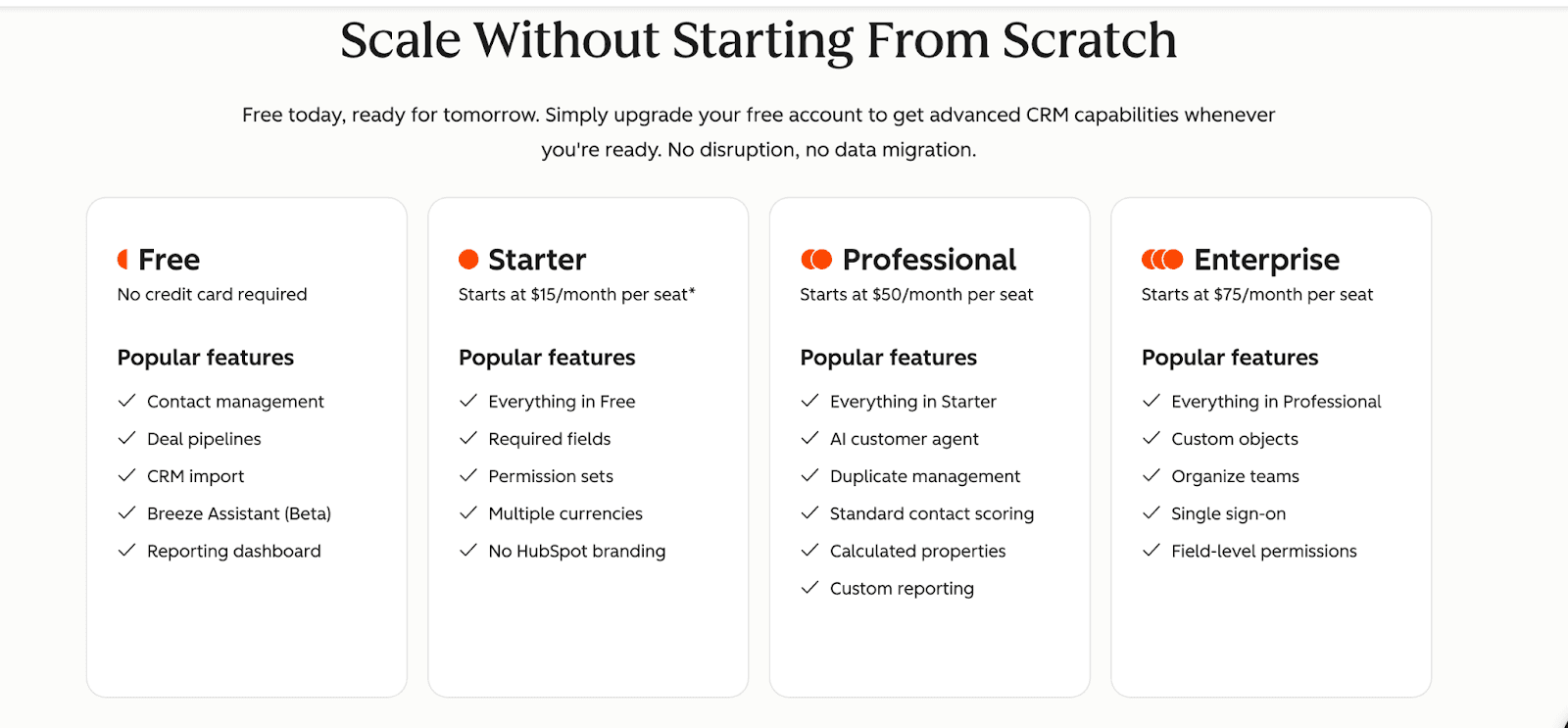
HubSpot offers a free tier, but paid plans increase based on contacts, automation limits, and additional hubs.
Free CRM with no expiration
Starter: $9 per seat per month, billed annually
Professional: $50 per seat per month, billed annually
Enterprise: $75 per seat per month, billed annually
5. Monday CRM
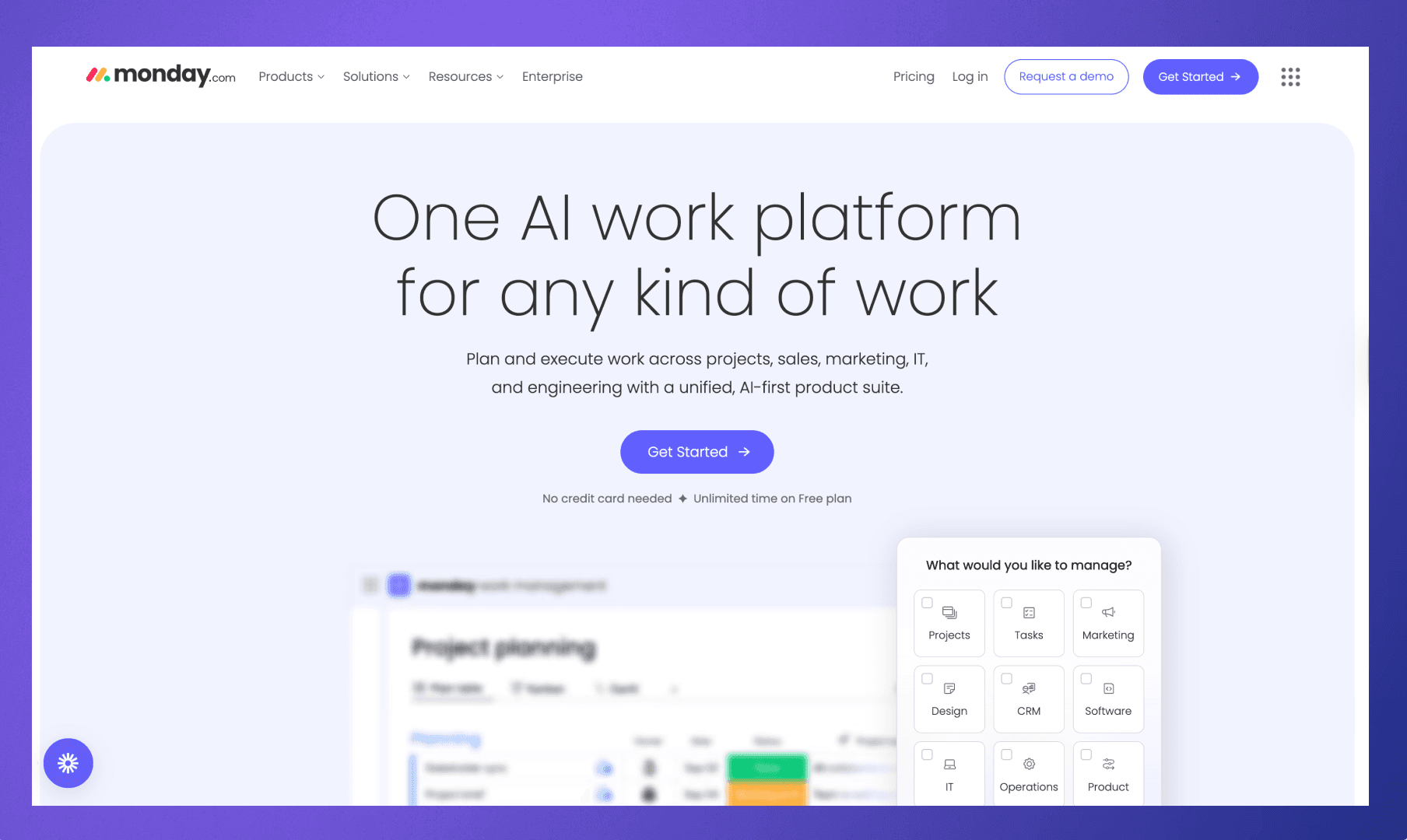
Monday CRM builds on its work management foundation to offer a flexible, highly visual sales system.
Rather than operating as a traditional sales-only CRM, Monday CRM allows teams to connect pipeline tracking with project execution. This makes it easier to move from a closed deal to fulfillment without switching tools.
Besides, its intuitive interface also makes adoption straightforward for non-technical teams.
Key features of Monday CRM
Provides customizable boards for deal tracking
Allows automation of repetitive workflow steps
Integrates project and post-sale delivery tracking
Supports dashboards for revenue and activity reporting
Includes collaboration tools for team visibility
Offers pre-built CRM templates for faster setup
Pricing
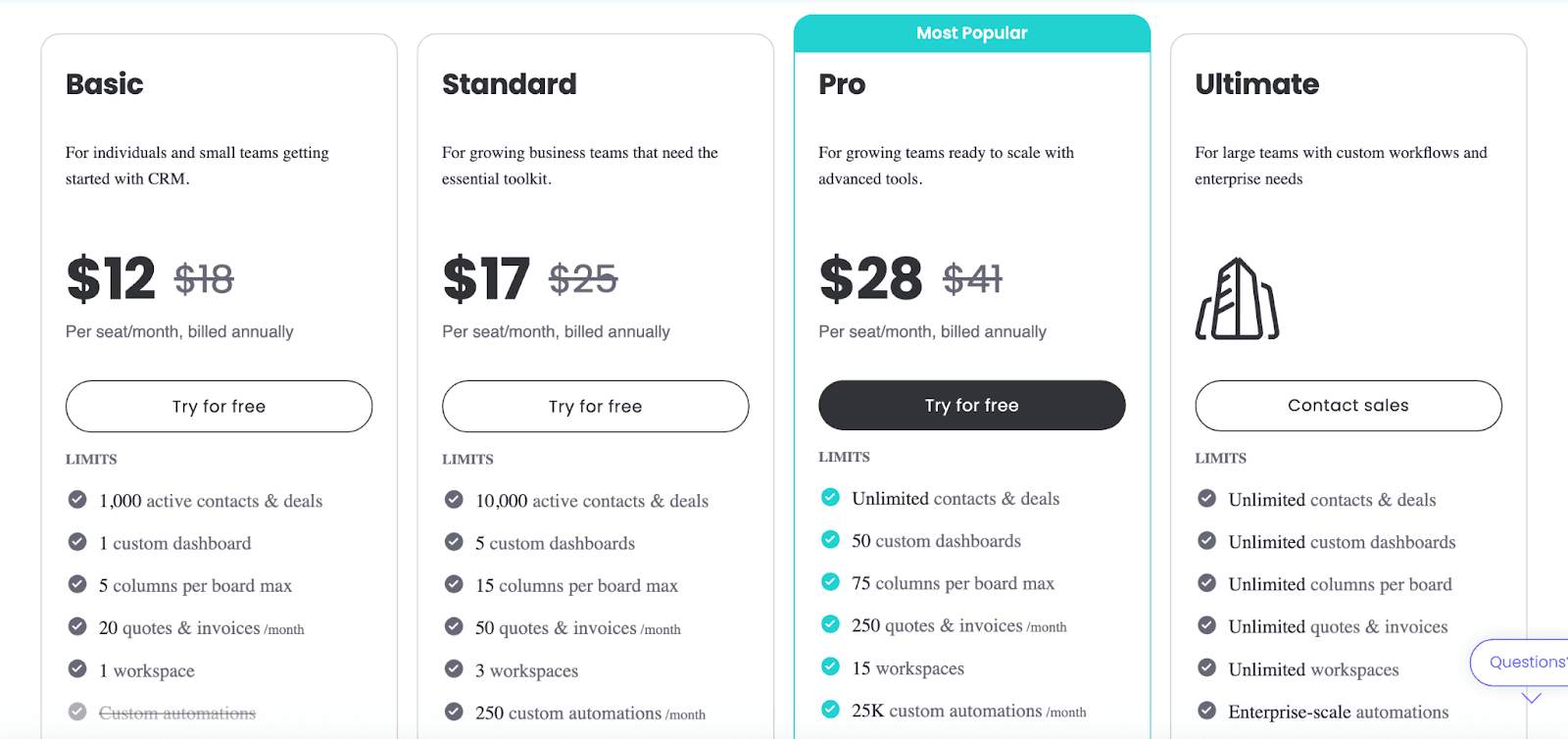
Pricing starts at entry-level tiers suitable for small teams, with costs increasing as automation and integrations expand.
Basic: $12 per seat per month, billed annually
Standard: $17 per seat per month, billed annually
Pro: $28 per seat per month, billed annually
Ultimate: Custom
6. Freshsales
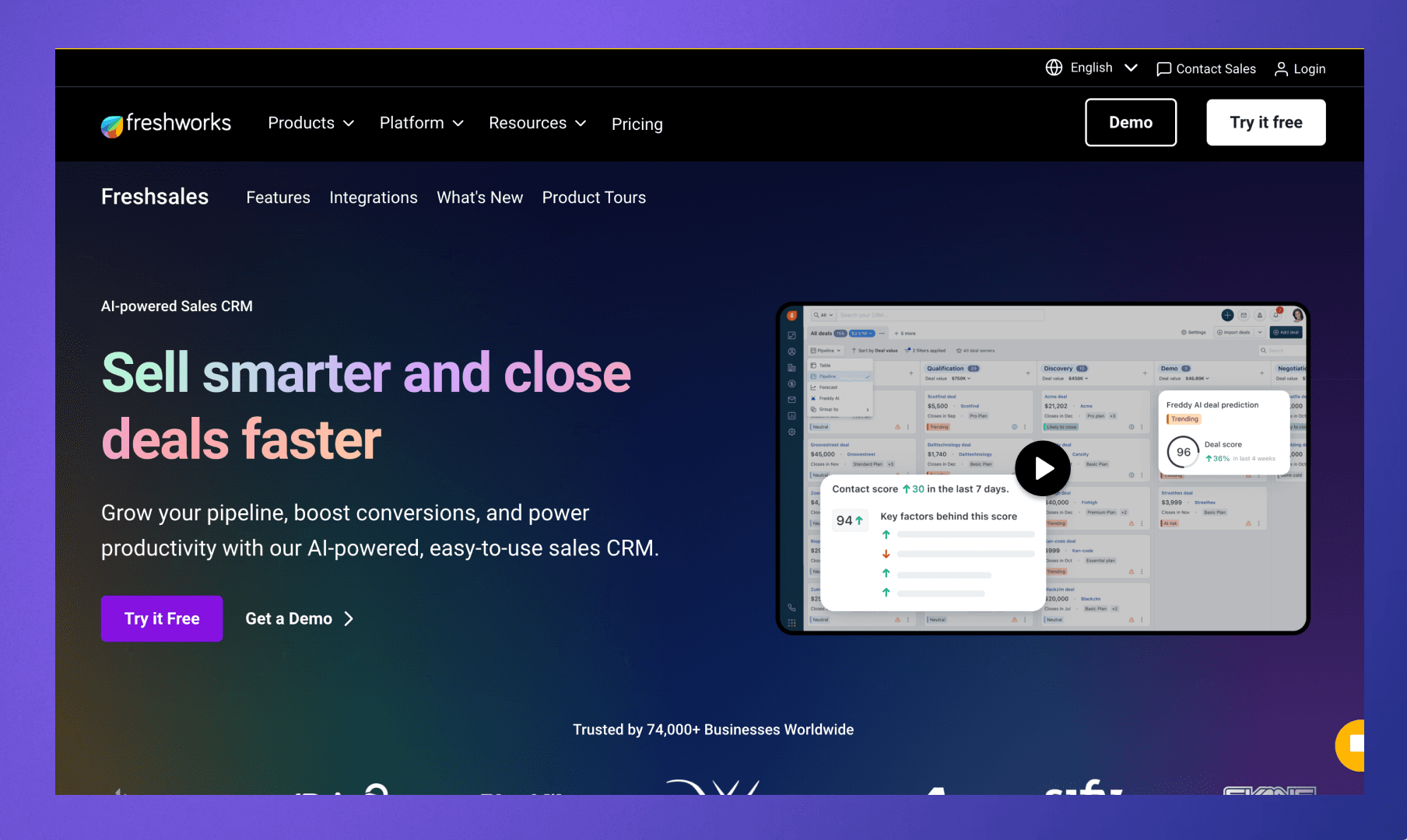
Freshsales focuses on combining CRM with communication tools. It includes built-in phone, email templates, and live chat features, reducing the need for multiple add-ons.
It suits small sales teams that want communication and pipeline management in one place. Its AI-driven insights also help teams prioritize leads and identify opportunities without heavy manual analysis.
Key features of Freshsales
Offers AI-powered lead scoring and insights
Supports visual deal pipelines and sales forecasting
Provides workflow automation for sales processes
Includes customizable reports and dashboards
Integrates with the broader Freshworks ecosystem
Pricing
Freshsales offers a free tier with paid plans starting at competitive per-user rates. It also offers a 21-day free trial period.
Free (for up to 3 users)
Growth: $9 per user per month, billed annually
Pro: $39 per user per month, billed annually
Enterprise: $59 per user per month, billed annually
7. Zoho CRM
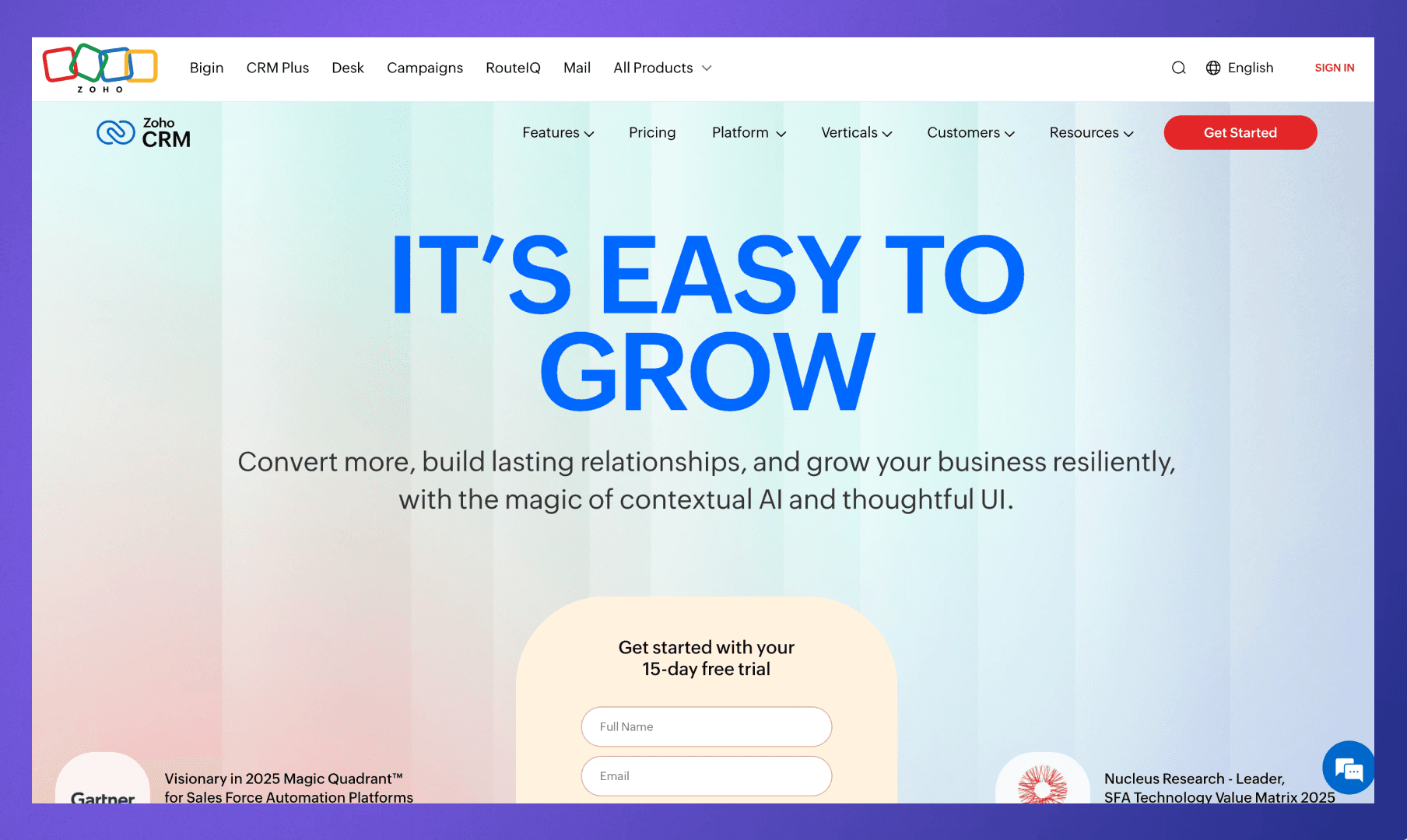
Zoho CRM offers a broad set of sales automation, reporting, and customization tools that rival higher-cost platforms. For teams willing to invest time in setup and configuration, Zoho provides significant flexibility and control over workflows, data structure, and communication tracking.
It is particularly appealing to businesses already using other Zoho applications, as the ecosystem integration is seamless.
While Zoho focuses heavily on automation and customization, teams that prioritize deeper relationship mapping may look toward platforms like Rings AI.
Key features of Zoho CRM
Supports sales automation and lead scoring
Includes multichannel communication tracking
Provides AI insights through Zia, Zoho’s AI assistant
Enables detailed customization of workflows and fields
Integrates seamlessly with the Zoho business suite
Offers advanced reporting for growing teams
Pricing
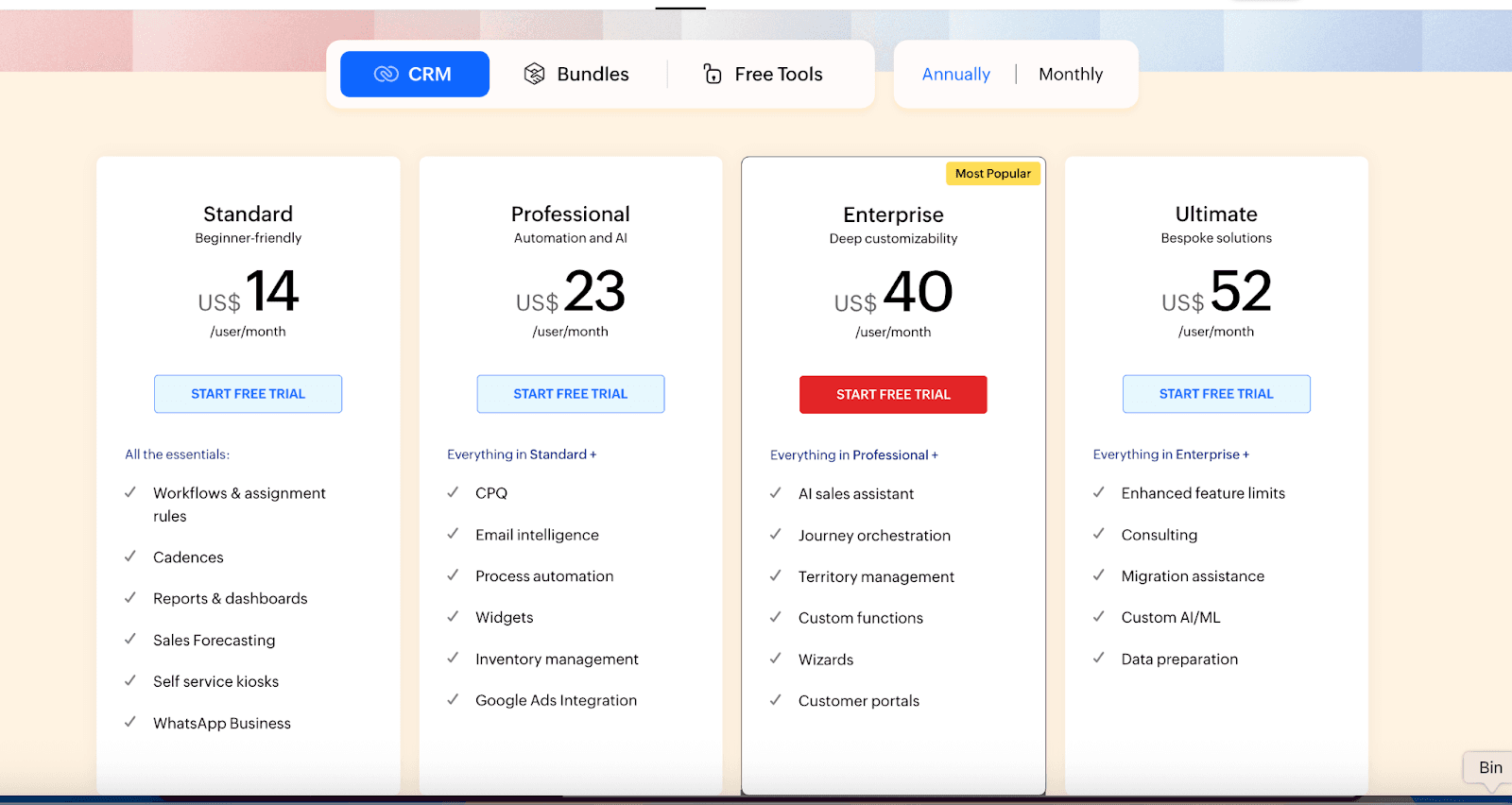
Zoho CRM offers a free edition for small teams, with paid plans starting at affordable per-user monthly rates and scaling based on features.
Free (for up to 3 users)
Standard: $14 per user per month, billed annually
Professional: $23 per user per month, billed annually
Enterprise: $40 per user per month, billed annually
Ultimate: $52 per user per month, billed annually
Choosing the Right CRM for Your Small Business
The best CRM for a small business is the one that supports how you generate revenue today, and how you plan to grow tomorrow. That means looking beyond surface-level features and focusing on what drives results: consistent follow-ups, clear ownership of deals, meaningful reporting, and the ability to keep everyone aligned.
Small businesses should prioritize simplicity, scalability, and insight. A CRM should reduce manual work, surface useful signals, and give leadership confidence in their pipeline without adding operational overhead.
Among the platforms covered, Rings AI stands out for teams that want more than just deal tracking. It helps bring structure to external relationships, adds context to opportunities, and ensures that important connections are not lost across inboxes and spreadsheets.
If your team is ready to move from basic pipeline management to more informed, relationship-driven growth, book a demo to see how Rings AI can support your next stage.