
Growing a strong network is fundamental to how venture capital and private equity firms generate deal flow and maintain access to opportunities. Investors expand their network through founder introductions, portfolio relationships, LP conversations, and ongoing industry interactions. Over time, these relationships form the foundation of how firms source opportunities and stay connected to the market.
Effective network growth requires more than meeting new people. Investors must maintain visibility into past conversations, introductions, and relationship history as the network expands. Without a shared view of these interactions, important context often remains scattered across individual inboxes and personal notes.
Firms that grow their networks consistently treat relationships as institutional memory rather than isolated contacts. When meetings, emails, and introductions remain visible across the team, investors approach every conversation with the full history of the relationship. Platforms built around relationship intelligence, such as Rings AI, help firms preserve that continuity while their network continues to expand.
How Investor Networks Grow Through Introductions and Relationships
Investor networks expand through ongoing interactions across founders, operators, co-investors, and limited partners. Each conversation, introduction, and collaboration adds another connection to the firm’s broader relationship ecosystem. Over time, these interactions shape how firms access opportunities and stay connected to market activity.
Introductions play a central role in this process.
Founders often introduce other founders, operators refer investors to emerging companies, and co-investors share opportunities within trusted circles. Many firms treat these introductions as an important component of deal sourcing. Research from the National Venture Capital Association notes that venture deal flow frequently originates through referrals and trusted professional networks rather than open outreach.
As these relationships accumulate, firms must maintain a clear understanding of who introduced whom, where conversations occurred, and how relationships evolved. Relationship context often lives across email threads, meetings, and notes recorded over several years.
Maintaining visibility across those interactions strengthens the firm’s ability to build trust, maintain continuity, and stay informed about new opportunities.
This is why many investment firms prioritize systems designed to capture relationship history and preserve shared context across the team. A recent perspective in Forbes discusses how CRM systems built by operators who experienced traditional CRM limitations often focus more heavily on relationship context and long-term memory.
Strategies Investors Use to Grow Their Network
Investor networks expand through consistent interaction with founders, operators, limited partners, and other investors. Network growth develops through repeated conversations, introductions, and collaboration across deals and portfolio activity. Firms that grow their network intentionally focus on maintaining relationship continuity and strengthening trust across these interactions.
In venture capital and private equity, introductions and referrals remain one of the most reliable sources of new opportunities. Professional networks play a significant role in how investors identify promising companies and evaluate opportunities. Sustained engagement across these relationships increases the likelihood that founders, operators, and other investors bring new opportunities directly to the firm.
The following practices help investors expand their professional network while maintaining strong relationship continuity across their ecosystem.
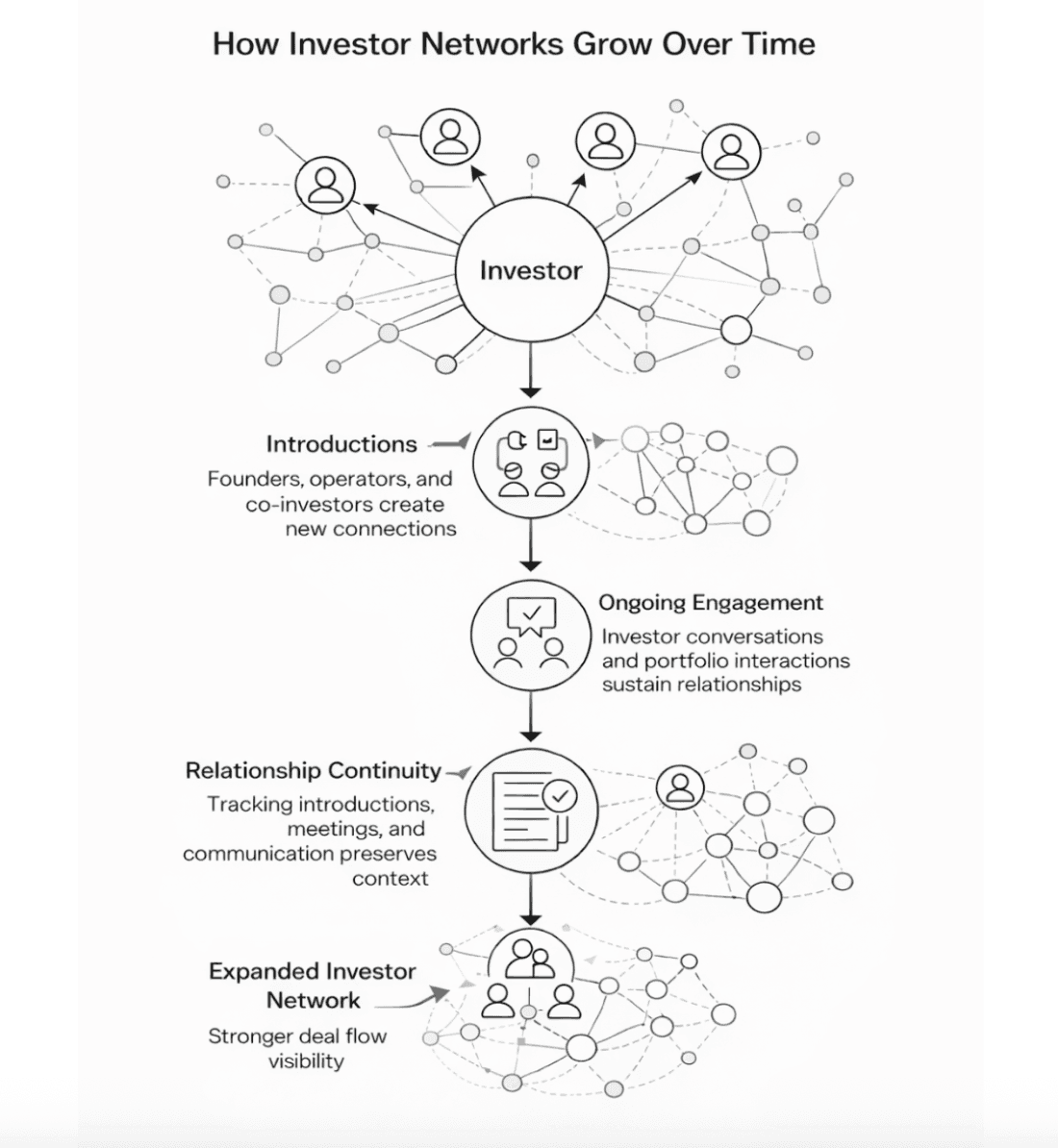
Investor networks grow through introductions, ongoing engagement, and consistent relationship tracking, allowing firms to expand connections and improve deal flow visibility over time.
Start With Existing Relationships
Many of the strongest network expansions originate from relationships that already exist within the firm’s ecosystem.
Founders introduce other founders, portfolio executives recommend operators, and co-investors share opportunities that align with the firm’s investment focus. These introductions build on existing trust and often lead to higher-quality conversations.
Maintaining consistent engagement with current relationships supports this growth. Investors who remain active with founders, advisors, and operators create ongoing opportunities for introductions and collaboration. These interactions often occur through portfolio updates, industry conversations, and introductions between founders working in related markets.
Portfolio companies frequently play a central role in expanding investor networks. Founders and executives bring their own professional circles into contact with the firm as companies scale. Research from Kauffman Fellows highlights how founder and operator networks often influence how venture opportunities circulate across the market.
Many firms organize relationship information to maintain continuity across these introductions. Systems designed for investor relationship management help teams understand existing connections and past conversations before engaging with new contacts.
Turn Introductions Into Long-Term Relationships
Introductions often create the first connection between investors and new founders, operators, or advisors.
The long-term value of those introductions depends on how consistently the relationship develops after the initial conversation. Investors who follow up thoughtfully and maintain periodic communication often remain connected to founders long before a formal investment discussion begins.
This approach strengthens reputation within the broader ecosystem.
Founders and operators tend to introduce investors who remain engaged and responsive over time. Research from Stanford Graduate School of Business highlights how professional trust and repeated interaction shape long-term venture relationships.
Maintaining structured records of introductions and follow-up conversations helps investors manage these connections across years of interaction. Documenting who made the introduction, the context of the conversation, and subsequent meetings provides useful reference points when relationships reappear later.
Maintaining this type of relationship history within a shared system improves continuity across the firm and supports future engagement with the same network.
Maintain Consistent Engagement Across Your Ecosystem
Sustained engagement keeps investor networks active and responsive. Founders, operators, and limited partners often stay connected with investors who remain present through regular communication, industry conversations, and portfolio interactions. Consistency across these touchpoints reinforces trust and keeps investors visible within the broader ecosystem.
Many firms maintain engagement through portfolio updates, founder check-ins, and participation in industry discussions. These interactions create natural opportunities to exchange insights, share introductions, and stay informed about new developments across the market.
Insights from McKinsey & Company highlight how long-term professional networks strengthen information flow and opportunity awareness across industries.
Maintaining a structured view of past conversations helps investors approach each interaction with context. Reviewing prior meetings, introductions, and shared connections allows firms to engage more thoughtfully with founders and partners over time.
Learn more about deal intelligence.
Track Relationship Context Across the Firm
Investor networks often span hundreds of founders, operators, advisors, and co-investors across multiple years of interaction. Conversations occur across meetings, email exchanges, conferences, and portfolio discussions. Maintaining clear records of these interactions helps firms retain the context behind each relationship.
Relationship context includes details such as who introduced the contact, the topics discussed in prior meetings, and how the relationship evolved. Access to this information allows investors to approach new conversations with a clear understanding of past engagement.
Studies from MIT Sloan School of Management emphasize that structured relationship knowledge improves decision-making and collaboration inside professional networks.
Many investment teams maintain shared records of these interactions to support continuity across partners and associates. When the relationship context remains accessible across the firm, investors can coordinate outreach, prepare for conversations, and understand how contacts connect within the broader network. Guidance on structuring relationship records across investment teams is discussed in the resources available through Rings AI.
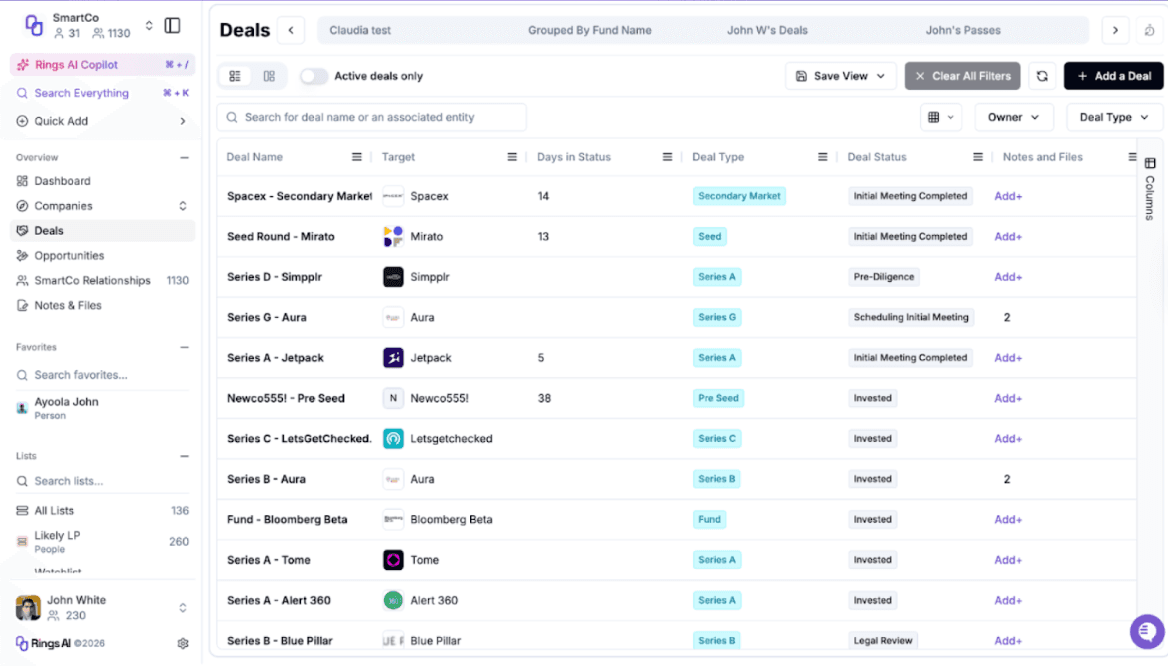
Rings AI shows relationship strength, activity history, and company context across your firm’s network so teams can understand how contacts connect and where relationships stand.
How Rings AI Helps Investors Grow and Understand Their Network
As investor networks expand, maintaining visibility across people, companies, and past interactions becomes increasingly important. Founders, operators, advisors, and co-investors often connect with multiple members of the same firm over time. A centralized system that preserves relationship context helps teams understand how those connections develop and where new opportunities may emerge.
Rings AI is designed to support relationship-driven investment teams by maintaining a structured view of conversations and connections across the firm.
Team network visibility - understand who within the firm knows each founder, operator, or investor.
Email and meeting history - access past communication tied directly to each person and company.
Relationship summaries - review prior interactions before engaging with founders or partners.
Meeting preparation - generate a structured background on a relationship before important conversations.
Shared institutional memory - preserve notes, introductions, and discussions across the investment team.
Flexible relationship structure - connect people, companies, and deals within the same relationship record.
Research from Deloitte notes that institutional knowledge and relationship visibility strengthen decision quality and collaboration across investment organizations. S
Grow Your Network With Full Relationship Context
Investor networks expand through introductions, referrals, and ongoing conversations across founders, operators, and co-investors. Firms that maintain clear visibility into these relationships stay closer to emerging opportunities and market developments.
Rings AI helps investment teams maintain a structured view of their relationships while their network grows.
Book a demo to see how Rings AI helps your team grow and understand its network.