
Choosing a customer relationship management (CRM) platform is one of the most important technology decisions a company can make. While HubSpot remains a popular option for marketing and sales automation, many businesses are now seeking CRM platforms that offer more advanced relationship intelligence and deeper customization.
Whether you’re scaling a startup or running a high-velocity sales team, it’s important to consider other platforms that might be a better fit for your goals. To help, we break down the top 13 HubSpot alternatives for 2026, highlighting their core strengths, ideal use cases, and pricing structures.
Quick Recap: Best HubSpot Alternatives in 2026
If you’re short on time, here’s a quick overview of the best HubSpot alternatives based on different business needs:
CRM | Best For | Starting Price |
Rings AI | Relationship intelligence and deal-driven teams | Custom pricing |
Affinity | VC and investment relationship management | $2K/user/year |
Attio | Flexible CRM customization for startups | $29/user/month |
Salesforce | Enterprise CRM and automation | $25/user/month |
Pipedrive | Pipeline-focused sales teams | $14/user/month |
Zoho CRM | Budget-friendly all-in-one CRM | $14/user/month |
Freshsales | SMB sales automation | $9/user/month |
Monday CRM | Visual workflow management | $12/user/month |
4Degrees | Relationship-driven deal sourcing and networking | Custom pricing |
Copper | Google Workspace users | $9/user/month |
Insightly | Project + CRM management | $29/user/month |
Keap | Small business automation | $299/month |
Zendesk Sell | Customer support-led sales teams | $19/user/month |
Let’s dive in.
1. Rings AI
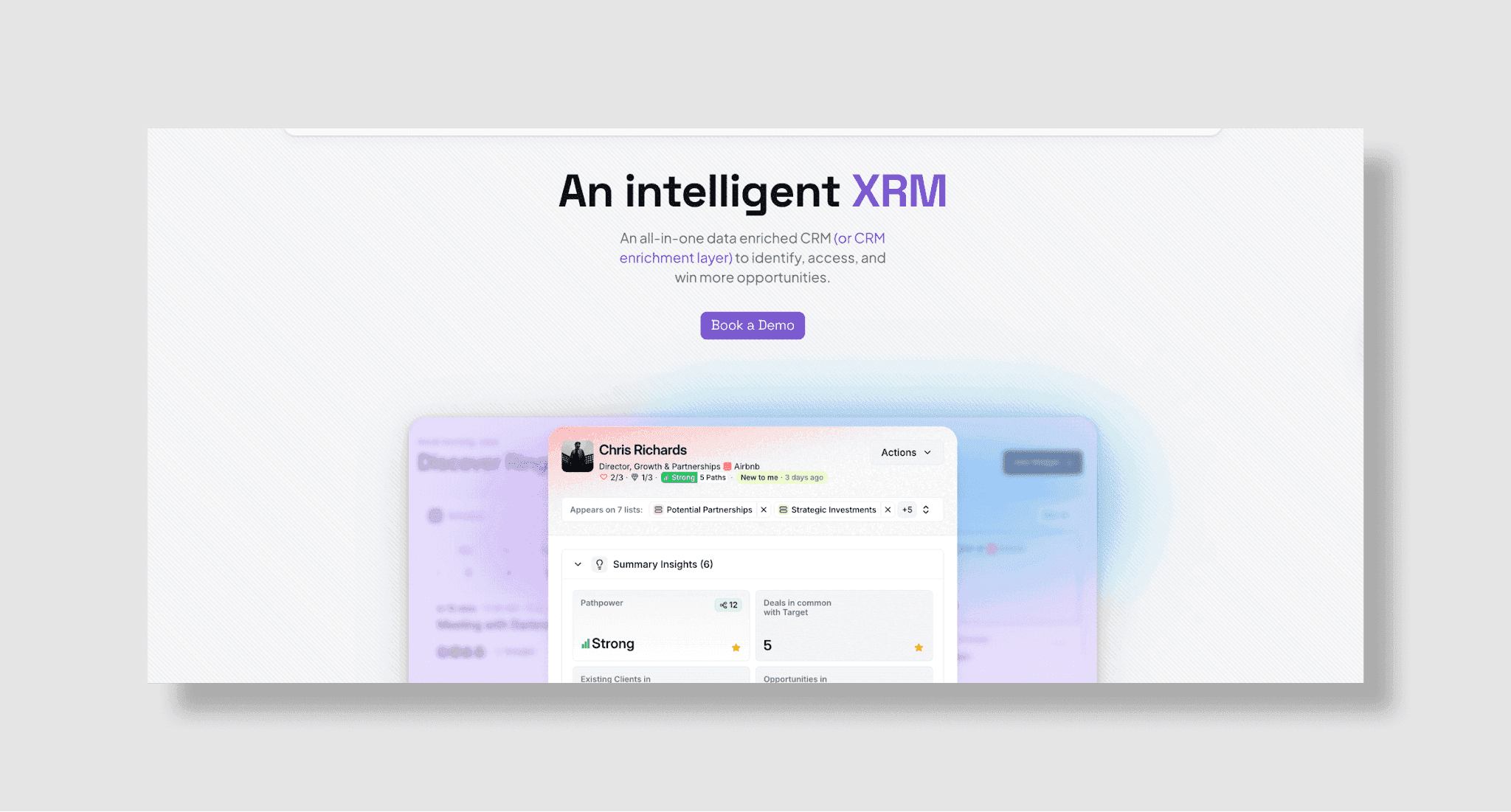
Rings AI is an intelligent extended relationship management (XRM) platform that’s built to help organizations identify, win, and manage their most valuable relationships and investments for business growth.
Core features:
Advanced relationship mapping: Visualize connections not just between you and your current contacts, but also across investors, advisors, board members, and more.
Comprehensive deal and investor data: Instantly access a vast database of funding rounds, complete with investor details and valuations.
Widespread prospecting: Search globally for companies and investors using dozens of filters, leveraging both public data and your private relationship history.
Pre-meeting intelligence: Get tailored insights on shared deals and mutual relationships before every critical meeting.
Real-time company news: Monitor and score news about companies you care about, so you never miss an important development.
AI-powered customizations: Prioritize outreach with AI-driven, fully customizable scoring for companies and individuals.
Centralized knowledge base: Store and search files and communications for seamless collaboration.
Portfolio management: Track performance, analyze relationship health, and predict fundraises across asset classes.
Robust privacy controls: Fine-tune data visibility with intuitive privacy settings at the team and company level.
Seamless integrations: Connect to thousands of apps via Zapier, plus native integrations with major CRMs, email, calendars, and LinkedIn.
Pros:
Unmatched depth in deal, investor, and relationship data.
Prospecting tools that go far beyond your existing network.
Rich, dynamic relationship mapping of key stakeholders.
AI-powered insights and scoring tailored to your business.
Centralized, searchable knowledge management for enhanced collaboration.
All essential features included, no hidden fees for core capabilities.
Free, expert onboarding and continuous support.
Cons:
It may be feature-rich for very small teams or those with simple needs.
Use cases/ideal users:
Any business selling to or prospecting startups and venture-backed companies.
Businesses with complex and high-value relationships that want to unlock new opportunities from their networks.
Venture capital and private equity firms seeking deep deal and relationship intelligence.
Business development teams needing global prospecting and AI-driven prioritization.
Enterprises managing complex portfolios and requiring robust privacy controls.
Price:
As low as $1K per user/year
2. Affinity
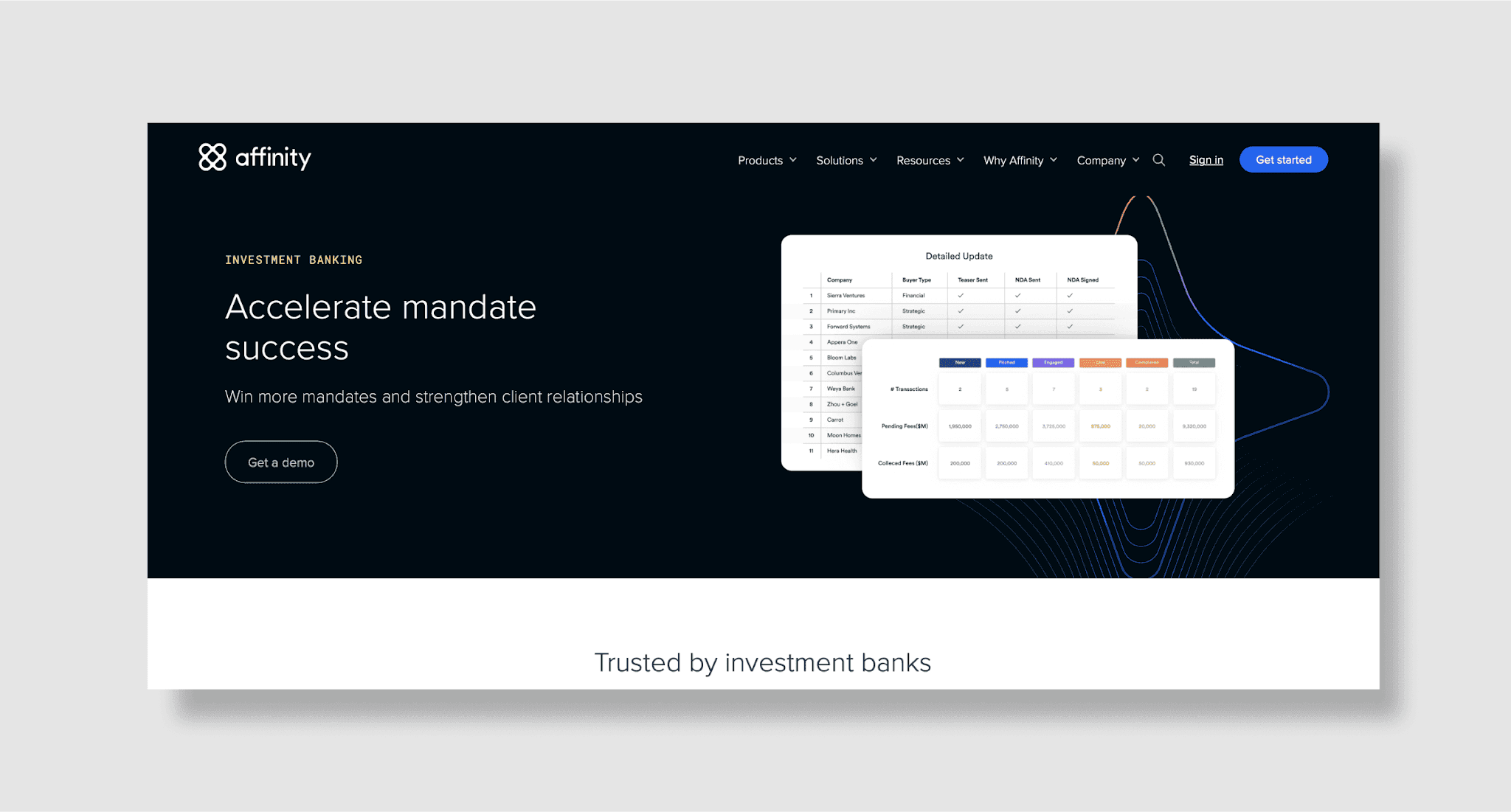
Affinity is designed to help investment firms make better deal decisions with existing network data and AI insights.
Core features:
Relationship intelligence: Track communications and prioritize connections within your existing network.
Deal management: Review and manage deals throughout your organization.
Data enrichment: Refresh your records with data from 40+ trusted sources.
Integrations: Sync network and deal data across your tech stack.
Activity tracking: Monitor emails and calendars for valuable relationship insights.
Pros:
Clean, user-friendly interface for basic relationship tracking.
Data-driven investment insights for enhanced decision-making.
Automated activity tracking through email and calendar integration.
Cons:
Limited to prospects inside your existing network.
No full deal data, company news tracking, or investor portfolio views.
Can’t analyze LinkedIn connections for relationship mapping.
Limited customizability and no AI scoring.
No support for fund and portfolio management.
Essential features like analytics and integrations come with an added cost.
Pricier than other CRMs, plus required onboarding fees.
Use cases/ideal users:
Venture capital, private equity, and professional services firms focused on managing deals through network intelligence.
Small investment teams managing a known contact base.
Teams that do not require deep data enrichment, prospecting tools, or advanced mapping.
Price:
$2K per user/year.
Onboarding fee required, starting at $3K.
Extra charges for core features and capabilities.
3. Attio
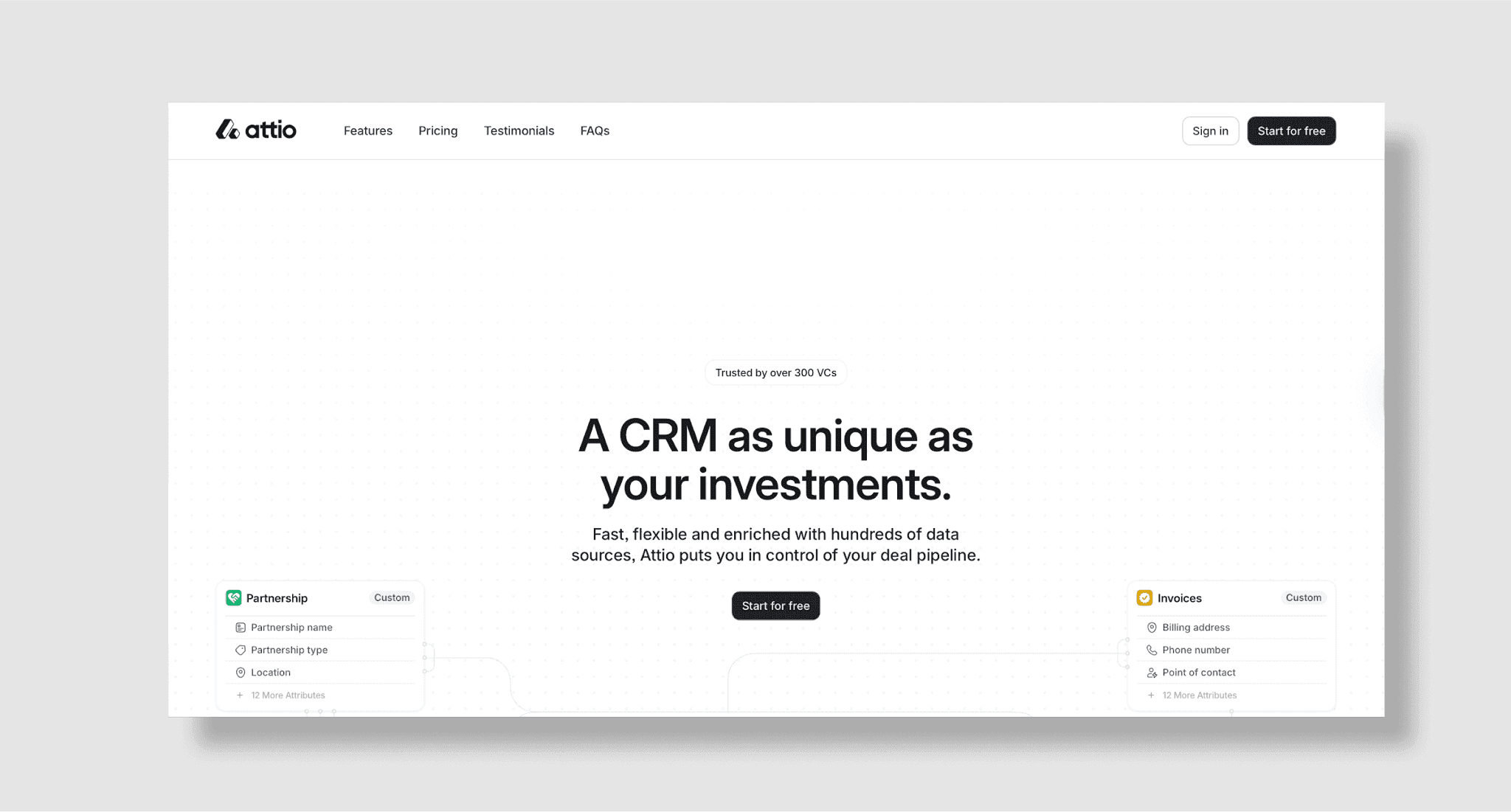
Attio is a CRM designed for flexibility and collaboration. It empowers teams to build their own workflows and scale customer relationships with ease.
Core features:
Customizable data model: Define custom objects, fields, and relationships fit to your business goals.
Activity timelines: View a history of interactions across connections.
Advanced reporting and analytics: Generate detailed reports and dashboards to monitor performance and optimize workflows.
Integrations: Sync with Slack, Google Workspace, and other tools for integrated business processes.
No-code customization: Easily set up and adjust workflows with minimal technical know-how.
Pros:
Highly flexible and customizable.
Easy-to-use, intuitive interface.
Strong real-time collaboration and workflow automation.
Free plan available for up to three users, making it easy to try out.
Cons:
No access to full deal data, investor portfolios, and company prospecting.
Limited options for portfolio and enterprise opportunity management.
Lack of capabilities for deep relationship mapping.
Some advanced features, like reporting and analytics, are only available on higher-tier plans.
Self-serve onboarding only.
Use cases/ideal users:
Startups and SMBs seeking a lightweight, customizable CRM.
Price:
Free for up to three users; paid Plus plans start at $29 per user per month.
4. Salesforce
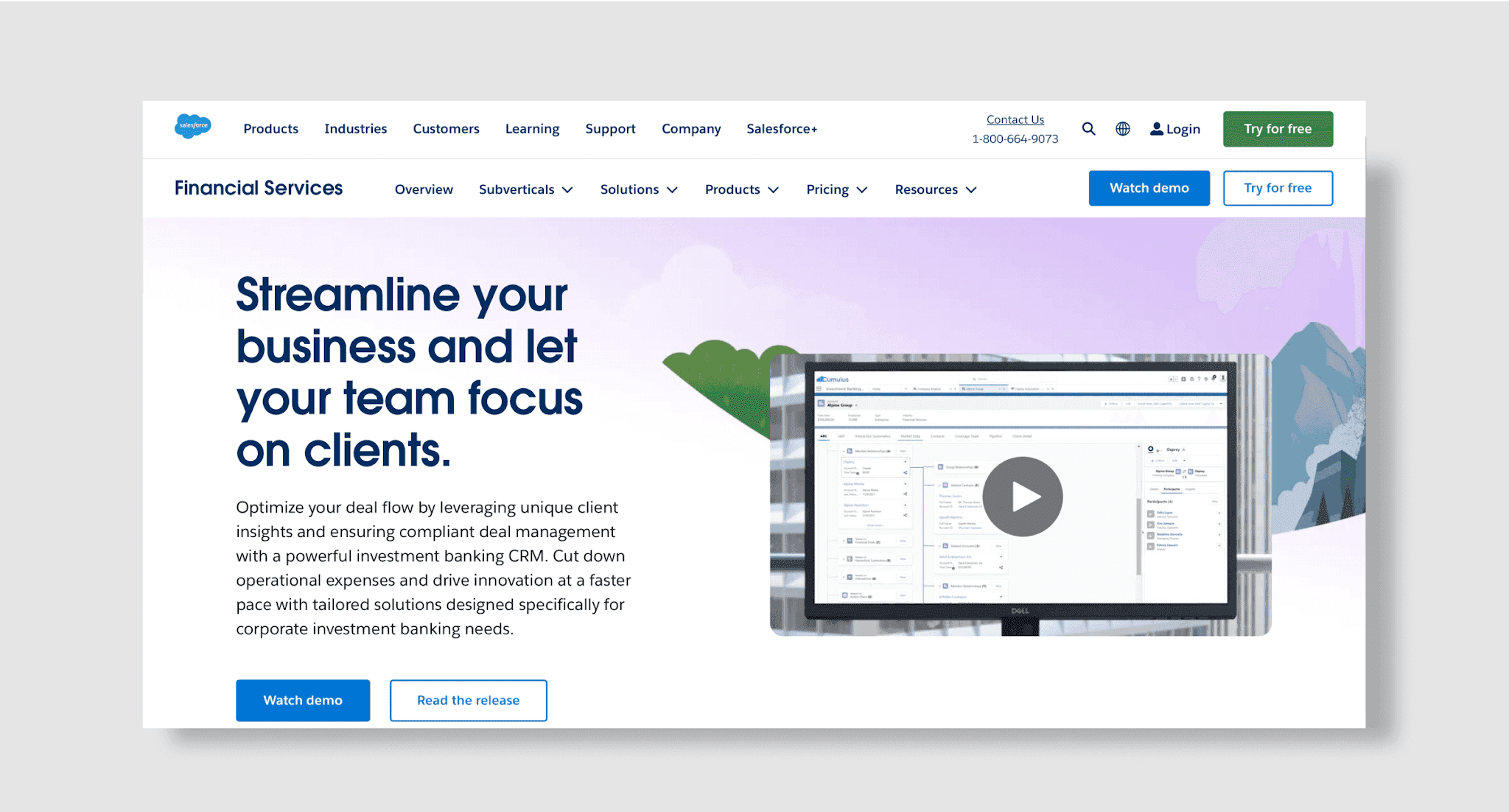
Salesforce remains one of the most recognized CRMs, catering to businesses of all sizes with a suite of features and cloud-based solutions.
Key features:
Einstein AI insights: Leverage predictive analytics, lead scoring, and automated recommendations to drive sales.
AppExchange ecosystem: Access thousands of integrations and add-ons to expand CRM capabilities.
Custom reporting: Create detailed dashboards and analytics for real-time business intelligence.
Enterprise scalability: Support global teams and intricate organizational structures.
Pros:
Deep customization and automation capabilities.
Advanced analytics and reporting options.
Strong integrations with collaboration tools like Slack.
Cons:
Can be expensive, especially as you add users or require advanced features and support.
Technical setup and configuration often require IT support.
Interfaces can be cluttered and complex for new or non-technical users.
No access to full deal data, investor portfolios, and company news tracking.
Lack of capabilities for fund and portfolio management.
Use cases/ideal users:
Large enterprises needing scalability and AI-driven insights.
Price:
Plans start at $25 per user/month; advanced features and add-ons push costs much higher.
5. Pipedrive
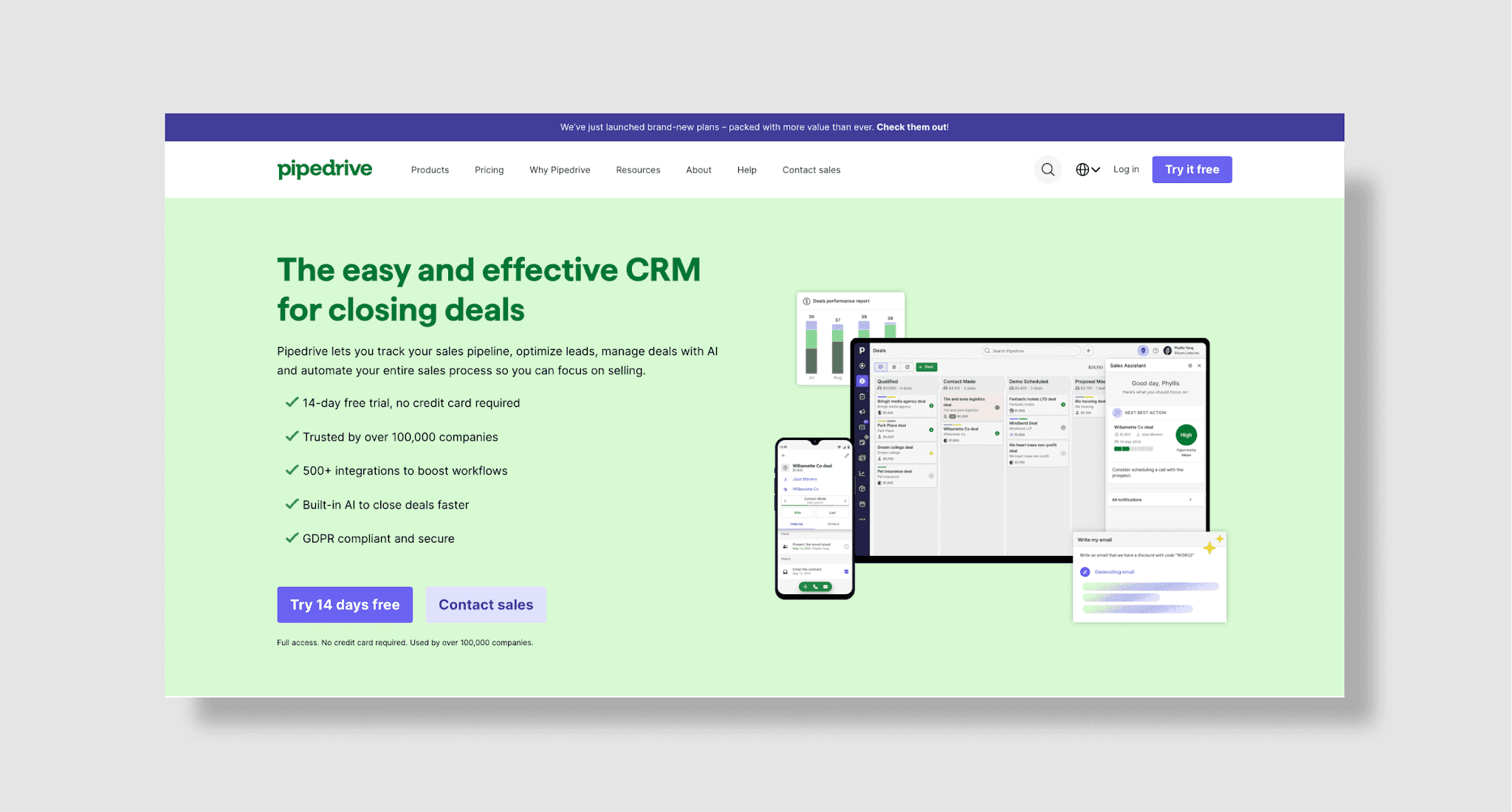
Pipedrive is a sales-focused CRM that helps businesses organize leads, track deals, and manage their sales pipelines.
Core features:
Visual pipeline management: Access a customizable interface for moving deals through sales stages.
Contact and lead management: Store and organize contacts and companies in one place.
Workflow automation: Automate repetitive tasks like follow-ups, notifications, and assignments.
Reporting and dashboards: Monitor performance with customizable sales dashboards and reports.
AI sales assistant: Get personalized tips and reminders to optimize sales activities.
Integrations: Connect with over 400 apps, including email, calendar, and marketing tools.
Pros:
Easy to use, with a clean and intuitive interface.
Quick data import and setup for new users.
Flexible pricing plans to suit different team sizes and budgets.
Cons:
Many advanced features, like lead generation and enhanced reporting, come with extra costs or premium plans.
Limited in-depth relationship mapping and no native support for investor or portfolio management.
No company news tracking or AI-driven pre-meeting insights.
Not designed for fund management or enterprise opportunity workflows.
Use cases/ideal users:
Sales teams that need a simple way to manage leads and deals.
Small to medium businesses that prioritize sales management over relationship intelligence.
Price:
Starts at $14/user/month.
Add-ons for lead generation, web forms, live chat, and more are available at an extra cost.
6. Zoho CRM
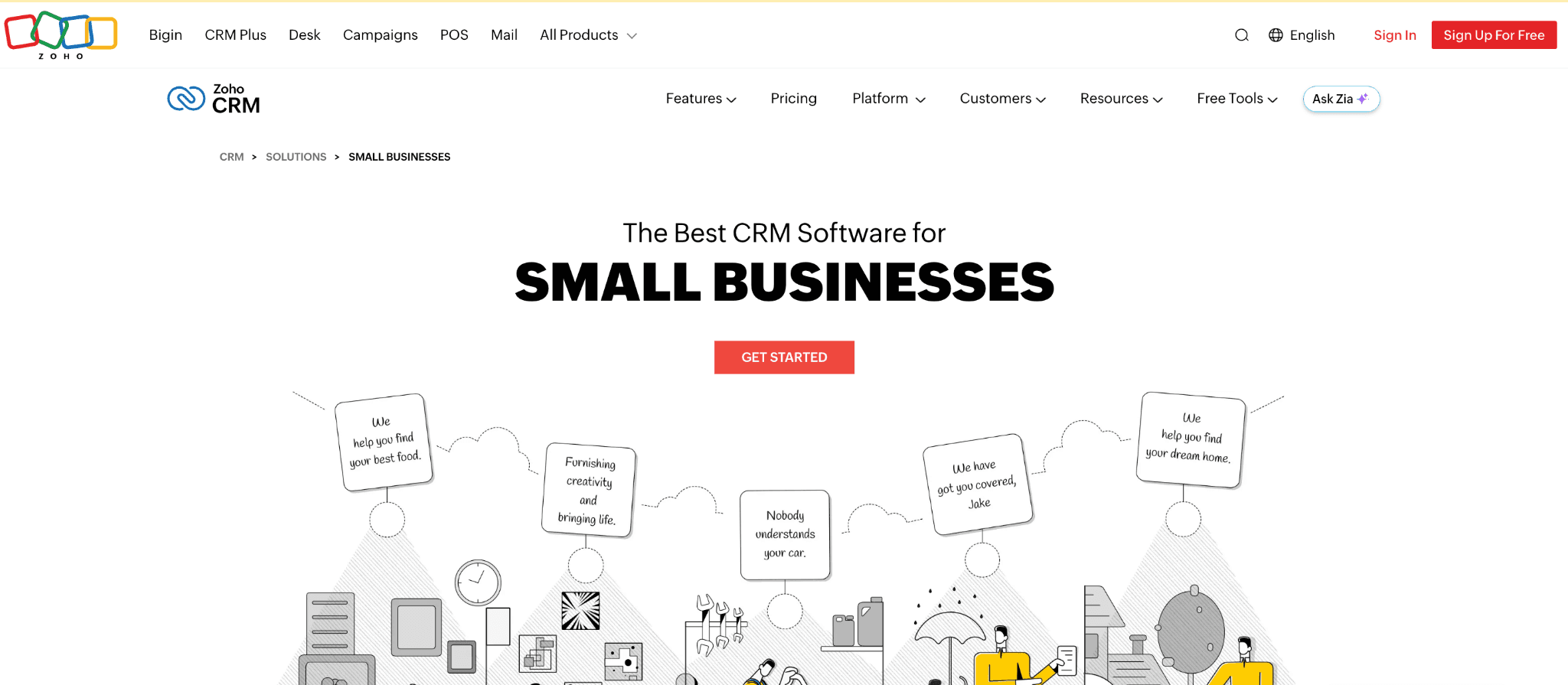
Zoho CRM is a cost-effective CRM platform designed for growing businesses that need sales, marketing, and customer support tools in one ecosystem.
Key features:
Sales automation: Automate lead assignments, follow-ups, workflows, and repetitive sales tasks.
Zia AI assistant: Access AI-powered lead scoring, predictions, and workflow suggestions.
Omnichannel communication: Manage customer conversations across email, phone, live chat, and social media.
Custom dashboards and reporting: Build detailed reports and analytics dashboards for pipeline visibility.
Integrations: Connect with the wider Zoho ecosystem and third-party business applications.
Pros:
Affordable pricing compared to HubSpot
Wide range of built-in business apps
Strong customization capabilities
Good automation for SMBs
Cons:
The interface can feel cluttered for first-time users
Advanced setup may require technical configuration
Some reporting and AI capabilities are limited to higher-tier plans
Use cases/ideal users:
SMBs looking for an affordable all-in-one CRM
Teams already using other Zoho apps
Businesses needing flexible automation on a budget
Price:
Starts at $14/user/month and can go as high as $52/user/month for features like enhanced analytics and additional data processing capabilities.
7. Freshsales
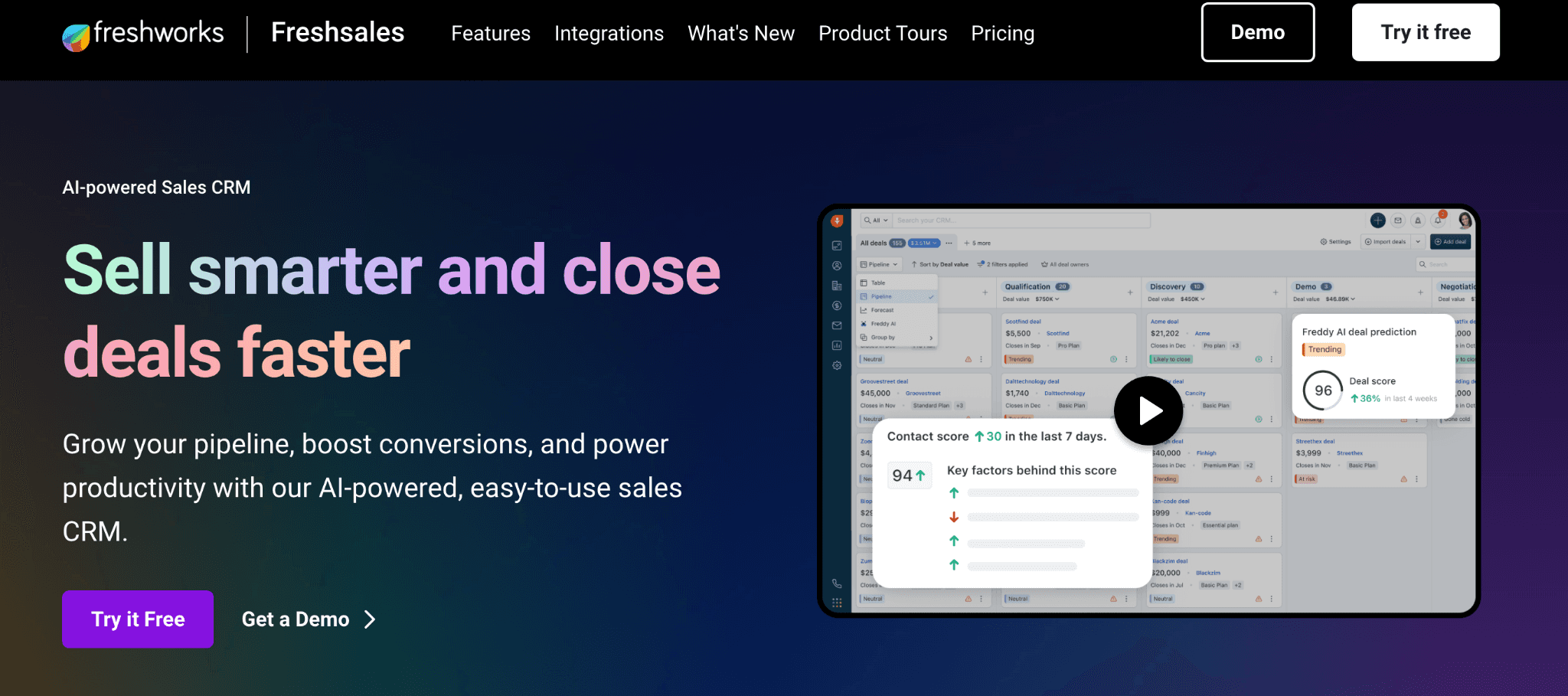
Freshsales is a sales-focused CRM from Freshworks designed to help teams streamline pipelines, automate outreach, and manage customer relationships from a single platform.
Key features:
AI-powered lead scoring: Prioritize leads using engagement and behavioral insights.
Built-in communication tools: Access phone, email, and chat directly within the CRM.
Workflow automation: Automate lead assignments, follow-ups, and sales activities.
Sales pipelines: Track opportunities and deal stages through customizable visual pipelines.
Reporting and analytics: Monitor team performance and pipeline health with built-in dashboards.
Pros:
Easy-to-use interface with fast onboarding
Built-in communication tools reduce dependency on third-party apps
Affordable pricing for small and mid-sized teams
Good balance of sales automation and usability
Cons:
Limited enterprise scalability
Fewer advanced integrations than Salesforce
Less suitable for complex enterprise relationship management
Use cases/ideal users:
Sales teams and SMBs looking for an easy-to-use CRM with built-in communication features
Price:
Free plan available; paid plans start at $9/user/month
8. Monday CRM
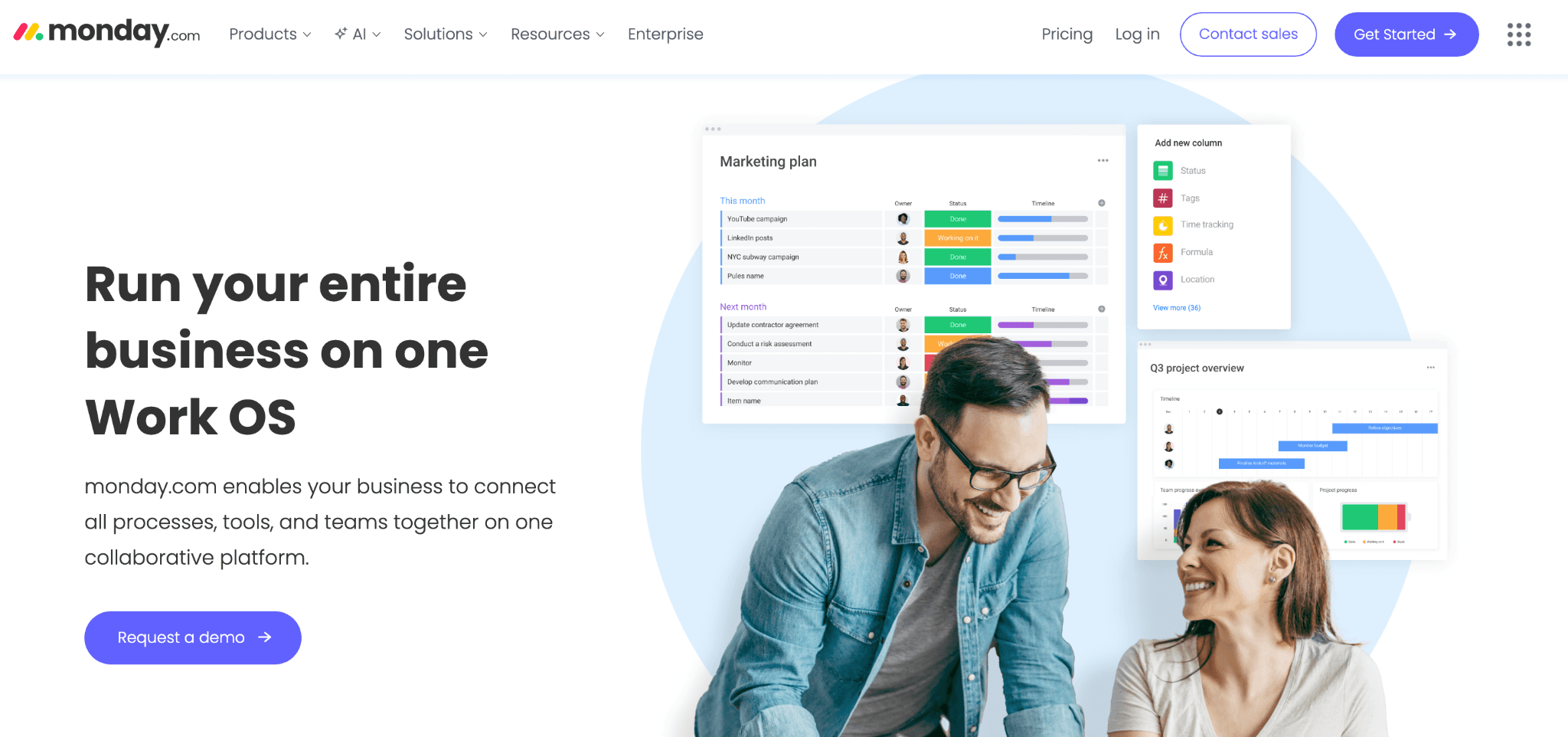
Monday CRM stands out as a HubSpot alternative if you’re looking for a collaborative CRM platform. It focuses on visual workflow management, sales tracking, and team coordination. It emphasizes flexibility and ease of use for growing teams.
Key features:
Custom sales pipelines: Build and manage pipelines tailored to your sales process.
Workflow automations: Automate notifications, assignments, and repetitive tasks.
Visual dashboards: Track deals, activities, and performance with customizable views.
Collaboration tools: Coordinate across teams with shared boards, comments, and task management.
Multiple workflow views: Switch between Kanban, calendar, table, and timeline views.
Pros:
Highly visual and intuitive
Easy setup with minimal technical expertise required
Flexible workflow customization for different team structures
Cons:
Less advanced relationship intelligence
Can become expensive as teams scale
Limited deep CRM functionality compared to enterprise CRMs
Use cases/ideal users:
Collaborative sales and operations teams seeking flexible workflow management
Price:
Starts at $12/user/month
9. 4Degrees
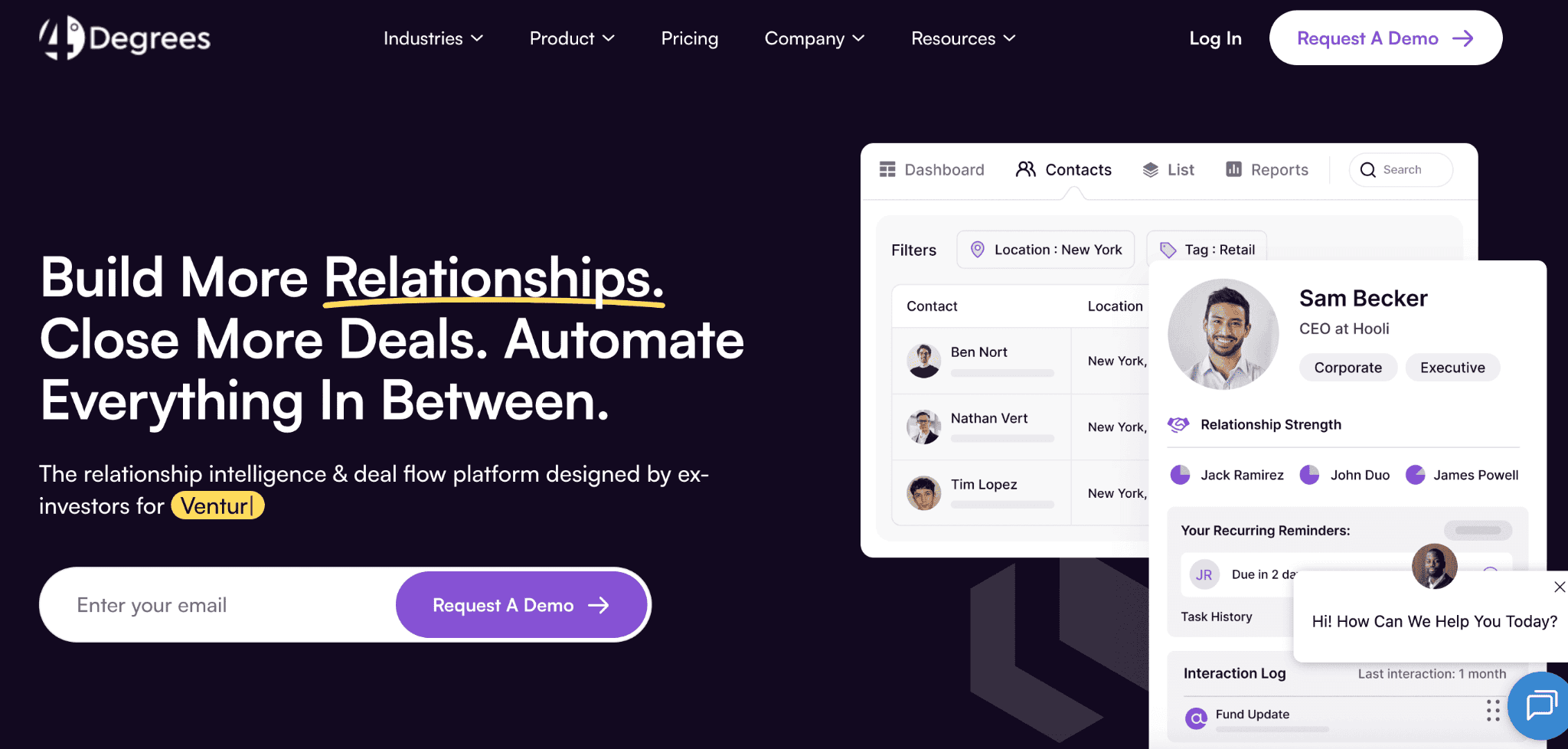
4Degrees, as a HubSpot alternative, positions itself as a relationship intelligence CRM designed primarily for venture capital, private equity, and relationship-driven teams.
Key features:
Relationship intelligence: Track interactions and relationship strength across your network automatically.
Deal flow management: Organize pipelines, investment opportunities, and relationship activity in one workspace.
Email and calendar syncing: Capture meetings, emails, and touchpoints automatically for better visibility.
Warm introduction tracking: Identify shared connections and paths to key decision-makers.
Reporting and analytics: Monitor deal activity, sourcing efforts, and relationship engagement through dashboards.
Pros:
Built specifically for relationship-driven industries
Automated activity tracking reduces manual data entry
Helpful visibility into network connections and warm introductions
Simple and focused interface for deal teams
Cons:
Limited company prospecting and external market intelligence capabilities
Lacks deeper portfolio and fund management functionality
Fewer customization options compared to more flexible CRMs
Can become expensive for smaller teams as usage scales
Use cases/ideal users:
Venture capital, private equity, and business development teams focused on relationship-driven deal sourcing
Price:
Custom pricing based on team size and requirements.
Check out our detailed 4Degrees review to see whether it’s the right fit for your business.
10. Copper
Businesses operating within Google Workspace can consider replacing HubSpot with Copper CRM. Copper CRM focuses on simplicity, automation, and seamless Gmail integration.
Key features:
Google Workspace integration: Sync directly with Gmail, Google Calendar, and Google Drive.
Pipeline management: Track deals and opportunities through customizable sales stages.
Task automation: Automate reminders, follow-ups, and workflow actions.
Contact management: Store customer interactions and communication history in one place.
Reporting dashboards: Monitor sales activity and team performance through visual reports.
Pros:
Native Google Workspace experience
Easy adoption for Gmail users
Clean interface and minimal setup required
Cons:
Limited functionality outside the Google ecosystem
Less scalable for enterprise use
Fewer advanced analytics tools
Use cases/ideal users:
Google Workspace-based businesses and smaller sales teams seeking simplicity
Price:
Starts at $9/user/month
11. Insightly
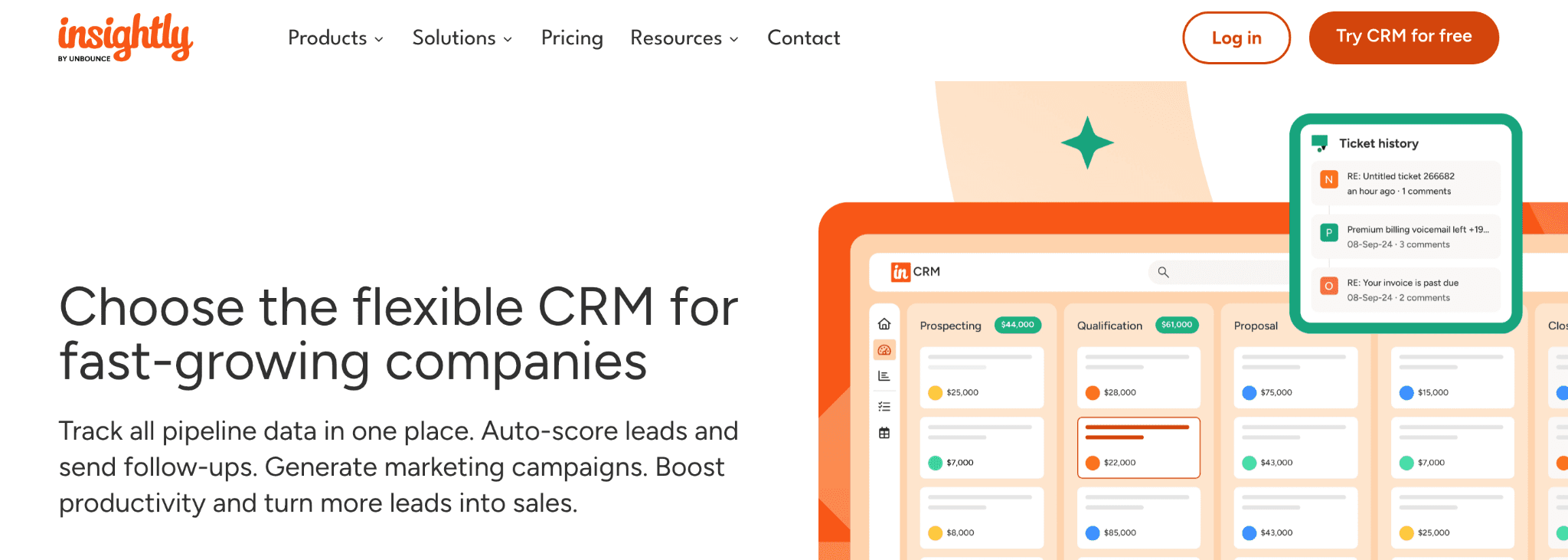
Insightly combines CRM and project management functionality, making it useful for businesses managing post-sale delivery workflows.
Key features:
Lead and opportunity management: Track leads, contacts, and deals across the sales pipeline.
Project management: Convert closed deals directly into delivery projects and tasks.
Workflow automation: Automate repetitive business processes and approvals.
Email tracking: Monitor customer communication and engagement activity.
Reporting and dashboards: Access pipeline, project, and performance analytics.
Pros:
Combines CRM and project management capabilities
Good visibility into post-sale workflows
Easy relationship and task tracking
Strong workflow automation for SMBs
Cons:
Interface feels dated in some areas
Limited advanced AI capabilities
Customization flexibility is lower than Salesforce or Attio
Reporting options can feel restrictive for larger teams
Use cases/ideal users:
Service-based businesses and agencies managing both sales and project delivery
Price:
Starts at $29/user/month
12. Keap
Keap is built for small businesses that want CRM, invoicing, email automation, and appointment scheduling in one platform.
Key features:
Marketing automation: Create automated email campaigns and customer follow-ups.
Appointment scheduling: Manage bookings and meeting reminders directly within the platform.
Invoicing and payments: Send invoices and collect payments without external tools.
Sales pipeline management: Track opportunities and customer interactions across the sales cycle.
Contact management: Store customer details, activities, and communication history.
Pros:
Strong automation for small businesses
Built-in payments and invoicing
Useful for managing repeat customer communication.
Good fit for service-based businesses.
Cons:
Higher starting price
Limited enterprise scalability
The interface can feel overwhelming initially
Use cases/ideal users:
Small businesses, consultants, and service providers seeking an all-in-one business automation
Price:
Starts at $299/month for up to two users
13. Zendesk Sell
Zendesk Sell is another HubSpot alternative focused on helping teams improve pipeline visibility while staying closely connected with customer support operations.
Key features:
Sales pipeline management: Track deals, leads, and opportunities through customizable pipelines.
Built-in communication tracking: Manage calls, emails, and texts from within the CRM.
Lead and contact management: Organize customer information and interaction history.
Reporting and analytics: Access sales dashboards and forecasting tools.
Zendesk integration: Connect sales and support workflows within the Zendesk ecosystem.
Pros:
Strong alignment between sales and customer support teams
Useful communication tracking capabilities
Useful for customer-facing teams
Cons:
Limited deep customization
Advanced analytics require higher tiers
Not built for highly complex enterprise workflows
Use cases/ideal users:
Customer-facing sales teams or teams already using Zendesk products
Price:
Starts at $19/user/month.
What To Look for in a HubSpot Alternative
The right CRM needs to check a lot of boxes, and what works best for one organization might not fit your specific needs. So, when evaluating alternatives, consider these essential factors to ensure your CRM will drive growth and efficiency:
Relationship mapping: Integrate emails, meetings, LinkedIn, and other platforms to visualize important connections and uncover paths to key decision-makers.
Privacy and data security: Set granular permissions for confidential information while enabling collaboration.
Automated data enrichment: Eliminate manual entry and keep records accurate and up to date in real time.
Portfolio and fund management: Track assets, use AI scoring, and predict future fundraises and relationship health to harness new opportunities and beat the competition.
Integration ecosystem: Seamlessly connect your CRM with tools across your tech stack, including email, calendar, and marketing platforms.
Collaboration and knowledge sharing: Make it easy for teams to access and share data, boosting productivity and communication for decision-making.
Scalability and customization: Adapt your CRM to your workflows with custom fields and dashboards.
User experience and support: Help teams get started quickly with intuitive interfaces and guided onboarding, as well as ongoing support as your business evolves.
Why Rings AI Is the Standout HubSpot Alternative
HubSpot is a recognizable name in marketing automation, but it lacks many of the advanced features today’s relationship-driven businesses need for scalability. That’s where Rings AI stands out, providing in-depth network intelligence, integrations, and AI-powered insights to help you uncover new connections in your market.
Going beyond basic contact management, Rings AI offers unmatched access to deal data and real-time company news, so you’re always equipped with the information you need to land your next big client or investor.
Ready to supercharge your CRM capabilities? Book a demo to see how Rings AI compares.