
CRM data enrichment is supposed to make your CRM more useful. In practice, many teams end up with the opposite. More fields. More records. More tools. And still, the same questions are hard to answer.
Teams enrich their CRM with contact data, company details, and third-party attributes. On paper, the system looks complete. In reality, it still feels empty. You know who someone is, but not why the relationship matters, what was discussed last, or how the context has changed over time.
That gap is the problem. Enrichment has been treated as a data exercise instead of a usability one. The focus stays on filling in blanks, not on making relationships easier to understand and act on. As a result, teams spend more time managing data and less time using it.
This article takes a practical look at CRM data enrichment. What it actually means, the tools teams commonly use, where those tools fall short, and what truly makes CRM data useful over time. Especially for teams managing long-lived relationships, which is the problem Rings.ai is built to solve.
What is CRM Data Enrichment?
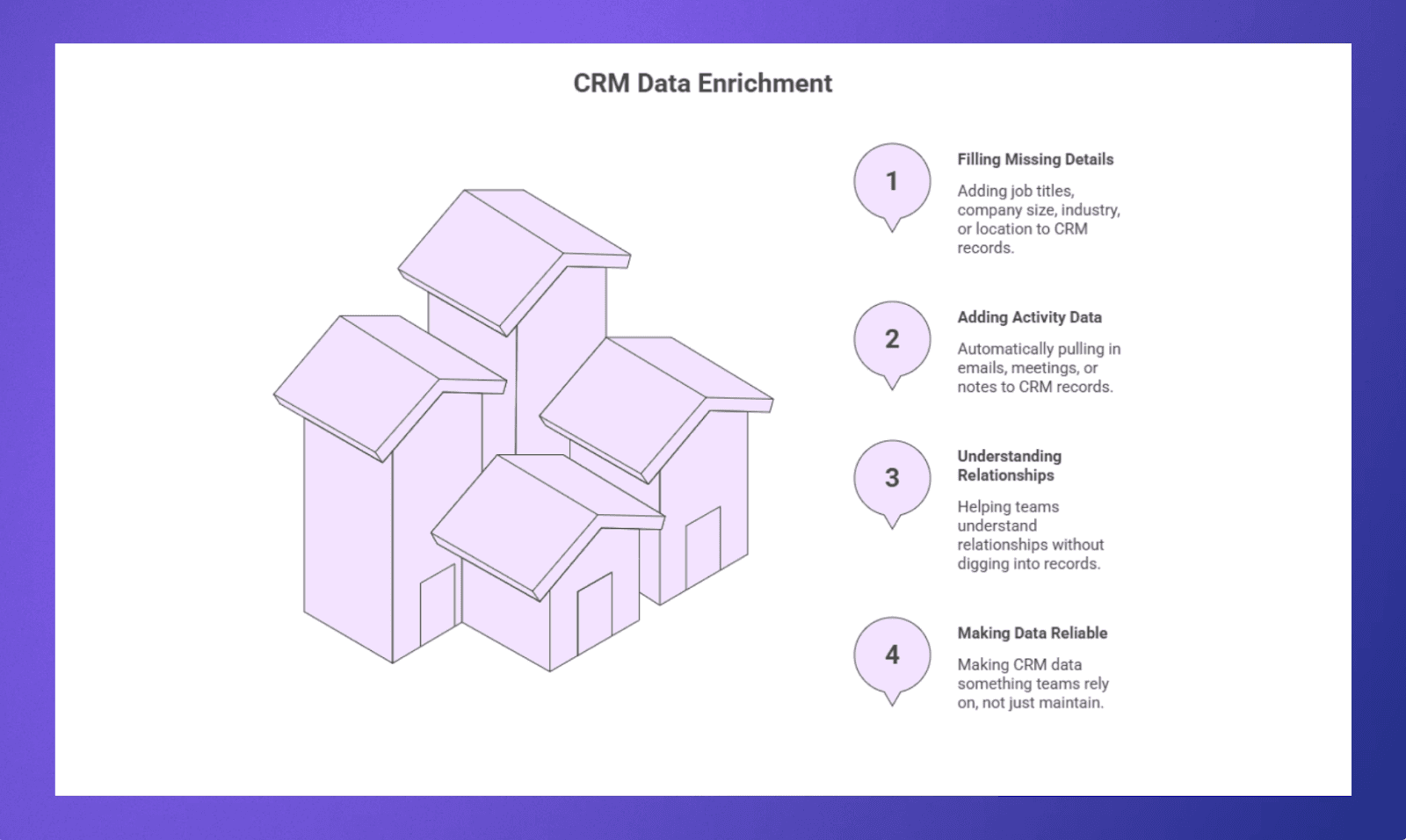
CRM data enrichment is the process of adding information to existing CRM records to make them more useful.
In most teams, this means filling in missing details like job titles, company size, industry, or location. Sometimes it includes activity data, such as emails, meetings, or notes pulled in automatically. The goal is simple. Reduce guesswork and make records easier to understand at a glance.
Useful enrichment goes further than adding fields. It helps you understand a relationship without digging. It makes history visible, decisions easier to trace, and ownership clear. When enrichment does that, CRM data becomes something teams rely on, not just maintain.
Common CRM Data Enrichment Tools and Their Limits
Most enrichment tools add surface-level data. That helps with completeness, but it rarely improves understanding. Below are common options teams evaluate, and where each tends to fall short.
ZoomInfo
Adds contact and company attributes at scale.
Limit: Static third-party data goes stale and says nothing about relationship history.
Clearbit
Fills firmographic and demographic fields.
Limit: Explains who someone is, not why the relationship matters.
Apollo
Combines enrichment with outbound workflows.
Limit: Optimizes for volume, often adding noise instead of clarity.
Cognism
Provides compliant contact data for regulated markets.
Limit: Field-based enrichment without ongoing context.
HubSpot
Enriches records through native activity tracking and integrations.
Limit: Data stays tied to lifecycle stages, not long-lived relationships.
Affinity
Surfaces relationship signals from activity.
Limit: Context is often constrained to active deals.
People.ai
Auto-captures activity for reporting.
Limit: Built for analytics, not durable relationship memory.
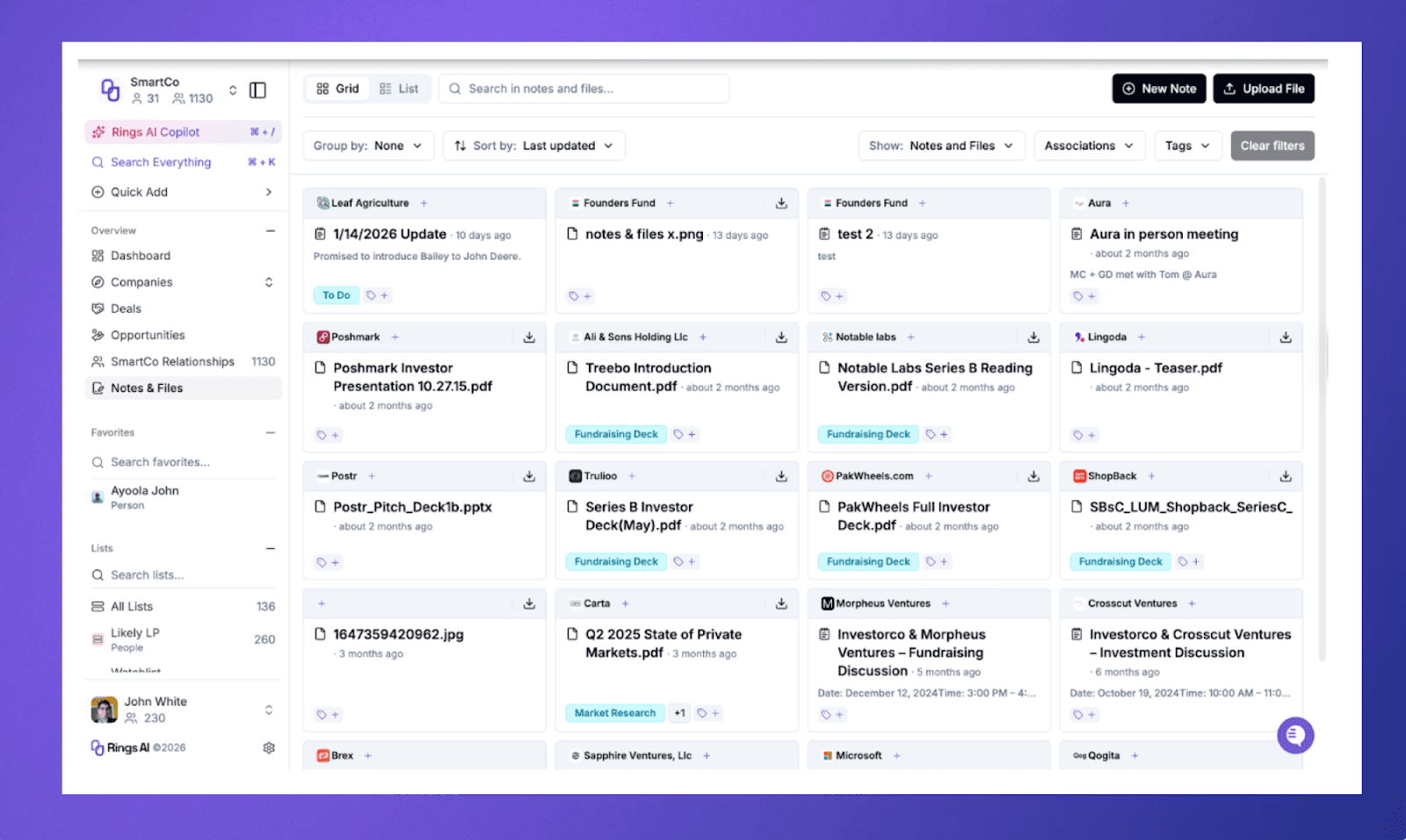
Relationship enrichment is useful when it shows connection strength, activity, and priority, not just filled-in contact fields.
Why Enrichment Tools Alone Don’t Fix CRM Data
Most enrichment tools focus on adding more data, not improving understanding. Over time, that creates fuller records but more noise. Teams spend extra time sorting through attributes without gaining clarity on what actually matters.
The core issue is context. Static fields cannot explain why a relationship exists, how it has evolved, or what changed since the last interaction. As data volume grows, usability often declines. Research from MIT Sloan Management Review shows that adding more data without improving how it is interpreted increases cognitive load and reduces decision quality.
This is why enriched CRMs still feel hard to use. Without continuity and shared context, teams fall back on memory and side notes. Approaches that emphasize relationship history and visibility, like relationship mapping, tend to hold up better than field-heavy enrichment alone.
More data does not fix a CRM. Better context does.
What Actually Makes CRM Data Useful Over Time
CRM data stays useful when it reflects how relationships evolve, not just how records are filled.
What matters most is continuity. When emails, meetings, notes, and decisions accumulate in one place, teams can understand context quickly without digging. Ownership stays clear. History does not reset when a deal pauses or a role changes. This is why systems designed around real workflows age better than those designed around fields and stages.
Usefulness over time also depends on friction. If data capture requires manual effort, quality drops. Automatic capture and a lightweight structure keep information current without forcing behavior change. This is a key reason teams that simplify systems before and during CRM implementation see higher long-term adoption.
When CRM data is easy to revisit and easy to trust, it becomes part of daily work instead of background noise.
Data Enrichment for Relationship-Driven Teams
For relationship-driven teams, enrichment is less about adding attributes and more about preserving memory.
These teams work across long timelines. Conversations pause and resume. Roles change. Context compounds. Data is only useful if it helps someone understand the relationship quickly and pick up where things left off. Field-level enrichment does not do that on its own.
What helps instead is shared visibility. Teams need to see interaction history, past decisions, and ownership without hunting across systems. This is especially true in environments with complex networks and ongoing deal flow, where relationships matter long before and long after a transaction.
CRMs fail when they focus on data capture instead of how people actually manage relationships and work together over time. For these teams, enrichment only works when it reduces friction and increases clarity. Anything else becomes noise.
How Rings AI Enriches CRM Data Through Context
Rings AI approaches data enrichment differently. Instead of adding more third-party fields, it focuses on preserving and surfacing relationship context as work happens.
Rings AI captures emails, meetings, notes, and interactions automatically and ties them to people and companies over time. That creates continuity. Relationships do not reset when a deal pauses or a role changes. Context stays intact and easy to revisit.
This approach reflects what CRMs were originally meant to support: ongoing relationships, not just stored attributes or static records. By enriching data through real usage instead of manual entry, Rings AI keeps information current without adding noise or extra work.
Want to see how Rings.ai keeps CRM data useful over time? Book a demo.
Learn more about XRM vs CRM.