
Private equity is one of the hardest parts of finance to learn from blogs, podcasts, or social media alone. The best investors build their edge by studying how great deals were sourced, how firms created value after acquisition, and why some transactions failed.
That is why nearly every top private equity and venture capital investor has a reading list. Executives at firms like Blackstone, KKR, Bain Capital, Carlyle, and Sequoia often recommend books that combine three things:
Real deal stories
Practical investing frameworks
Lessons on leadership, negotiation, and value creation
The books below rank highly on Goodreads and Amazon and are some of the most respected and frequently recommended reads in private equity.
1. King of Capital by David Carey and John E. Morris
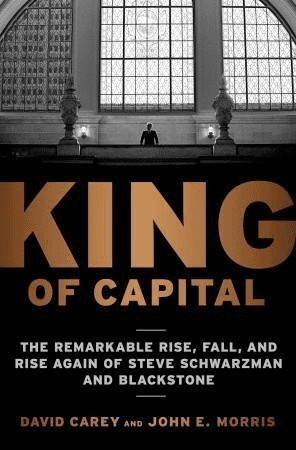
If you read only one book about private equity, start here.
King of Capital tells the story of how Steve Schwarzman and Pete Peterson built Blackstone from a small advisory firm into one of the largest private equity firms in the world. The book walks through the rise of leveraged buyouts, the evolution of private equity after the 1980s, and the way Blackstone approached risk, dealmaking, and scale.
More importantly, it explains how modern PE firms think. You see how relationships, timing, access to capital, and operational discipline matter far more than simply buying a company cheaply.
Many managing directors and partners at buyout firms recommend this book because it gives readers a practical understanding of how the industry actually works behind closed doors.
Why read it: Best for understanding the history and mindset of modern private equity.
Ratings: Goodreads 4.0/5 | Amazon 4.4/5
2. Barbarians at the Gate by Bryan Burrough and John Helyar
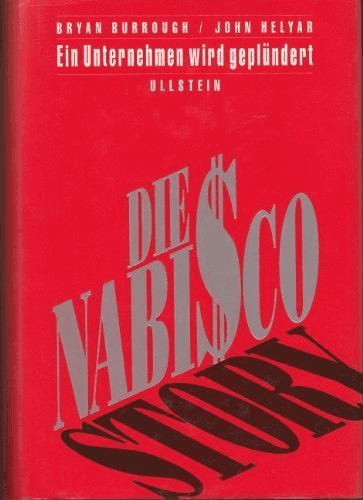
No list of private equity books is complete without Barbarians at the Gate.
The book covers the famous leveraged buyout of RJR Nabisco in the 1980s, one of the biggest and most dramatic deals in financial history. While the story is entertaining, it is also deeply educational. It shows what can happen when ego, leverage, competition, and weak governance collide.
Private equity investors often recommend this book because it illustrates both the power and danger of dealmaking. You learn how buyouts are structured, how bidders compete, how investment banks influence deals, and why incentives matter.
Many senior investors still consider it the best narrative ever written about a leveraged buyout.
Why read it: Best for learning how LBOs work in practice.
Ratings: Goodreads 4.3/5 | Amazon 4.6/5
3. What It Takes by Stephen A. Schwarzman
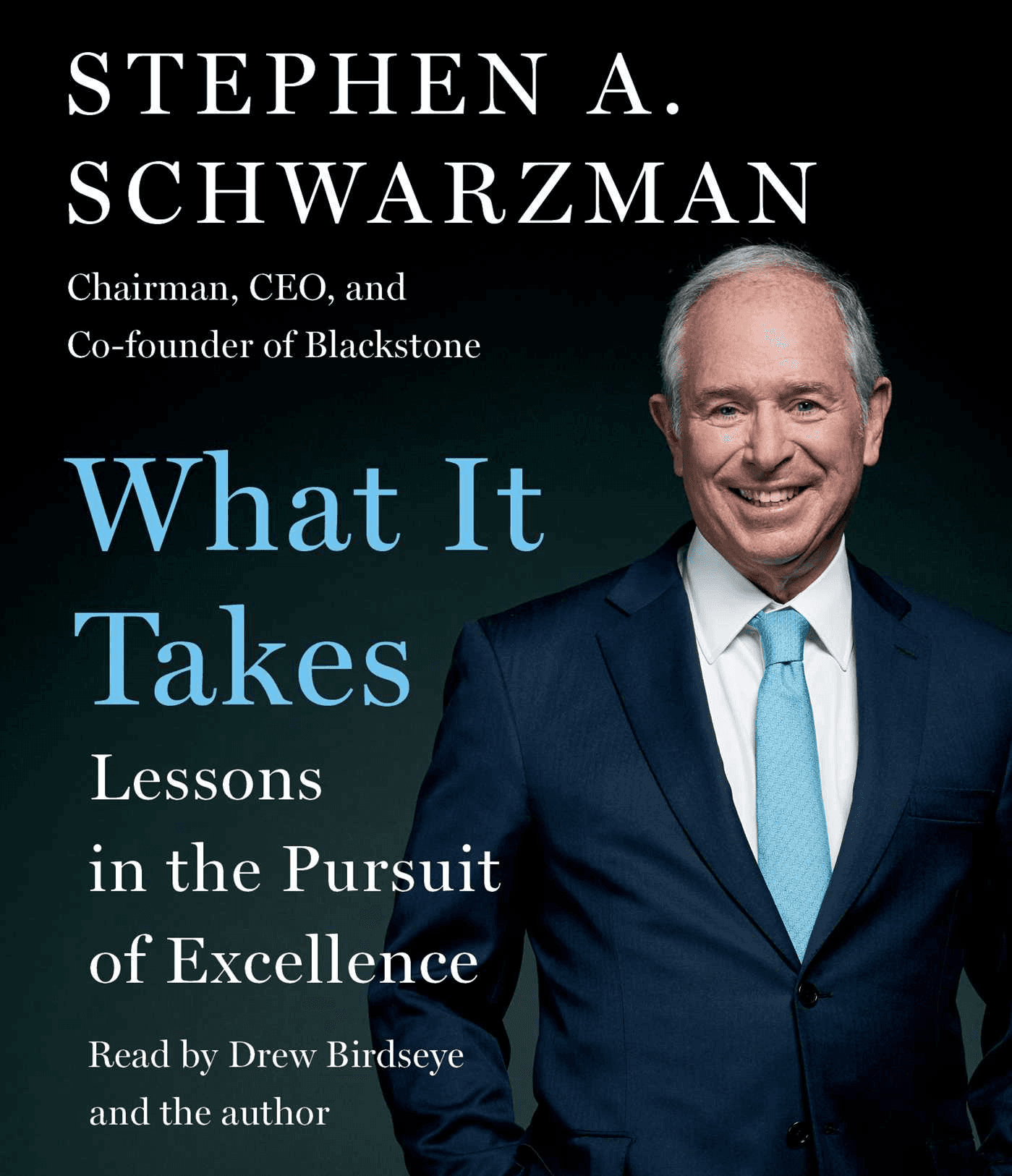
Blackstone co-founder Stephen Schwarzman wrote this memoir to explain how he built one of the world's most successful private equity firms.
Unlike King of Capital, which focuses on the history of Blackstone, What It Takes is more personal. Schwarzman writes about decision-making, hiring, negotiation, leadership, and how he approached major deals.
The book is especially useful for investors who want to understand what separates great investors from average ones. Schwarzman repeatedly returns to the same themes: prepare obsessively, move quickly when conviction is high, and never underestimate the importance of relationships.
Many private equity partners recommend this book to younger investors because it provides both career advice and lessons on building an investment firm.
Why read it: Best for leadership, decision-making, and building conviction.
Ratings: Goodreads 4.1/5 | Amazon 4.5/5
4. The Masters of Private Equity and Venture Capital by Robert Finkel and David Greising
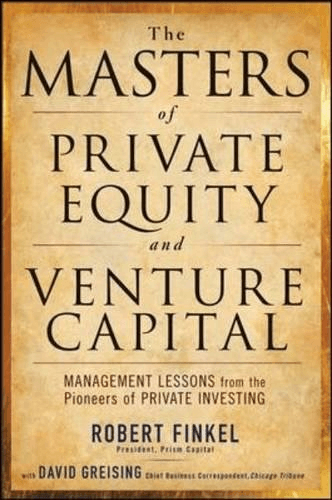
This book is often recommended by managing partners because it is one of the few books that lets you hear directly from legendary investors.
The authors interview some of the pioneers of private equity and venture capital, including leaders from firms like KKR, Carlyle, Forstmann Little, and Clayton, Dubilier & Rice.
Instead of theory, you get first-hand insights into how top investors:
Evaluate deals
Build management teams
Improve portfolio companies
Think about risk
Decide when to sell
Several PE professionals recommend this book because it feels like sitting in a room with experienced investors and listening to them explain what actually matters.
Why read it: Best for practical wisdom from top investors.
Ratings: Goodreads 3.8/5 | Amazon 4.3/5
5. Mastering Private Equity by Claudia Zeisberger, Bowen White, and Michael Prahl
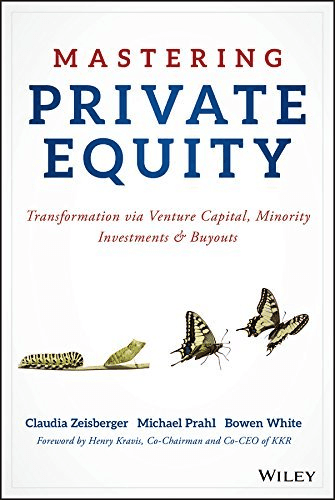
If you want a more technical and structured guide to private equity, this is probably the strongest book available.
Mastering Private Equity covers the entire lifecycle of an investment, including deal sourcing, due diligence, financial modeling, leveraged buyouts, value creation, and exit strategies.
The book is widely recommended by PE associates, MBA programs, and investment firms because it is detailed without becoming unreadable.
Henry Kravis of KKR wrote the foreword, and many investors describe it as the best all-in-one reference for understanding how private equity works from beginning to end.
This is not a story-driven book. It is more like a handbook that you can return to repeatedly during your career.
Why read it: Best for learning the full PE process from sourcing to exit.
Ratings: Goodreads 4.2/5 | Amazon 4.6/5
6. The Private Equity Playbook by Adam Coffey
Adam Coffey, a former CEO who worked with multiple private equity-backed companies, explains private equity from the perspective of the operator. Most PE books focus on investors. This one focuses on what happens after the deal closes.
Coffey explains how firms create value through better operations, add-on acquisitions, improved management, multiple expansion, and stronger systems and reporting.
The book is especially useful for investors who want to understand the operational side of private equity rather than only the financial side.
Operating partners and CEOs often recommend this book because it shows how good private equity firms turn ordinary businesses into much more valuable companies.
Why read it: Best for understanding post-acquisition value creation.
Ratings: Goodreads 4.0/5 | Amazon 4.5/5
7. Private Equity at Work by Eileen Appelbaum and Rosemary Batt

Most books about private equity are written by investors. This one takes a different view.
Private Equity at Work examines what happens to companies, employees, and industries after private equity firms take over. The authors argue that some PE firms create value, while others rely too heavily on cost-cutting and leverage.
Even if you disagree with the conclusions, this book is worth reading because strong investors need to understand both the strengths and criticisms of the industry.
Many institutional investors and limited partners recommend reading at least one book that challenges the standard private equity narrative.
Why read it: Best for understanding the risks and criticisms of private equity.
Ratings: Goodreads 4.0/5 | Amazon 4.5/5
8. Secrets of Sand Hill Road by Scott Kupor
While this is technically a venture capital book, many private equity investors still recommend it.
Scott Kupor, managing partner at Andreessen Horowitz, explains how investors think about deals, ownership, governance, fundraising, and exits.
The reason PE professionals like this book is that private equity and venture capital increasingly overlap. Many growth equity firms now invest in companies earlier, while many VC-backed businesses eventually become PE targets.
Understanding how venture investors think can help private equity professionals spot opportunities earlier and work better with founders.
Why read it: Best for investors who want to understand the overlap between VC and PE.
Ratings: Goodreads 4.2/5 | Amazon 4.6/5
9. The Intelligent Investor by Benjamin Graham
Although it is not a private equity book, this classic appears on nearly every recommended reading list from top investors.
Warren Buffett, Seth Klarman, Howard Marks, and many private equity partners have all said that understanding value investing is essential.
The Intelligent Investor teaches the core principles behind good investing:
Think independently
Focus on intrinsic value
Protect against downside risk
Private equity is different from public market investing, but the mindset is similar. The best PE investors still look for mispriced businesses, strong cash flow, and a margin of safety.
Why read it: Best for developing the mindset of a disciplined investor.
Ratings: Goodreads 4.2/5 | Amazon 4.5/5
10. Margin of Safety by Seth Klarman
This book is extremely difficult to find and often sells for hundreds or even thousands of dollars. Yet it remains one of the most recommended books among private equity and hedge fund investors.
Klarman focuses on risk, downside protection, and buying assets below intrinsic value. His ideas strongly influence many PE firms because successful investing is often less about finding the perfect deal and more about avoiding bad ones.
This book is highly recommended because it teaches the importance of discipline during both good and bad markets.
Why read it: Best for learning how to think about risk and valuation.
Ratings: Goodreads 4.0/5 | Amazon 4.0/5
Which Book Should You Read First?
The best starting point depends on what you want to learn.
If you want to understand how private equity firms became powerful, read King of Capital.
If you want to learn how leveraged buyouts work, read Barbarians at the Gate.
If you want a practical handbook, start with Mastering Private Equity.
If you care most about operations and value creation, read The Private Equity Playbook.
If you want broader investing wisdom, begin with The Intelligent Investor.
A good sequence is:
King of Capital
Barbarians at the Gate
Mastering Private Equity
The Private Equity Playbook
What It Takes
That combination gives you the history, mechanics, and mindset behind successful private equity investing.
The best private equity investors are almost always relentless readers. They study great deals, failed deals, leadership decisions, and investing principles long before they make their own investment decisions. These books provide a shortcut to decades of experience from some of the industry's most successful investors.
Once you understand how top PE firms think, the next step is building the systems to put those lessons into practice.
See how Rings helps private equity firms manage relationships, deal flow, and investor intelligence. Book a demo today.