
CRM migration rarely starts because teams want something new. It starts because something feels broken. The CRM is slow. Data is unreliable. Context lives everywhere except the system that is supposed to hold it.
Most teams delay migration for as long as they can. They know what is coming. Weeks of cleanup. Arguments about fields. Lost notes. Confusion about ownership. Even when the migration technically works, trust often does not come with it.
The real risk is not moving data from one system to another. The real risk is losing relationship context along the way. Why a deal stalled. Why a founder mattered. Who owns a relationship now. When that context disappears, teams repeat conversations and make decisions with half the picture.
That is why so many CRM migrations fail quietly. The new system goes live, but people keep relying on memory, inboxes, and side notes. The CRM looks cleaner, but it does not feel safer to use. Over time, the same problems return, just in a different tool.
A good CRM migration is not about perfection. It is about continuity. It is about making sure relationships still make sense after the move. This guide walks through a practical, step-by-step approach to CRM migration in 2026, focused on preserving context, reducing risk, and avoiding the mistakes that force teams to migrate again later.
If your team is planning a CRM migration and wants to protect relationship context instead of rebuilding it later, book a demo and see how Rings AI works in a real workflow.
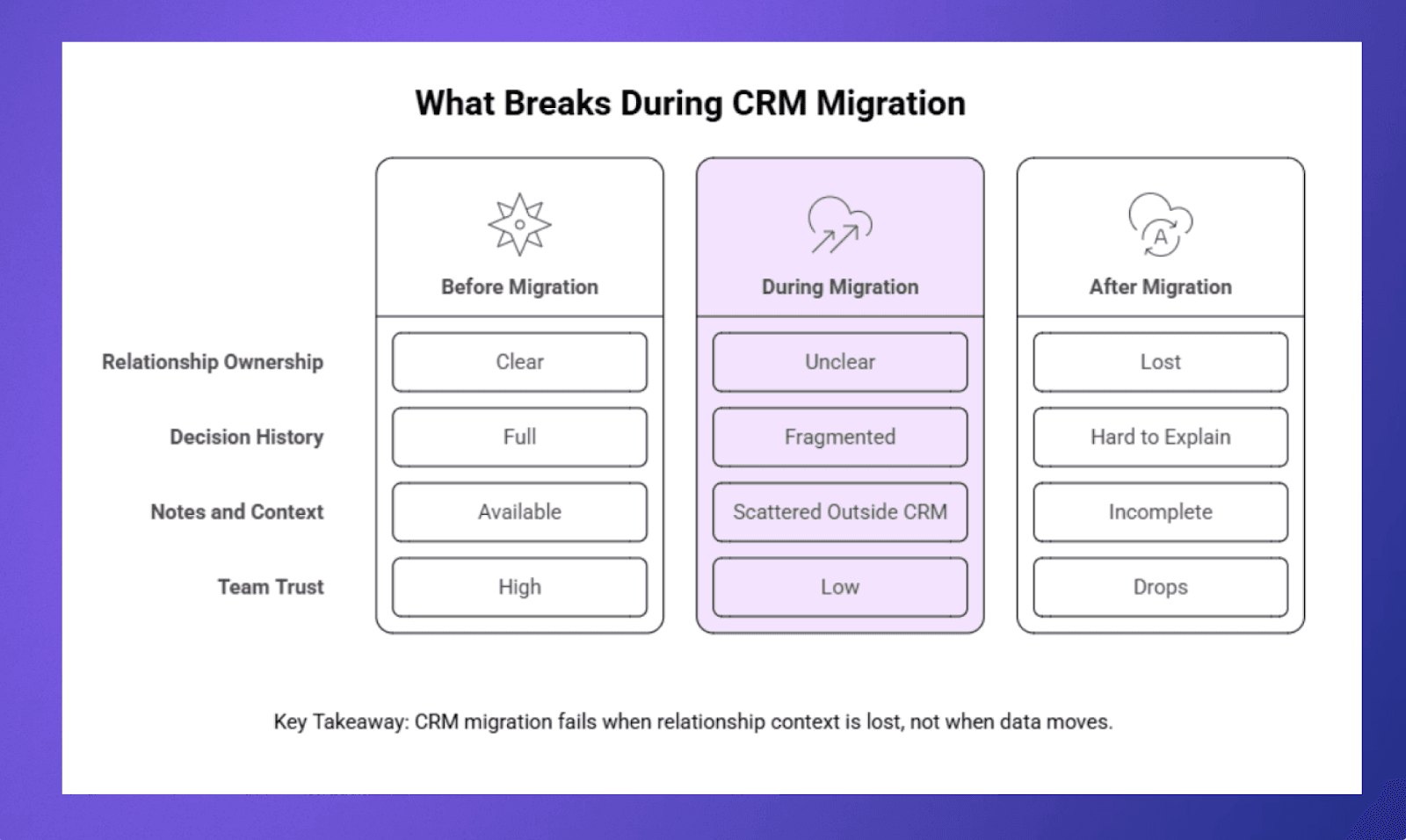
Step 1 - Decide Why You Are Migrating Before Choosing What to Migrate
Most CRM migrations begin with frustration.
Reports feel unreliable. The system feels noisy. People stop updating records because it no longer helps them do their work.
Migration becomes the obvious next step, even if no one has clearly defined what is actually broken. That is where teams get stuck. They jump straight into tools, data, and timelines without agreeing on why the migration is happening in the first place. Migration should be a part of a broader CRM strategy, not a one-time reset.
A new CRM may look cleaner, but if the same problems remain, missing context, unclear ownership, lost decisions, trust does not come back. It just shifts into a different system.
Before moving anything, you need clarity.
What information do you keep losing today?
What decisions are hard to reconstruct weeks later?
What relationships feel fragile because context is scattered?
A successful migration starts when you can answer those questions clearly.
If you cannot define what should be better after the move, no amount of cleanup or configuration will fix it.
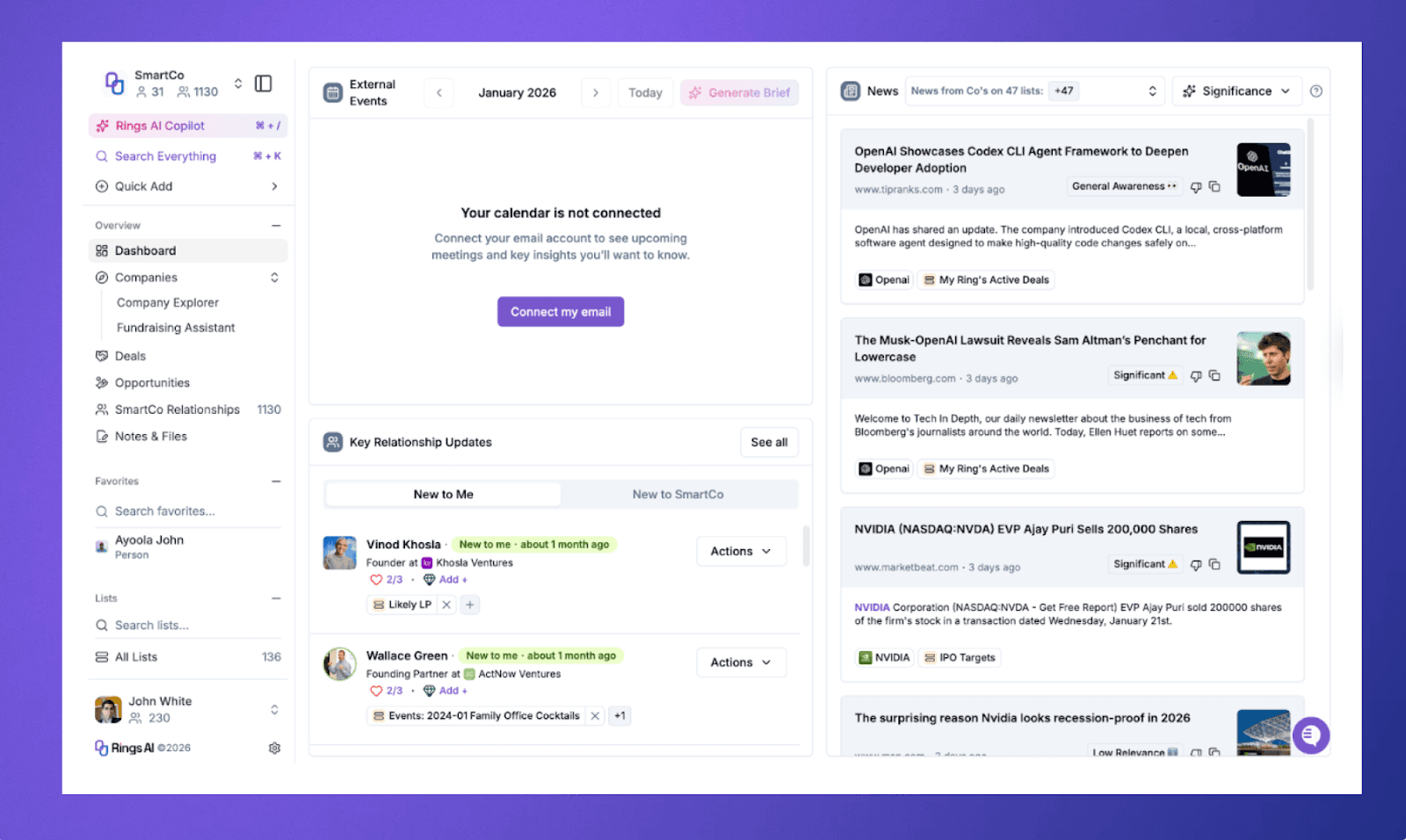
During CRM migration, teams risk losing shared visibility into relationships, updates, and ongoing context.
Step 2 - Identify the Relationship Context You Cannot Afford to Lose
Not all CRM data matters equally during migration.
When teams treat migration as cleanup, important relationship context is often lost along with outdated fields. Before moving anything, you need to be clear about what information must survive the transition.
Ask yourself:
What history would we need to understand this relationship later
Which decisions or pauses would be hard to reconstruct
Where does critical context live outside the CRM today
For relationship-driven teams, this context usually lives in notes, emails, meetings, and past decisions. When migration focuses only on structured fields, that meaning disappears. This is a common outcome of poor CRM data hygiene.
Clean data is not the same as useful data. A record can be accurate and still be unhelpful if it does not explain why a relationship exists or where it left off. Research from Gartner has shown that CRM value drops when systems prioritize structure over context.
Deciding what you cannot afford to lose tells you what needs full history, what can be summarized, and what can be left behind. If you skip this step, the migration will make those choices for you.
Step 3 - Audit Your Current CRM For Reality Versus Record
Before migrating, you need to see how your CRM is actually used, not how it looks.
Some records are opened daily. Others exist only for reporting. Important context often lives outside the system because teams do not trust what is inside it. Migrating everything without understanding this gap only recreates the same problems.
Look for gaps between what the CRM shows and how work really happens.
Ask:
Which records are used in day-to-day decisions
What information teams check manually because they do not trust the CRM
Where important context lives outside the system
This audit is about alignment. Research from Forrester has shown that CRM initiatives fail when systems are designed around process and reporting instead of how teams actually work day to day. When usage does not match reality, adoption and trust drop.
The goal is clarity. Know what should move with full history, what can be summarized, and what should not move at all.
Step 4 - Reduce Complexity Before Moving Any Data
Complexity is one of the biggest risks in CRM migration.
Over time, CRMs accumulate unused fields, custom objects, and workflows that reflect old decisions instead of current needs. Migrating all of that forward increases cost, slows adoption, and locks teams into the same problems they were trying to escape.
Before moving data, simplify.
Remove fields no one uses. Retire workflows that no longer reflect how work gets done. Focus on what teams actually rely on today, not what the system was designed to support years ago. This step alone can dramatically reduce migration effort and long-term friction.
Research from Bain & Company shows that technology transformations fail most often when organizations carry legacy complexity into new systems instead of redesigning for simplicity. Simplification before migration leads to higher adoption and better outcomes.
Reducing complexity also makes future change easier. When systems are lighter, teams adapt faster and rely less on perfect configuration.
Step 5 - Choose The Right Migration Approach For Your Team
Not every CRM migration needs a hard cutover.
Many teams assume migration means switching everything at once. That approach creates pressure, downtime, and risk, especially for teams managing long-running relationships. In practice, gradual transitions are often safer and more effective.
Choose an approach that matches how your team works.
Some teams run systems in parallel for a period. Others migrate core records first and layer in history over time. The goal is to keep work moving while the system changes, not to pause everything for a perfect handoff. This is especially important for teams with ongoing deal flow and relationships that cannot afford disruption.
Research from Prosci shows that phased change approaches lead to higher adoption and lower resistance than abrupt system switches, particularly in complex, relationship-driven environments.
Choosing the right migration approach reduces risk and gives teams time to adjust.
Step 6 - Protect Relationships During The Transition
Migration should not interrupt relationships.
During transitions, teams often lose track of who owns a relationship, what was discussed last, or why a conversation paused. That gap creates awkward follow-ups and forces people to rely on memory at the worst possible moment.
Protect continuity while systems change.
Make sure ownership stays clear. Keep the relationship history visible even if the records are moving. Give teams a shared view of who knows whom and where conversations left off. This is where approaches built around relationship mapping and long-lived deal flow hold up better than pipeline-only views.
Research from MIT Sloan Management Review shows that organizations lose trust and momentum during system transitions when relationship knowledge is fragmented or temporarily inaccessible. Preserving relational continuity reduces disruption and speeds recovery.
When relationships stay intact, migration becomes a background change instead of a front-line risk.
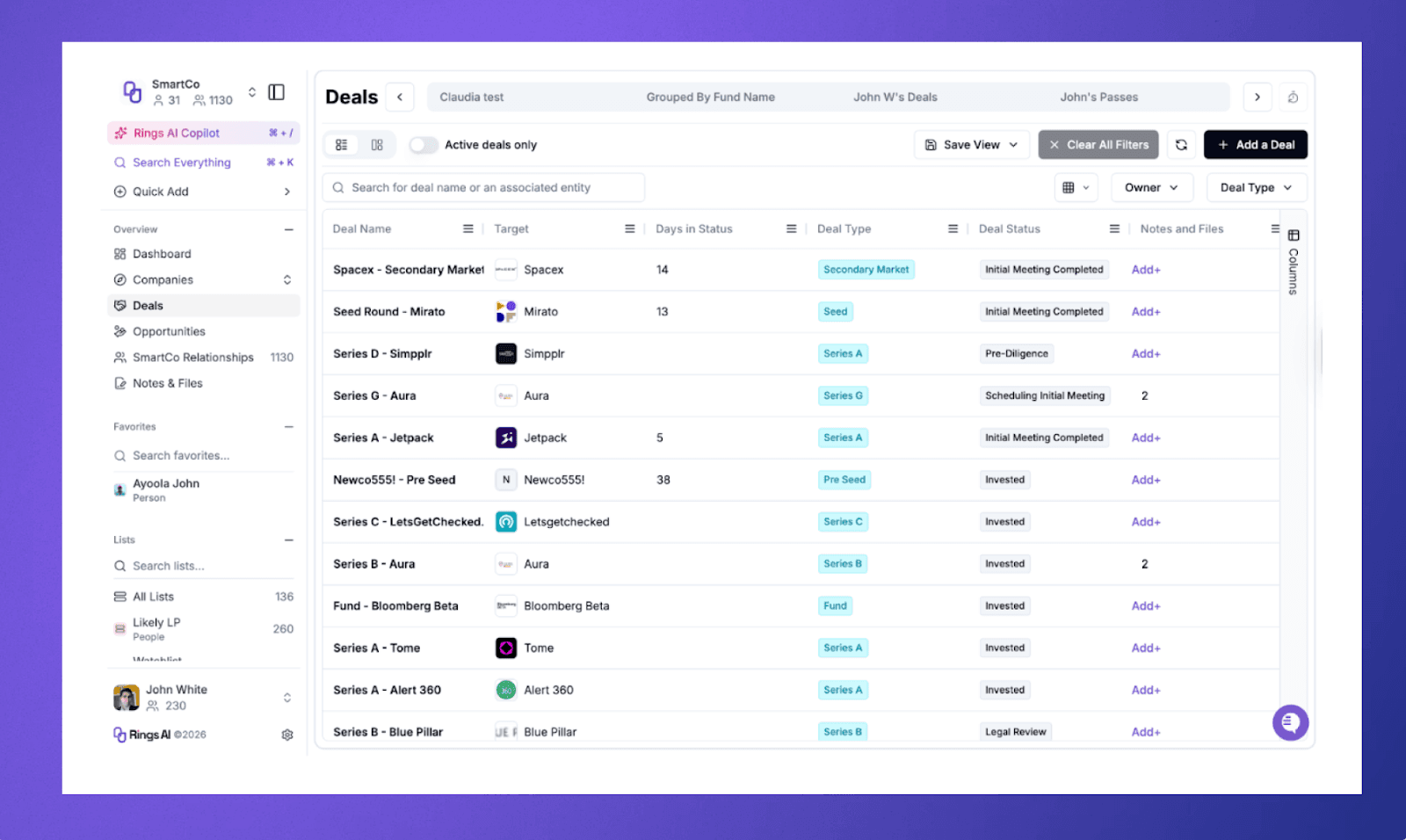
Protecting relationships during CRM migration means keeping ownership, history, and deal context visible throughout the transition.
Step 7 - Measure Success After Migration, Not Just Adoption
A CRM migration is not successful just because people log in.
Adoption metrics show activity, not trust. What matters is whether teams can understand relationships faster, make better decisions, and pick up conversations without starting over.
Measure outcomes that reflect real use.
Look for signals like clearer ownership, fewer side notes, faster context before meetings, and less reliance on memory. These are signs the system is actually helping, not just being used. This is also where regular reviews and strong CRM data hygiene make the difference between short-term adoption and long-term value.
Digital transformations succeed when success is measured by behavioral change and business impact, not system usage alone.
If success is defined only by completion, migration ends too early. When it is defined by clarity and trust, the system keeps improving long after the move.
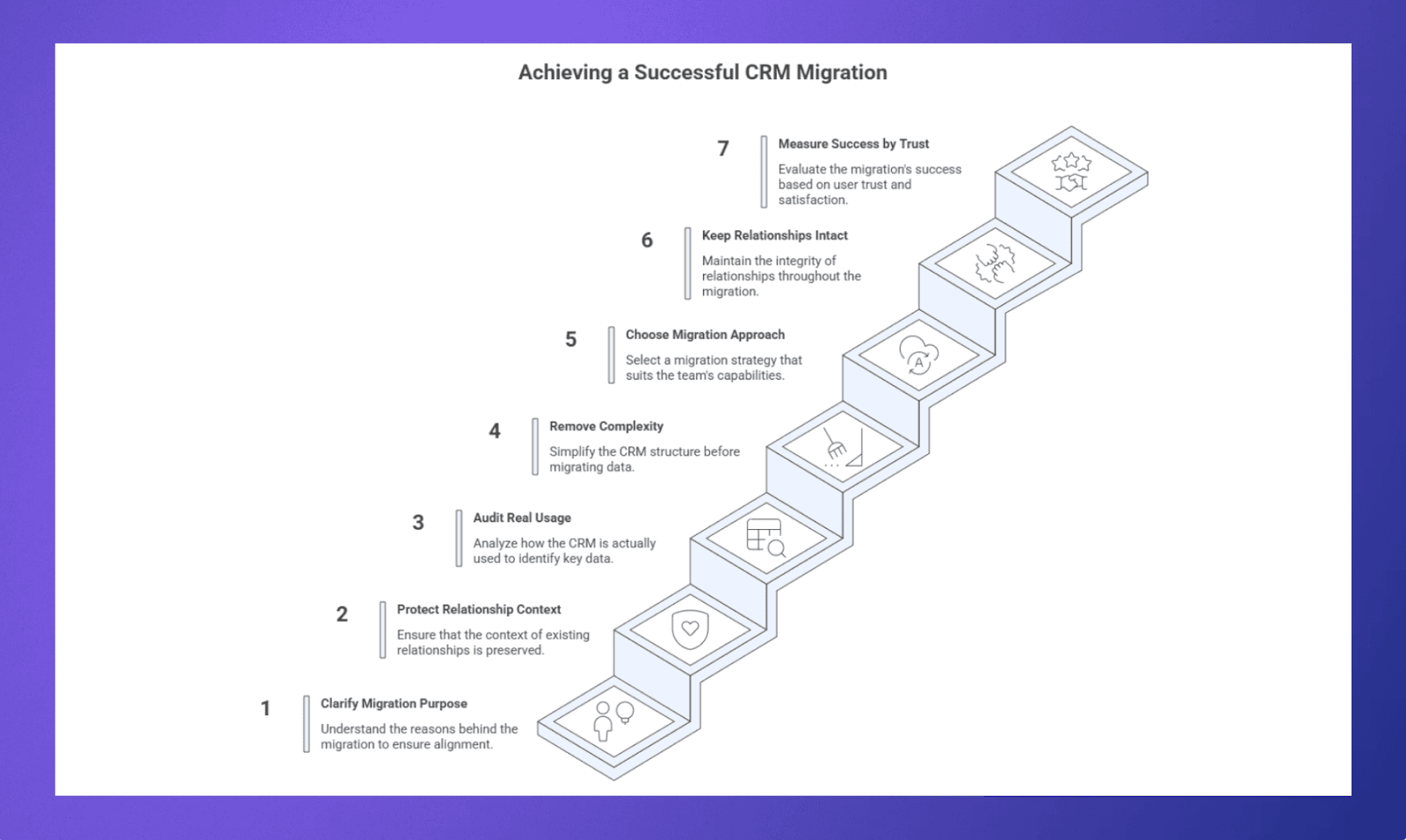
Achieving a Successful CRM Migration
Make CRM Migration Safer With Rings AI
Most CRM migrations fail quietly.
Data moves, but context disappears. Ownership blurs. Teams lose confidence in what they see and fall back on memory, inboxes, and side notes. The new system goes live, but relationships feel harder to manage than before.
Rings AI helps teams protect what matters during CRM migration. It keeps relationship context intact, makes ownership clear, and gives your team a shared view of who knows whom and why it matters. No forced cutovers. No rebuilding trust from scratch. Just continuity while systems change.
Book a demo and see how Rings AI works in a real CRM migration workflow.