
Investment banking runs on relationships and timing. The firms that consistently win and close mandates tend to be the ones that know exactly who in their network connects with the right buyer, seller, or sponsor at the right moment. A general-purpose CRM was never designed to handle that. It was built for linear sales funnels, not multi-stakeholder transactions that unfold over months or years with shifting priorities and strict confidentiality requirements.
That gap is why M&A-specific CRMs exist. These platforms are built around the realities of dealmaking: long relationship cycles, permissioned data access, buyer list management, deal pipeline tracking across multiple simultaneous mandates, and compliance.
What to Look For in an M&A CRM
Before comparing individual tools, it helps to understand which features actually matter to investment banking teams.
Deal tracking that maps to how bankers actually work
Most CRMs are built around sales pipelines with a linear progression: prospect, qualify, close. M&A deal flow doesn't work that way. A target you sourced two years ago might become relevant again after a sector shift. A relationship that's dormant for 18 months can resurface when a founder decides to explore a sale. The CRM needs to preserve context over time, not just flag what stage a deal is currently in.
The bare minimum for an IB-focused CRM: round-by-round deal history, company-level relationship tracking (not just contact-level), and the ability to log activity that doesn't expire or get buried after a deal closes.
Relationship intelligence, not just a contact database
There's a difference between storing contacts and understanding relationships. The former is what any spreadsheet can do. The latter means knowing which people on your team have the strongest connection to a target's CFO, or being able to quickly pull up the last three touchpoints before a pitch meeting.
This is where a lot of general-purpose CRMs fall down for investment bankers. They were designed for sales cycles, not for the kind of long-arc relationship management that drives deal flow in advisory work.
Low-friction data entry
Bankers don't update CRMs manually. If the system requires someone to log a call, record meeting notes, and tag a contact after every interaction, the data will be incomplete within weeks.
A CRM that does not sync emails and meetings creates gaps in reporting.
Look for systems that:
Sync two-way with Microsoft 365 or Google Workspace
Log emails to both contact and deal records
Capture meeting activity automatically
The tools that actually get used are the ones that surface information without someone having to go looking for it.
The Main CRM Options for Investment Bankers in 2026
1. Rings AI
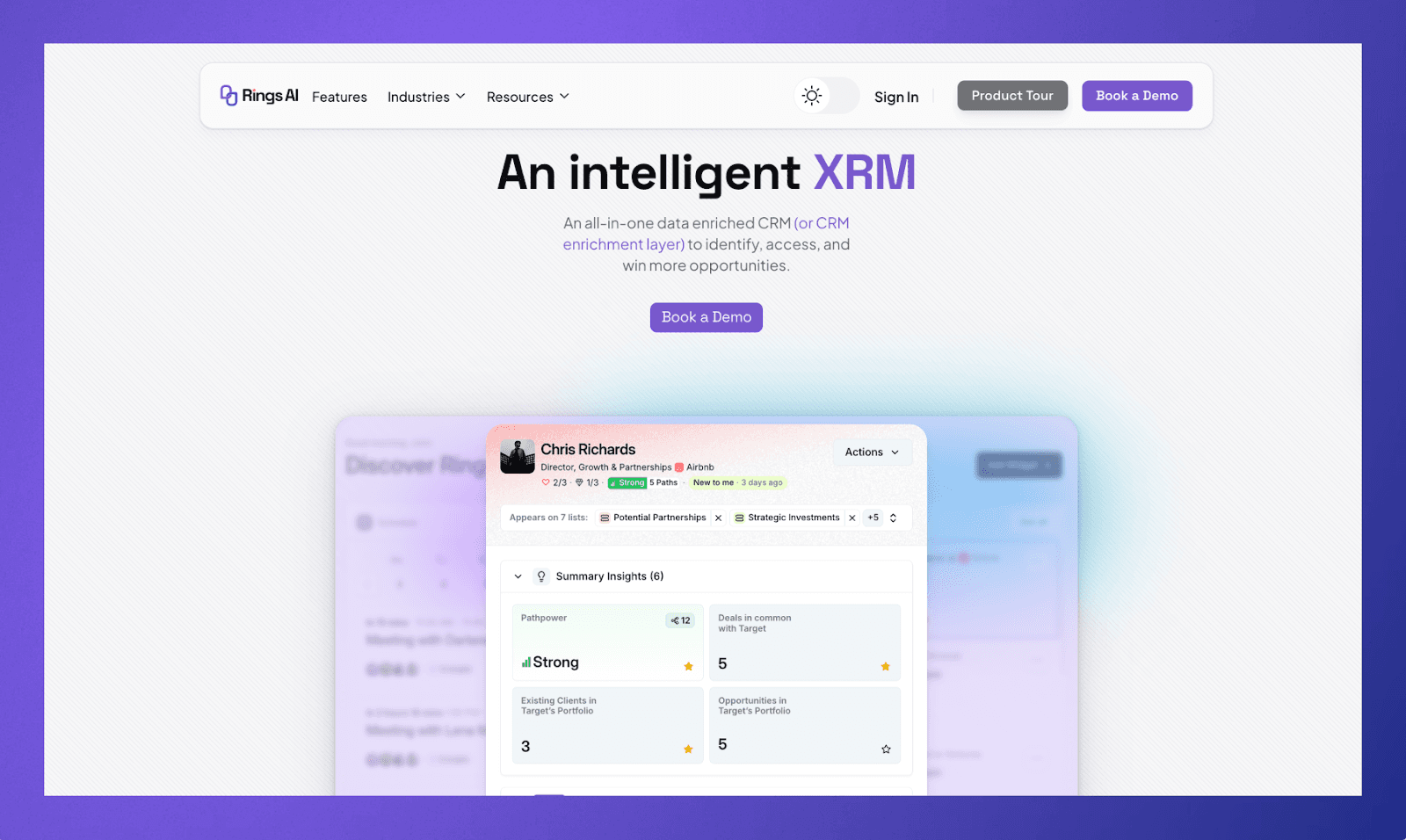
Rings AI was built specifically for investors and dealmakers, and that focus shows in how the product is structured. It's not a general-purpose CRM that was modified to fit finance use cases. The data model was designed around recurring relationships from the start, which matters when you're managing relationships that span years and multiple transactions.
Key features:
Scans both email and LinkedIn to map relationship strength across every person on your team, so you always know who has the warmest path to a contact
Let's you read your full email history with any person or company directly inside the platform, something most CRMs don't support at all
AI that can catch you up on any relationship using past emails, notes, and web research; useful before a call when you haven't spoken to someone in months
Generates full meeting prep documents using email threads, internal notes, market data, and recent news about the attendee and their company
Notes and files are fully searchable and AI-readable, so you can ask questions about your knowledge base instead of digging through folders
Multi-dimensional pipelines built for how investment processes actually work
100M+ data points from Crunchbase and other partners, matched automatically against your private relationship and deal data
What makes Rings AI different is how much it brings into one place. Most firms using other CRMs still rely on separate tools for note storage, market data, and email tracking. Rings AI replace all of that.
2. Affinity
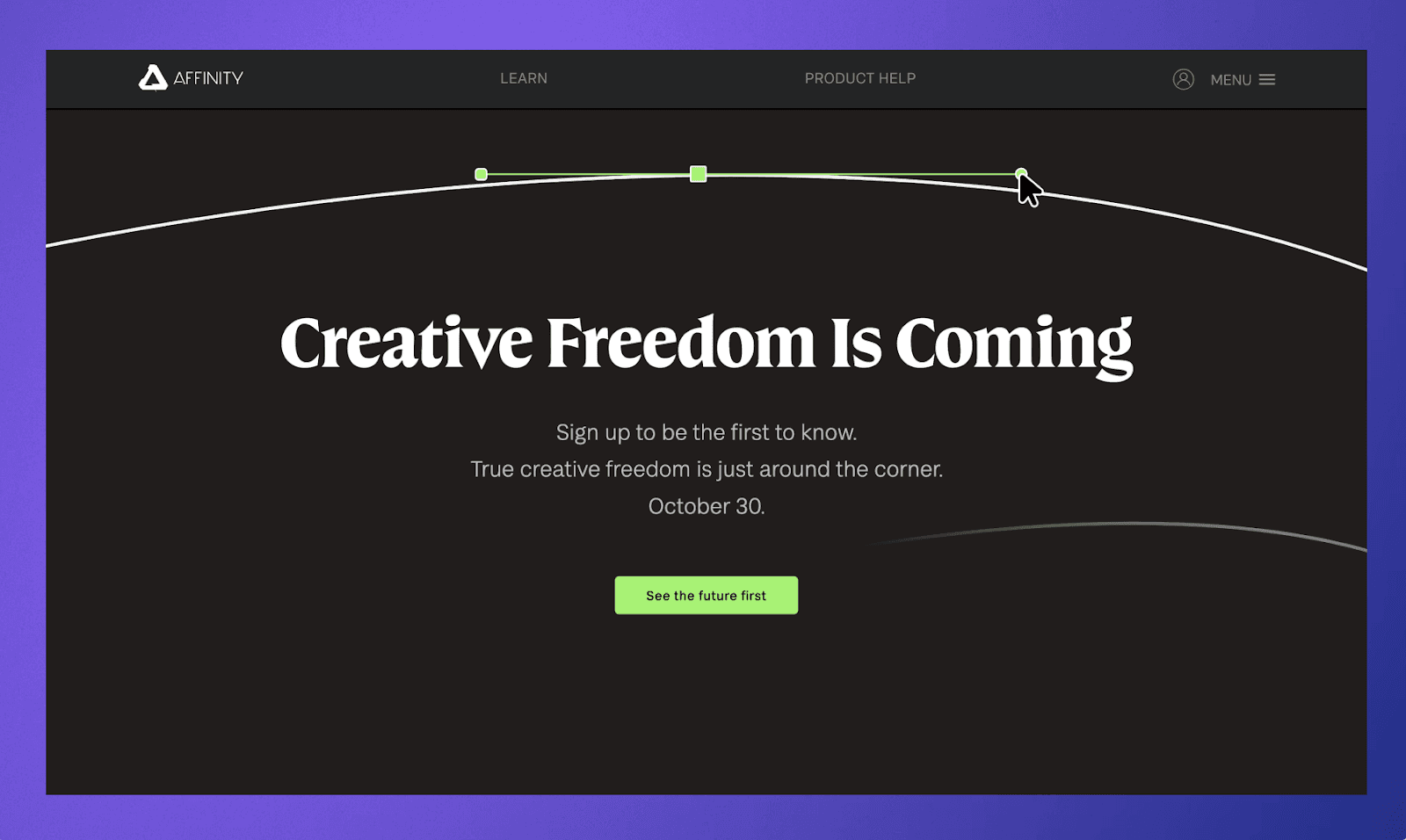
Affinity is a relationship intelligence CRM that focuses on automated data capture and network analysis. The platform syncs with your team's email and calendar to build and maintain contact records without manual entry. It then scores relationship strength based on interaction patterns to help identify warm introduction paths.
Key Features:
Automatic contact and company record creation from email and calendar activity
Relationship scoring based on interaction frequency, recency, and engagement patterns
Data enrichment from over 40 third-party sources for company and contact profiles
Deal pipeline management with customizable stages and reporting
Permissions and access controls for managing sensitive deal data across teams
Where Affinity has run into trouble is product momentum. The perception in the market has shifted over the past two years. Existing customers frequently cite frustration with slow feature development and a support experience that feels disconnected from how the product is actually used in practice. The AI capabilities added recently have been incremental rather than substantive.
3. DealCloud by Intapp
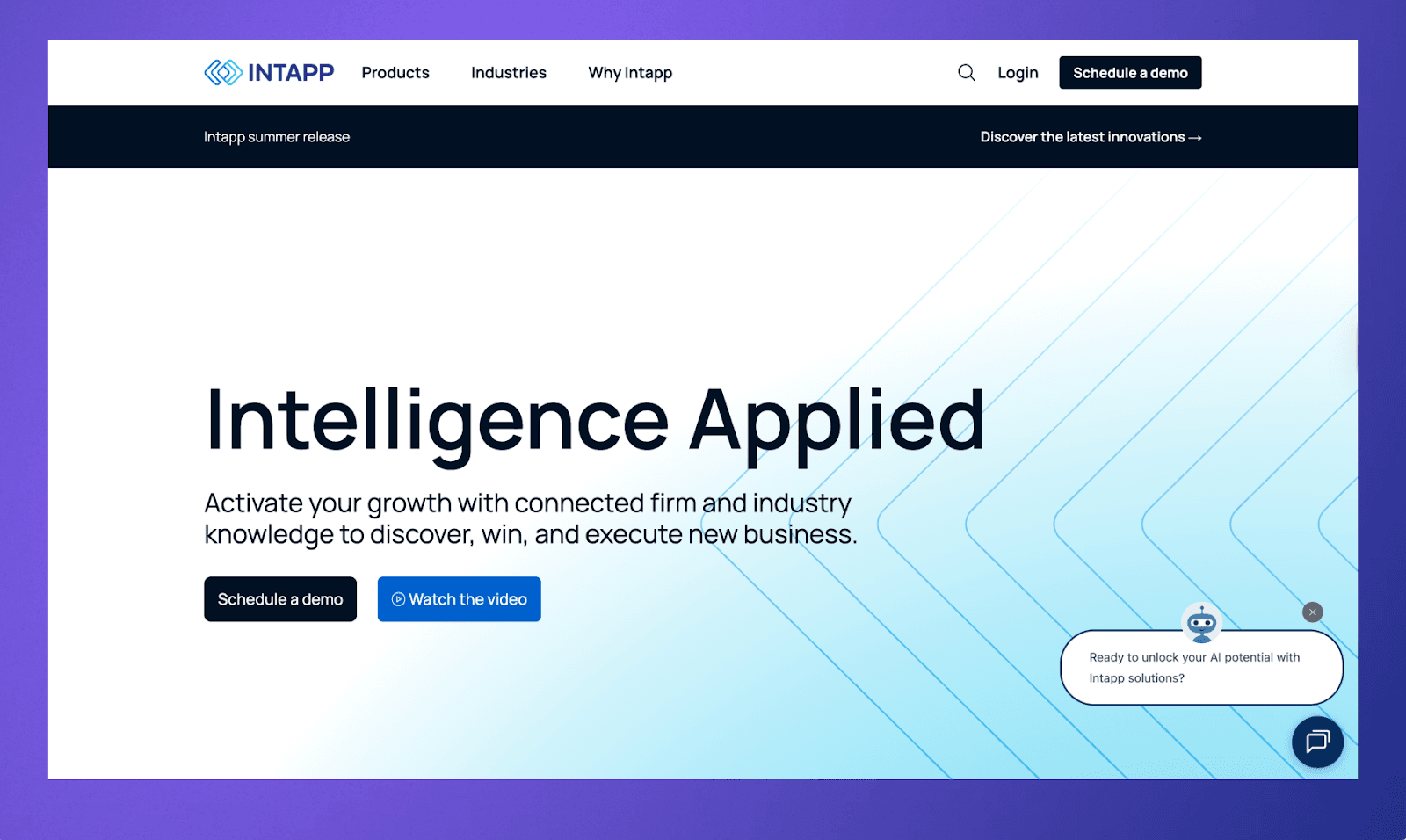
DealCloud CRM is widely used by middle-market and upper-middle-market investment banks. It functions as a combined deal management and relationship intelligence system, with deep customization options that allow firms to configure workflows, dashboards, and reporting to match their specific processes.
Its strengths include:
Conflict-of-interest checking built into the deal workflow
Integration with Microsoft 365 (Outlook, Excel, Word) and third-party data providers
Configurable pipeline views that support both buy-side and sell-side transactions
Mobile access for bankers working outside the office
The trade-off is implementation time. DealCloud's customization capabilities mean that onboarding can take several months, particularly for firms with complex or unusual processes. If your firm does enough volume to justify that investment and wants a platform that can scale into fund administration and compliance reporting, it makes sense to evaluate. If you're a 10-person M&A advisory shop that needs to move quickly, it's likely overkill.
4. 4Degrees
4Degrees is a CRM built for relationship-driven industries with a particular focus on VC and PE. It has relationship scoring, deal management, and email capture, and it's been around long enough to have a clear feature set. It maps connection strength across the entire firm and surfaces warm introduction paths to target contacts. The platform also includes deal pipeline management, task tracking, and reporting.
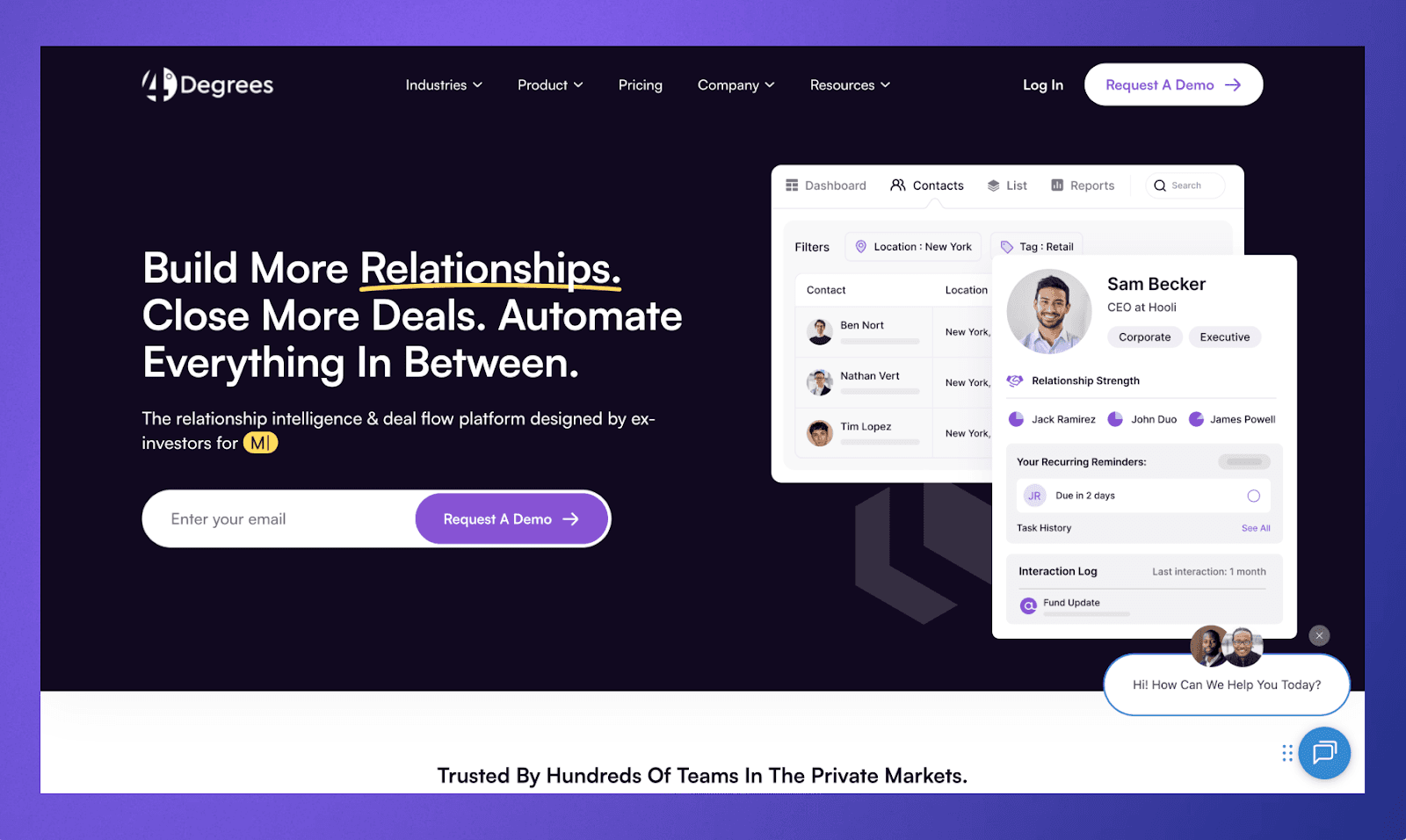
Key Features:
Automated interaction capture through syncs with Gmail and Microsoft Exchange
Network analysis that identifies the best introduction path to any given contact across the firm
Customizable deal pipeline stages with visual tracking and bottleneck identification
AI-driven alerts for relationship and deal activity changes
Integrations with common data providers and collaboration tools
The platform is primarily designed for firms in the 10 to 100-person range. Larger organizations with complex compliance or multi-entity structures may find it limiting. It also lacks some of the built-in market data and company intelligence that platforms like Rings AI or DealCloud provide natively, meaning firms may still need separate data subscriptions.
5. Dialllog
Dialllog is a project-based M&A CRM organized around mandates rather than contacts. Each mandate gets its own workspace containing buyer lists, email threads, milestones, and progress reporting. The platform is geared toward deal execution and is designed to replace the spreadsheets and scattered inboxes that many banking teams still use during active transactions.
Key Features:
Per-mandate workspaces with buyer lists, email capture, and milestone tracking
AI-generated email summaries linked to the relevant mandate and company
Bulk import and deduplication of buyer lists with referral source tracking
On-demand progress reports for internal reviews and client updates
Integration with Dealroom for company data enrichment
Dialllog is a newer entrant in the space, so its feature set is narrower than more established platforms. Its focus is on deal execution rather than sourcing or long-term relationship tracking, which means firms that need both may need to pair it with another tool. The relationship intelligence layer is less developed compared to Affinity, 4Degrees, or Rings AI.
Choose Rings AI as M&A CRM for Your Team
Most M&A CRMs solve one piece of the problem. You get relationship tracking in one tool, market data in another, and notes and emails scattered across a third. Your team ends up toggling between platforms just to prep for a single call.
Rings AI was built to eliminate that. It brings relationship intelligence, deal management, company and investor data, email and meeting history, notes, and AI into one system.
Book a demo to see how Rings AI can help your team map relationships, prep for meetings faster, and keep every mandate organized in one place.