
Picking the right CRM in 2026 feels like navigating a crowded app store where every tool promises the world—and some shiny new features. (Just waiting for one to say it can order your lunch and run your errands for you!) So it can be tough to discern which is actually the right fit for your workflow.
Platforms like Zoho, for instance, can leave teams wanting more as AI takes center stage and relationship-centered businesses seek more advanced business intelligence. While Zoho nails affordability for SMB multichannel tracking, longer and complex sales cycles may demand more. Meanwhile Forrester reports that financial firms, in particular, are struggling to extract value from their CRMs and justify their investments.
The good news is that organizations have no shortage of options to choose from. Grand View Research shows the CRM market more than doubling from $73 billion in 2024 to $163 billion by 2030 thanks to advancements in AI and cloud systems.
Ready to upgrade from Zoho to a platform that grows with every deal, contact, and conversation?
This guide covers the top Zoho alternatives for 2026—focusing on AI intelligence, customization, and scalability—to help you make the best choice for your team.
Why Consider a Zoho Alternative?
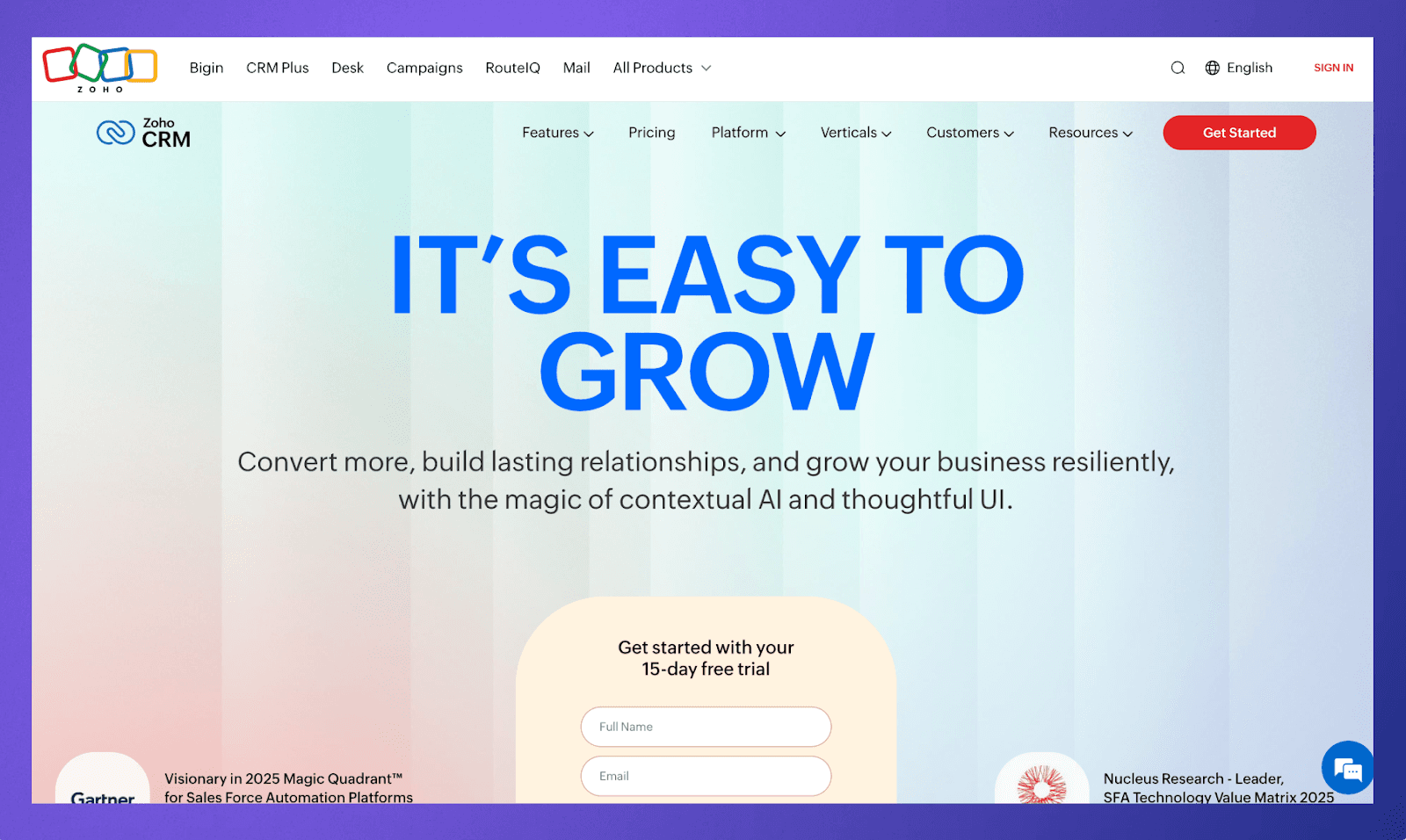
Zoho CRM offers solid value at $14–$52/user/month across tiers, which can be ideal for small businesses. However, its interface ranks lower on intuitiveness, and advanced AI or reporting often requires pricier tiers or add-ons.
Key pain points for Zoho users include:
Shallow relationship intelligence lacking network mapping or real-time signals
Basic AI without predictive scoring across marketing-sales handoffs
Rigid customization struggling with unique pipelines or reporting
Integration limits outside Zoho ecosystem, missing native email/calendar depth
Scalability hurdles for global teams with high data volumes
Top 5 Zoho Alternatives for 2026
If you’re struggling to choose your next—or first—CRM, it’s crucial to find a platform that actually matches your workflows and doesn’t just check boxes. Here’s a 2026 comparison of leading Zoho replacements by strengths, pricing, and fit:
Rings AI: AI relationship mapping, automated data sync, 7k+ integrations
HubSpot: Inbound marketing-sales alignment, free tier, omnichannel analytics
Salesforce: Enterprise AI forecasting, app ecosystem, modular scaling
Pipedrive: Visual pipelines, sales-focused automation, simplicity
Freshsales: AI lead scoring, built-in phone/email, affordable growth
1. Rings AI: Intelligent XRM for Network-Driven Teams
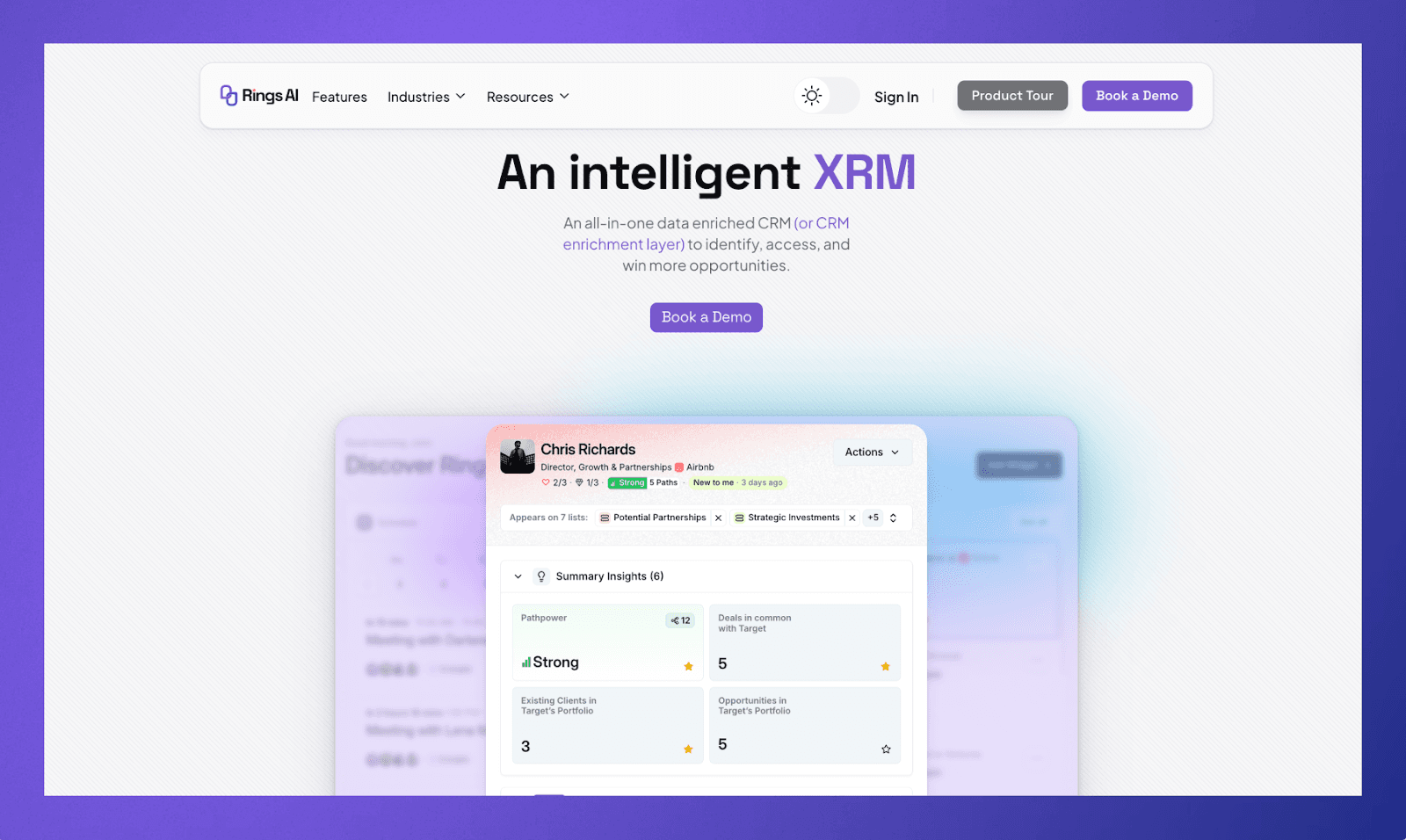
Rings AI elevates beyond traditional CRM offerings as an extended relationship management (XRM) platform, perfect for venture ecosystems, sales teams, or agencies chasing high-value networks. It maps connections across contacts, investors, and advisors with real-time Google News alerts, AI-powered scoring, and automated email and calendar capture from Gmail, Zoom, Slack—unifying silos without manual entry. With Rings AI, your team gets a single, clean view of every relationship without tedious data entry.
Pricing is offered through custom plans focused on value, with expert onboarding that help you skip Zoho-style tier sprawl and get productive faster.
Key features include:
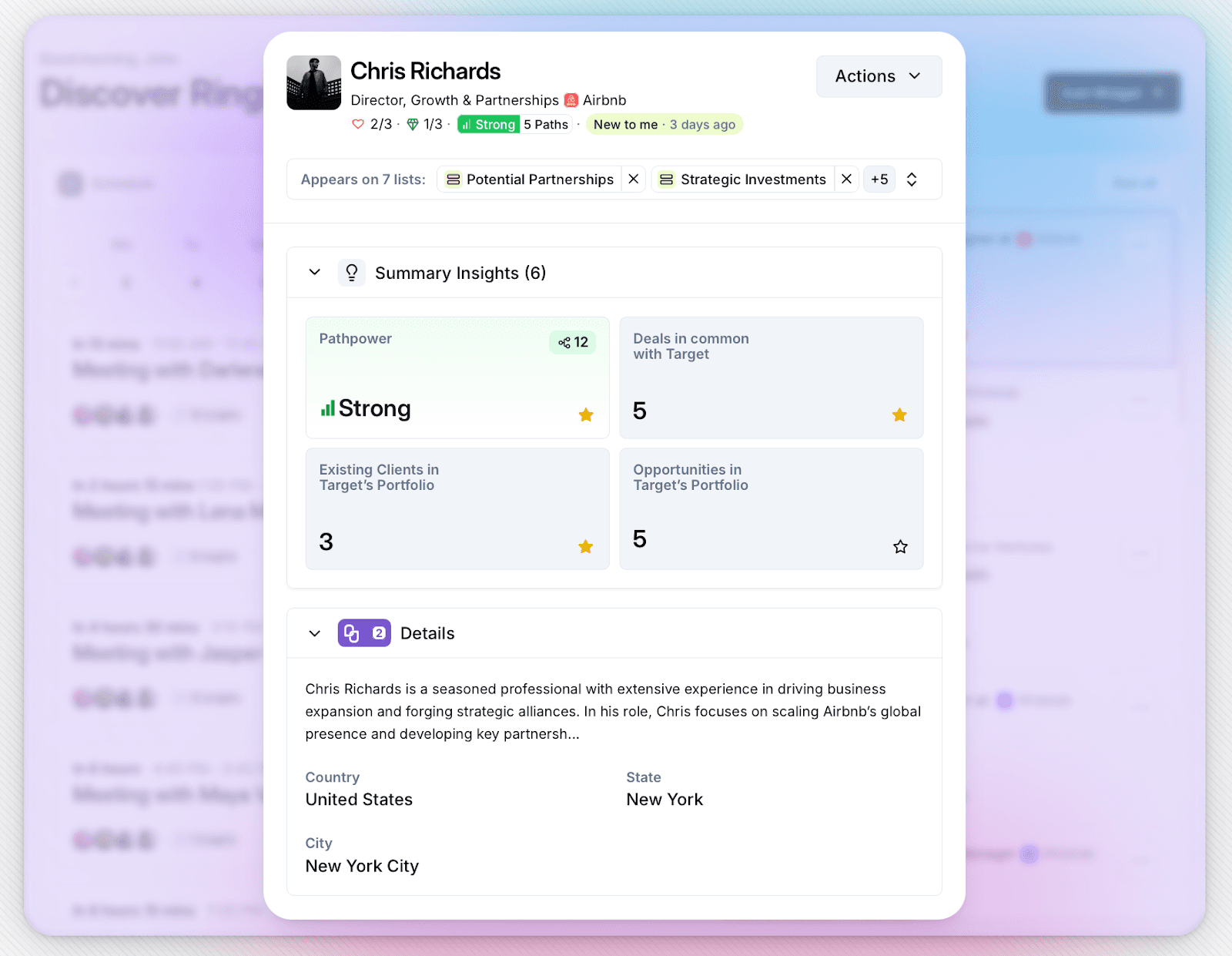
Dynamic relationship mapping revealing warm paths and mutual connections
100M+ data points for instant market insights and deal history
Portfolio management with company news tracking and team collaboration
7,000+ native integrations, including CRMs like Salesforce and HubSpot
Ideal for: Complex sales cycles, investor relations, or collaborative teams that need deep network intelligence rather than basic contact and deal tracking.
2. HubSpot: Seamless Marketing-Sales Hub
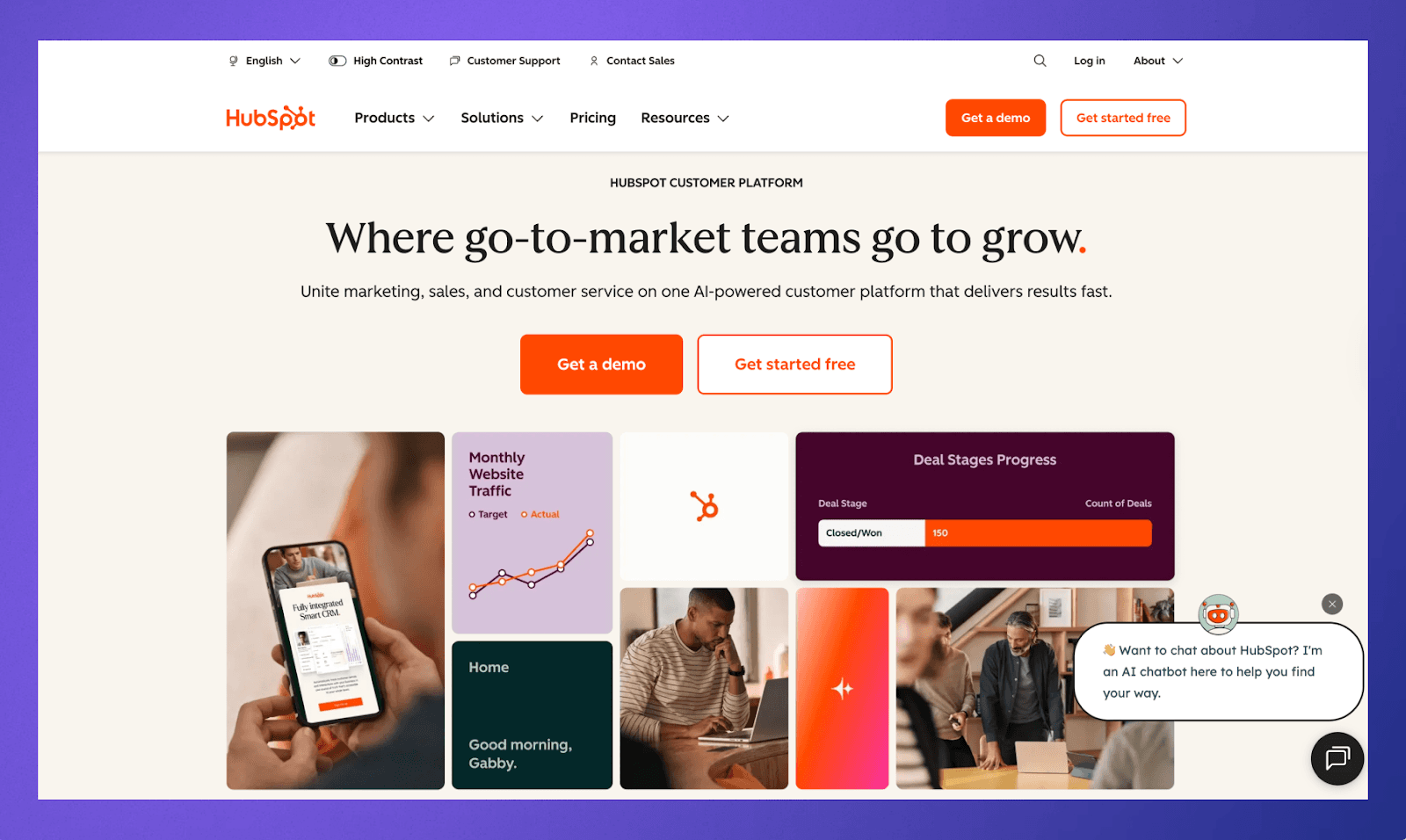
HubSpot brings CRM, marketing automation, and analytics together in one interface, making it a strong fit for teams that rely on inbound marketing and content-driven growth. The free CRM tier covers basic contact and deal tracking, while Professional and Enterprise plans add more advanced AI insights, custom objects, and reporting so you can grow into the platform as your needs mature.
Standout capabilities:
Revenue attribution tracking marketing ROI across channels
Sequences/forms for lead nurturing with smart send times
Operations hub syncing data across 1,500+ apps
Custom reporting with playbooks for sales enablement
HubSpot’s biggest appeal is how easily marketing and sales can align around the same data, and dashboards without the need for heavy admin support. That makes it particularly attractive for fast-moving teams that want a smoother experience than they might get from a more fragmented or engineering-heavy stack.
Ideal for: Growth-oriented teams that blend marketing and sales and want a gentle learning curve.
3. Salesforce: Enterprise Powerhouse with Detailed Customization
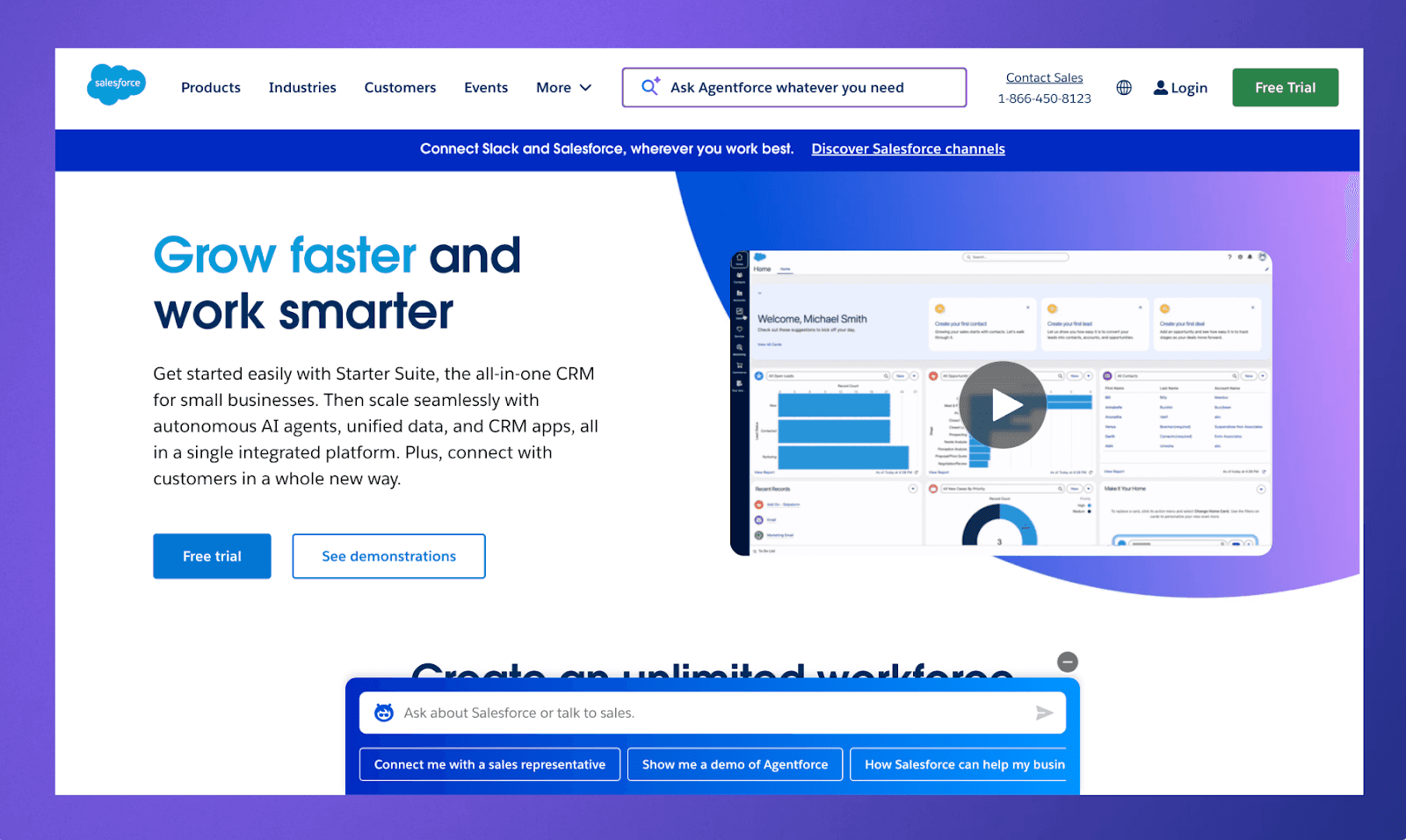
Salesforce is a classic choice for large enterprises, combining its Einstein AI for next-best-action forecasting with highly customizable objects. Because of its flexibility, most organizations need dedicated admins or partners to design and maintain the implementation, and rollout often takes several months rather than weeks.
Salesforce CRM pricing tiers start around $25 per user per month for Starter and climb through Professional and Enterprise into $330+ for Unlimited, with modular clouds that add powerful capabilities but can also increase total cost and complexity.

Key strengths:
Data Cloud unifying siloed sources for 360° customer views
Flow Builder for no/low-code automations and predictive scoring
Industry-specific clouds (Financial Services, Health) with compliance
Robust reporting/dashboards scaling to millions of records
Ideal for: Large organizations with in-house IT or rev ops resources that want maximum customization, analytics depth, and long-term scalability.
For more, check out our in-depth Salesforce review of features, pricing, and use cases.
4. Pipedrive: Pipeline Simplicity for Sales Velocity
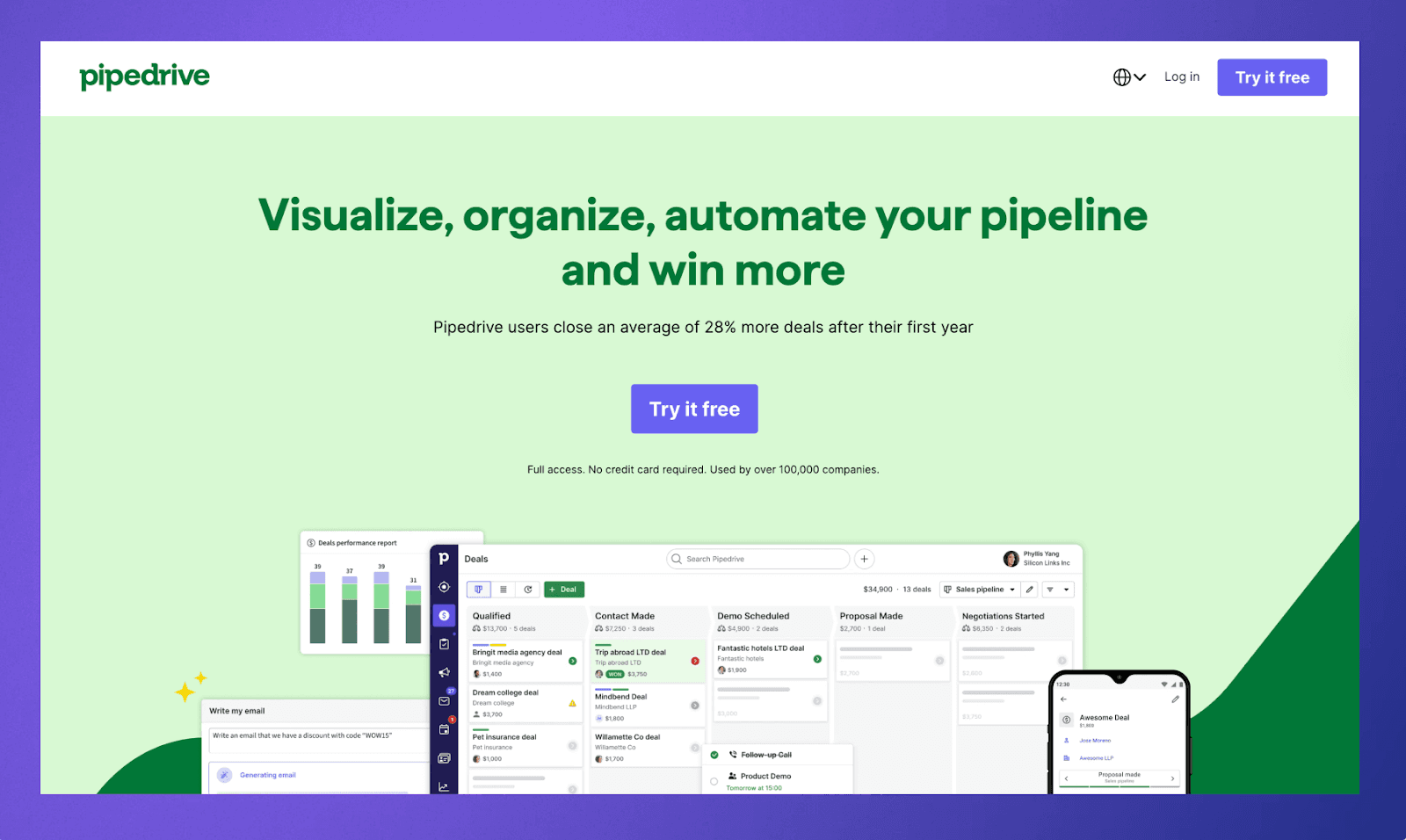
Pipedrive is built to keep sales reps focused on moving deals forward, with clean visual pipelines, drag-and-drop stages, and a Sales Assistant that suggests actions based on deal activity. The platform shines when it comes to ease of use and day-to-day productivity but offers less in-depth reporting and customization compared to enterprise systems.
Pipedrive pricing runs from roughly $14 per user per month for Essential up to $99 for the Ultimate plan on annual billing, which is straightforward for small and midsize teams to understand and budget for.
Core features:
Activity-based selling with smart scheduling/reminders
AI lead scoring and deal rotator for prioritization
Custom fields and reports with Google Workspace sync
Mobile app for field sales with offline access
Ideal for: Small and midsize sales teams that want a fast, low-friction CRM focused on pipeline visibility rather than complex enterprise workflows.
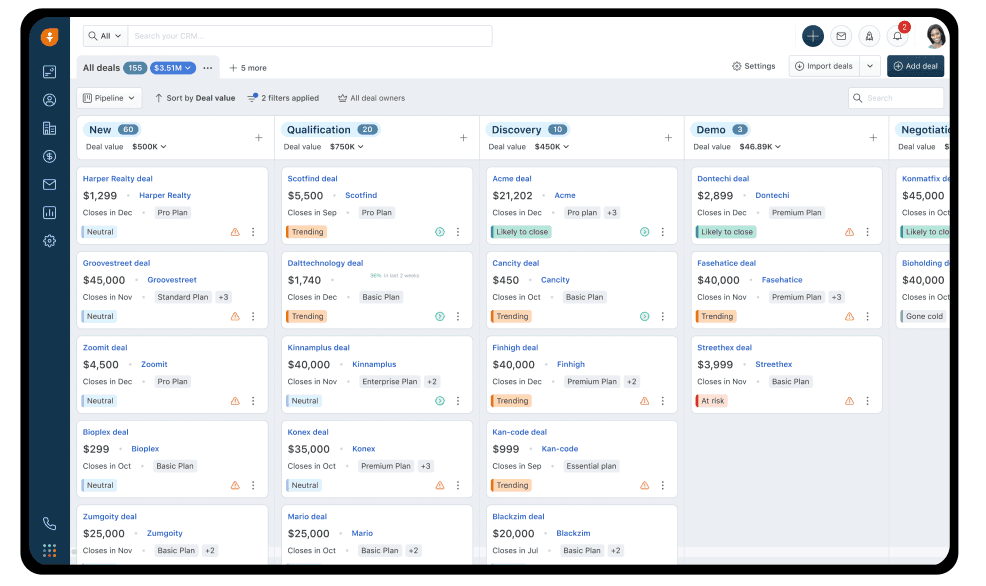
5. Freshsales: AI-Driven Value for Growing Teams
Freshsales, part of the Freshworks suite, aims to pack a lot of sales intelligence and communication features into an accessible price range, with plans typically spanning from around $9 to $59 per user per month.
Freshsales onboarding is relatively quick, so small businesses can get up and running without long implementation projects. However, it may not offer the same breadth of customization and capabilities as a full enterprise suite.
Highlights:
Visual pipelines with deal insights and automation
Freddy AI for conversation intelligence/next steps
Marketplace with 1,000+ apps
Advanced segments and journeys for targeted outreach
Ideal for: Growing companies that want sales automation and a manageable learning curve without committing to heavyweight enterprise software.
How to Choose a Zoho CRM Alternative
Selecting a Zoho alternative demands balancing current pain points against 2026 trends like AI agents and predictive insights. When exploring your options, remember to prioritize platforms that align with your team size, workflows, and growth trajectory.
Take these key evaluation factors into account:
User Experience and Adoption: Seek intuitive interfaces with free and comprehensive onboarding like Rings.
Integrations and Ecosystem: Make sure your platform has native syncs with essential apps like Slack, email, and calendars to unify data and eliminate silos.
Security and Compliance: Focus on privacy-first designs that meet vital compliance regulations and standards.
Why Rings AI Tops Zoho Alternatives in 2026
If you’re weighing Zoho against today’s leading CRM and productivity platforms, Rings AI stands out as the most future-ready choice for teams that depend on rich relationships and complex deal cycles. While Zoho’s generalist approach can feel limited, Rings AI is designed to help you reach that next stage of growth.
Instead of just tracking contacts and activities, Rings AI maps relationships to surface warm paths to introductions and keeps your team aligned. Where Zoho can feel like a static system you have to maintain, Rings AI behaves more like a copilot: It pulls in signals from the tools you already use, helps you see who to talk to next, and gives every stakeholder a shared, up-to-date picture of your relationships.
Ready to outpace competitors with next-level business intelligence? Book a Rings demo and transform your network into a growth powerhouse for 2026.