

Salesforce stands as a towering giant in the world of customer relationship management (CRM), known for its robust customization but nuanced and technical interface. Named one of TIME’s “World’s Best Companies” in 2025 and recognized as the top software company by G2, Salesforce continues to shape how businesses manage sales, marketing, and customer service with cutting-edge AI and cloud technology.
Still, Salesforce’s power and reputation come with high complexity and cost. Specifically, users note issues like poor onboarding and support, too much manual data entry, and limited dashboard functionality. As one reddit commenter put it, Salesforce is “not set up for anything right out of the box, so if your organization doesn’t have a strong idea of what processes should look like [...] the system will be nothing but a pain…” Meanwhile another Salesforce review said, “every extra button seems to come with its own admin rabbit hole (and fee).”
So, whether you’ve been drinking the Salesforce Kool-Aid and are looking to switch or are still searching for the perfect CRM to get you started, this guide can help.
Here, we’ll take a deep dive into Salesforce’s key features, pricing models, and user experience—and see how it compares to next-gen alternatives like Rings AI for AI-powered business insights.
Salesforce Features Overview
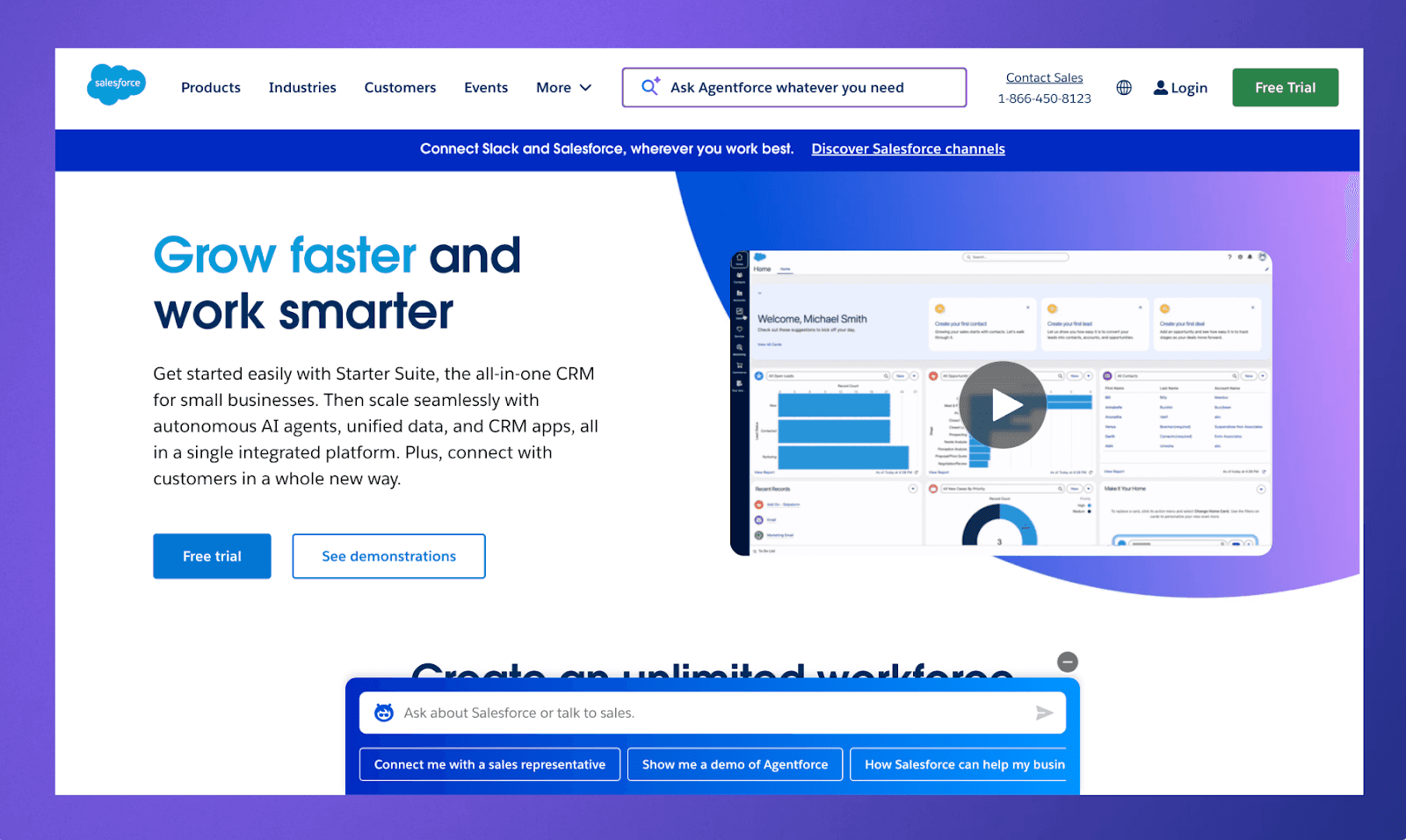
Salesforce is a robust, cloud-based CRM designed to help businesses of all sizes—particularly enterprises—grow by streamlining sales, marketing, and analytics in one platform. Here’s a breakdown of some standout Salesforce features:
Sales Forecasting & Pipeline Management: Salesforce uses AI-driven Sales Forecasting to offer highly accurate revenue predictions and real-time pipeline visibility. This lets sales leaders adjust strategy proactively and helps reps prioritize high-value deals.
Contact, Lead, and Opportunity Management: The platform is especially strong in organizing leads and opportunities, allowing teams to track communication history, automate lead scoring, and manage contacts effectively.
Custom Dashboards & Reports: Salesforce offers highly customizable dashboards and detailed reporting tools for in-depth analytics and performance tracking, supporting managers and sales teams with actionable insights.
Workflow Automation: Automation tools reduce manual tasks such as lead assignments, email follow-ups, and approvals, freeing sales teams to focus on selling rather than admin.
Collaboration Tools: Internal collaboration is streamlined with features like Chatter, enabling team communication, file sharing, and activity tracking within the CRM.
Einstein AI & Automation: Salesforce Einstein leverages AI to automate routine tasks, provide lead scoring, send reminders, and offer sales coaching, delivering greater efficiency in sales execution.
Third-Party Integrations: Salesforce boasts extensive CRM integrations across popular business apps, enhancing its functionality but sometimes requiring additional management effort.

This feature richness makes Salesforce an enterprise-grade CRM solution for sales teams, highly customizable to diverse business needs but often requiring dedicated admin and training resources.
Salesforce Pricing Breakdown 2025
Salesforce’s pricing structure is tiered to accommodate various business sizes and requirements, but it leans toward the premium end of the market.
Considering Salesforce for your organization? Take a look at the different pricing levels:
Free Suite: Basic CRM features, like account management and simple email marketing, for a maximum of 2 users.
Starter Edition: Approximately $25 per user/month, designed for small teams needing basic CRM functions.
Pro Suite: Around $100 per user/month, including features like advanced reporting, forecasting, and marketing campaign tools suited for growing companies.
Enterprise Edition: Pricing at $175 per user/month, aimed at larger teams needing extensive customization, automation, and integrations.
Agentforce Editions: These newer AI-powered plans start as high as $550 per user/month, delivering deep AI automation, generative AI integrations, and predictive sales capabilities.
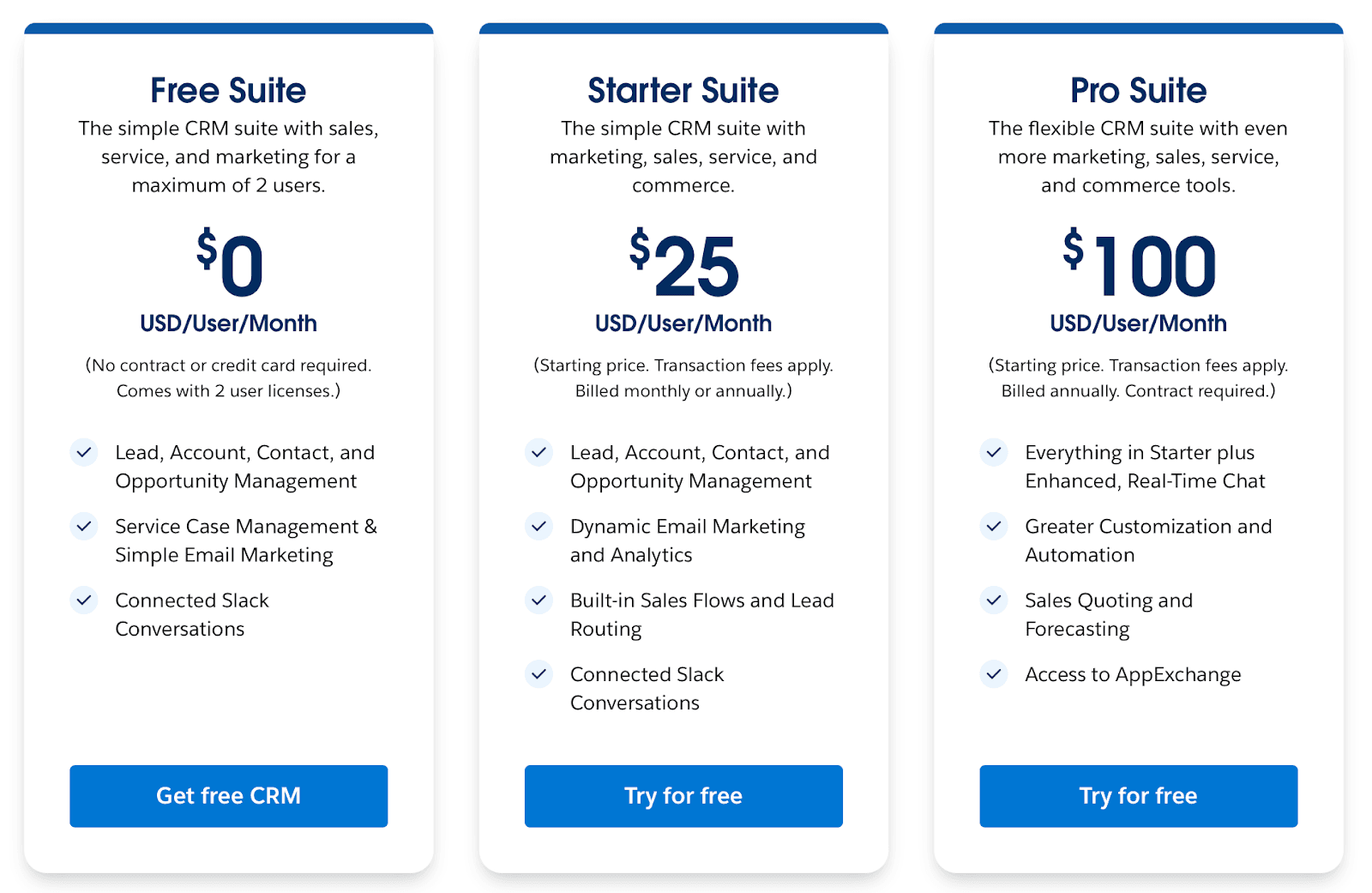
Note that Salesforce increased prices by approximately 6% in August 2025, reflecting ongoing innovation and AI feature enhancements. Also, keep in mind that costs can rise with required add-ons, support fees, and data storage charges, making total pricing potentially high for smaller or mid-market businesses.
Salesforce CRM Pros and Cons
While Salesforce excels in analytics and pipeline visibility, it may lack some integrated lead capture and communication tools that competitors include natively. Most notably, the platform’s steep learning curve can challenge new users and less tech-savvy teams.
Here’s a closer look at Salesforce pros and cons:
Pros:
Market-leading CRM with powerful AI and automation tools.
Robust customization and integration capabilities.
Scalable for businesses from small teams to global enterprises.
Comprehensive reporting and forecasting analytics.
Strong mobile app supporting sales on the go.
Cons:
High pricing that can be prohibitive for SMBs or startups.
Steep learning curve requiring dedicated admin resources.
Complexity from extensive features and integrations can overwhelm users.
Additional costs for many advanced features and necessary add-ons.
Some gaps in native lead capture and communication tools.
Top Salesforce Alternatives in 2026
For businesses seeking CRM solutions that offer differentiated value or are less complex than Salesforce, there are a few standout options.
Let’s unpack the top Salesforce alternatives in 2026:
Rings AI
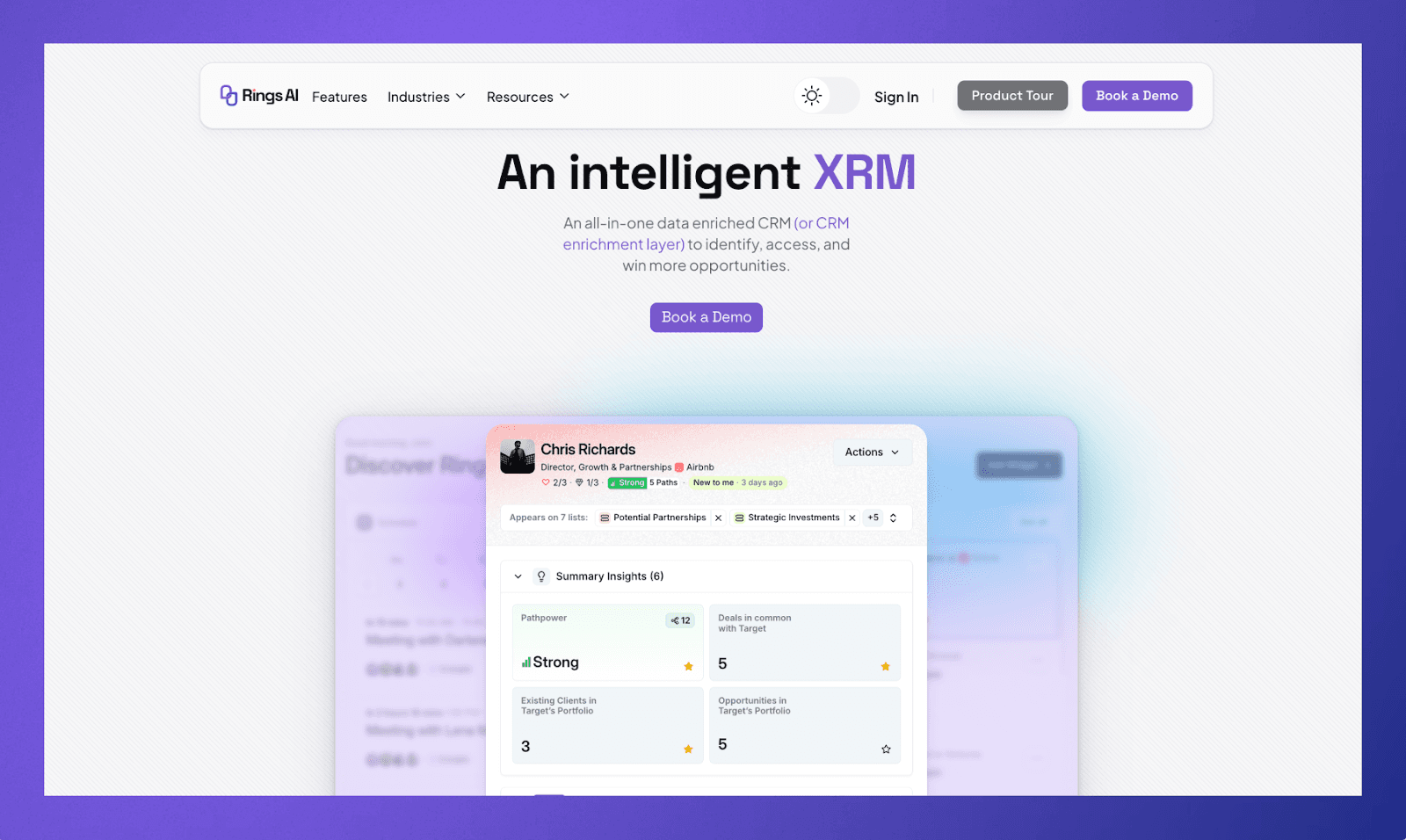
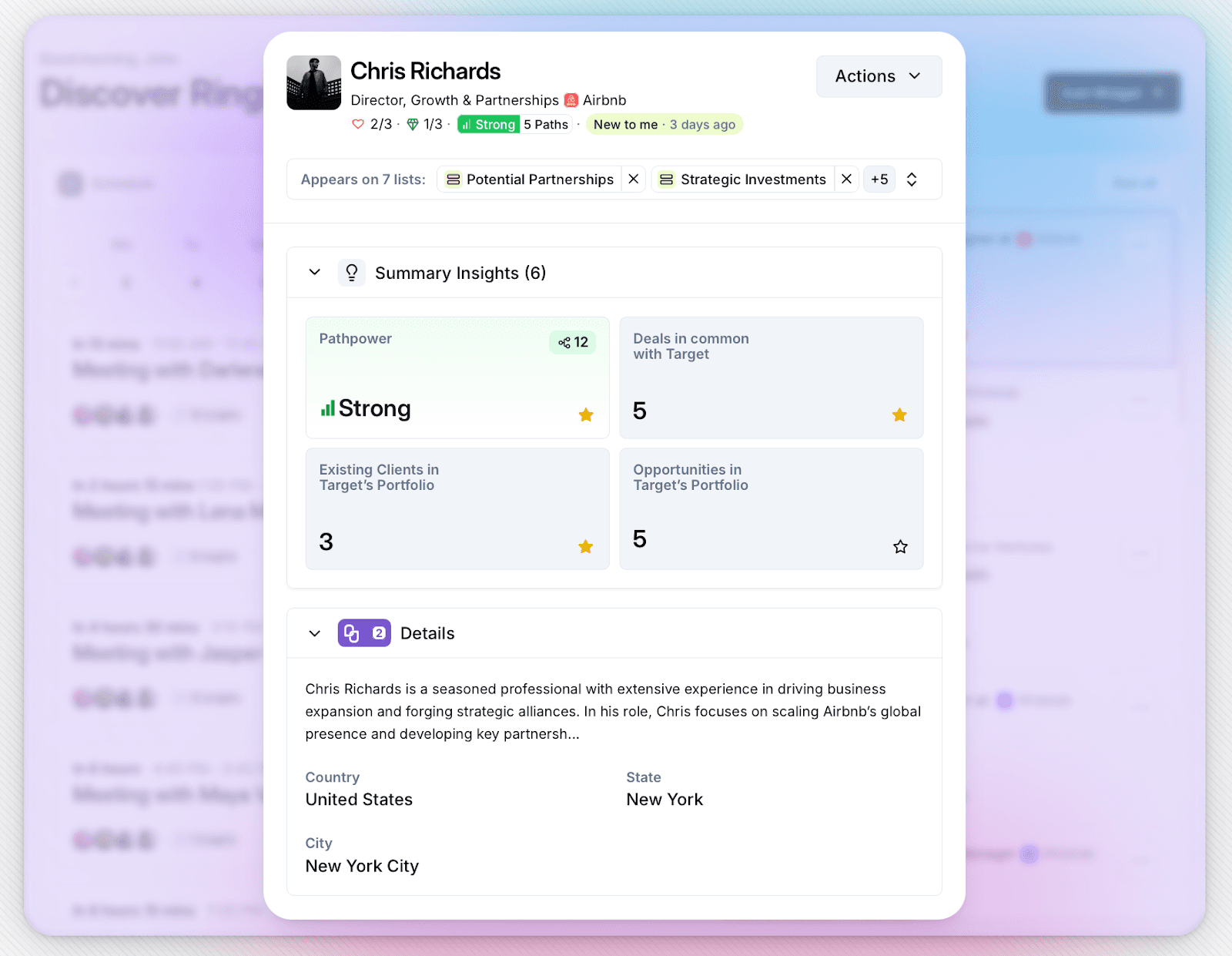
Rings AI is an intelligent CRM built for organizations managing complex, high-value relationships across investors, sales prospects, and strategic stakeholders. It combines deep relationship mapping with global prospecting, pre-meeting intelligence, and real-time company news so teams can prioritize outreach and never miss critical connection. Rings AI layers AI-driven, customizable scoring and a centralized knowledge base with robust privacy controls and portfolio management to support both deal flow and post-investment execution. Over 7,000 native and Zapier-powered integrations connect Rings AI to major CRMs, email, calendars, and LinkedIn for seamless workflows.
Pricing: As low as $1,000 per user/year.
Best for: Startups, venture capital, private equity, BD teams, and enterprises managing complex portfolios and relationship networks.
HubSpot
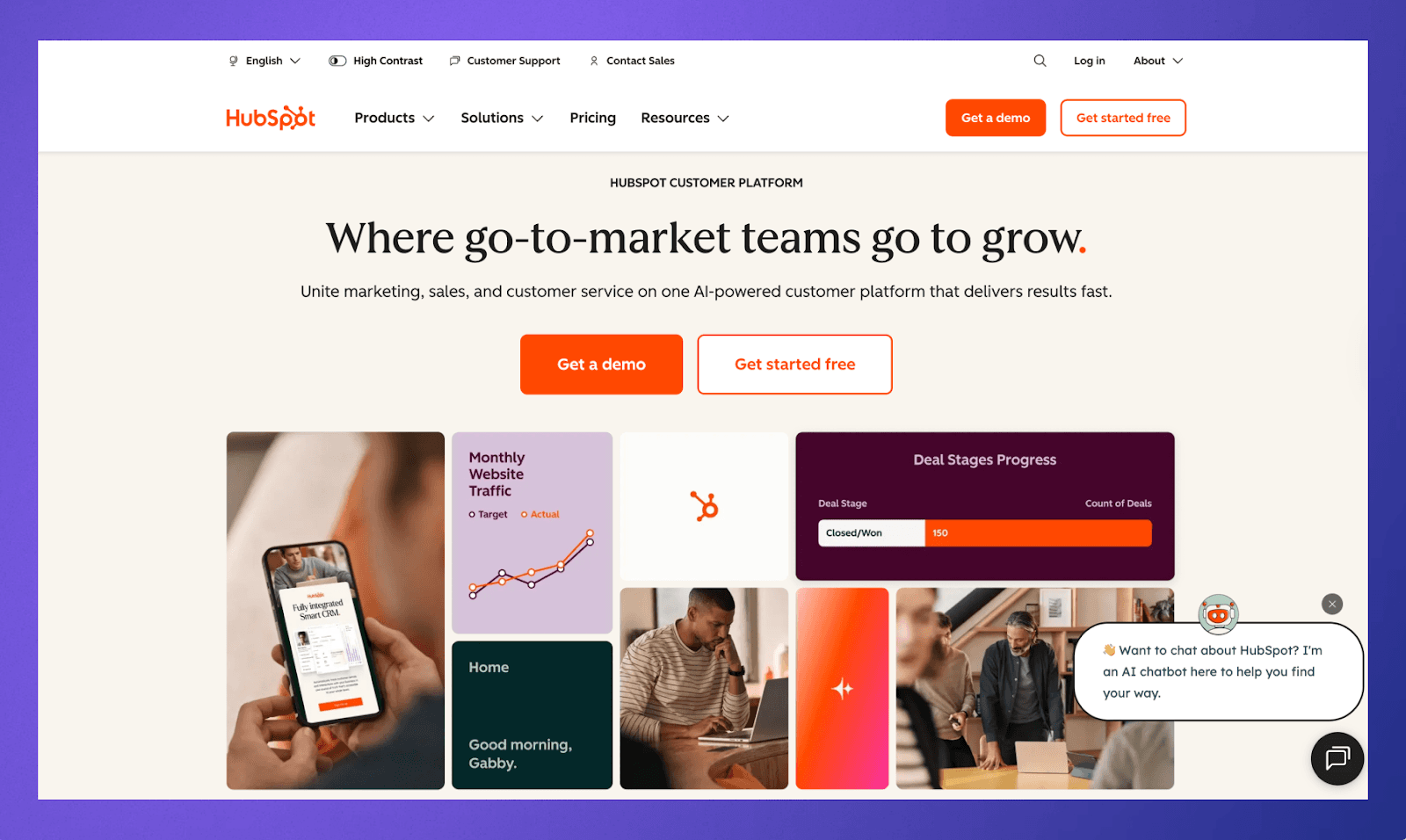
HubSpot’s CRM provides accessible contact and deal management tools with a unified interaction timeline, making it a popular first CRM for small teams. As needs grow, customers can add marketing, sales, and service hubs, but advanced automation, reporting, and enterprise features require paid upgrades. This can increase total cost as organizations scale into deeper workflows and analytics. The free core features remain valuable for early-stage adoption despite limitations in prospecting and advanced relationship intelligence.
Pricing: Free core CRM; advanced capabilities require paid hubs and higher tiers.
Best for: Small businesses starting with CRMs who may add marketing automation over time.
Pipedrive
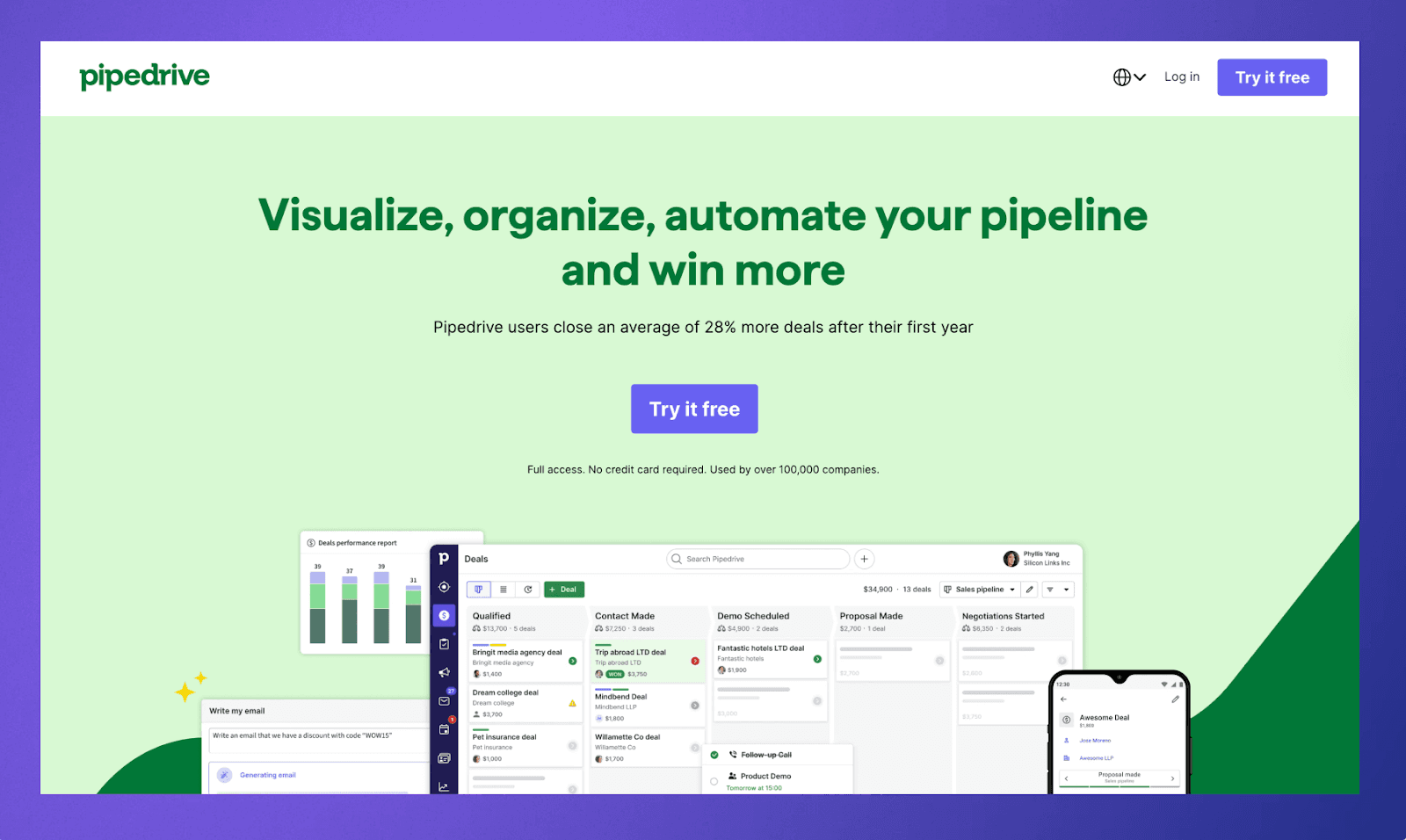
Pipedrive is a sales-centric CRM known for its visual pipelines, straightforward deal tracking, and quick setup, helping teams execute day-to-day sales. It offers workflow automation, reporting, and an AI sales assistant to streamline activity management. Many advanced capabilities—like lead gen tools and enhanced reporting—are separate add-ons or available only on higher tiers. The platform also lacks deep relationship intelligence, portfolio management, and company news tracking.
Pricing: Starts at $14 per user/month, typically billed annually; add-ons priced separately.
Best for: SMB sales teams prioritizing pipeline management and ease of use over advanced relationship mapping.
Unlock CRM Value with AI-Driven Tools
Salesforce continues to be a powerful and feature-rich CRM platform, especially suited for large enterprises with complex workflows and budgets to match. However, its high cost, complexity, and learning curve mean it is not the perfect fit for every organization.
For many growing businesses, Rings AI offers a modern, AI-driven alternative that simplifies relationship management without sacrificing analytical depth or sales productivity. With smarter AI integrations, transparent pricing, and a focus on ease of use, Rings AI stands out as a leading choice for teams seeking a future-ready CRM solution that complements or replaces Salesforce.
Ready to supercharge your CRM capabilities? Book a demo with Rings AI.