
HubSpot has grown into a full inbound growth platform powering sales pipelines and service workflows for millions of businesses worldwide. Most notably, its unified timeline tracks every customer interaction across platforms, making it a go-to CRM for teams wanting marketing-sales alignment without complex setups.
Still, if you’re considering HubSpot for your business, it’s important to understand all of its pros, cons, and unique use cases.
While G2 HubSpot reviewers praise the platform’s free tier and ease of use, they also flag escalating costs for advanced features, hub-switching complexity, and gaps in deep relationship mapping for complex B2B deals.
To help you evaluate your options, we’ll explain HubSpot’s key features and pricing models.
What is HubSpot CRM?
HubSpot CRM unites sales, marketing, service, and operations tools into one platform for inbound growth. It centralizes contacts, deals, and activities with a shared timeline view, letting teams track interactions without stitching together separate apps.
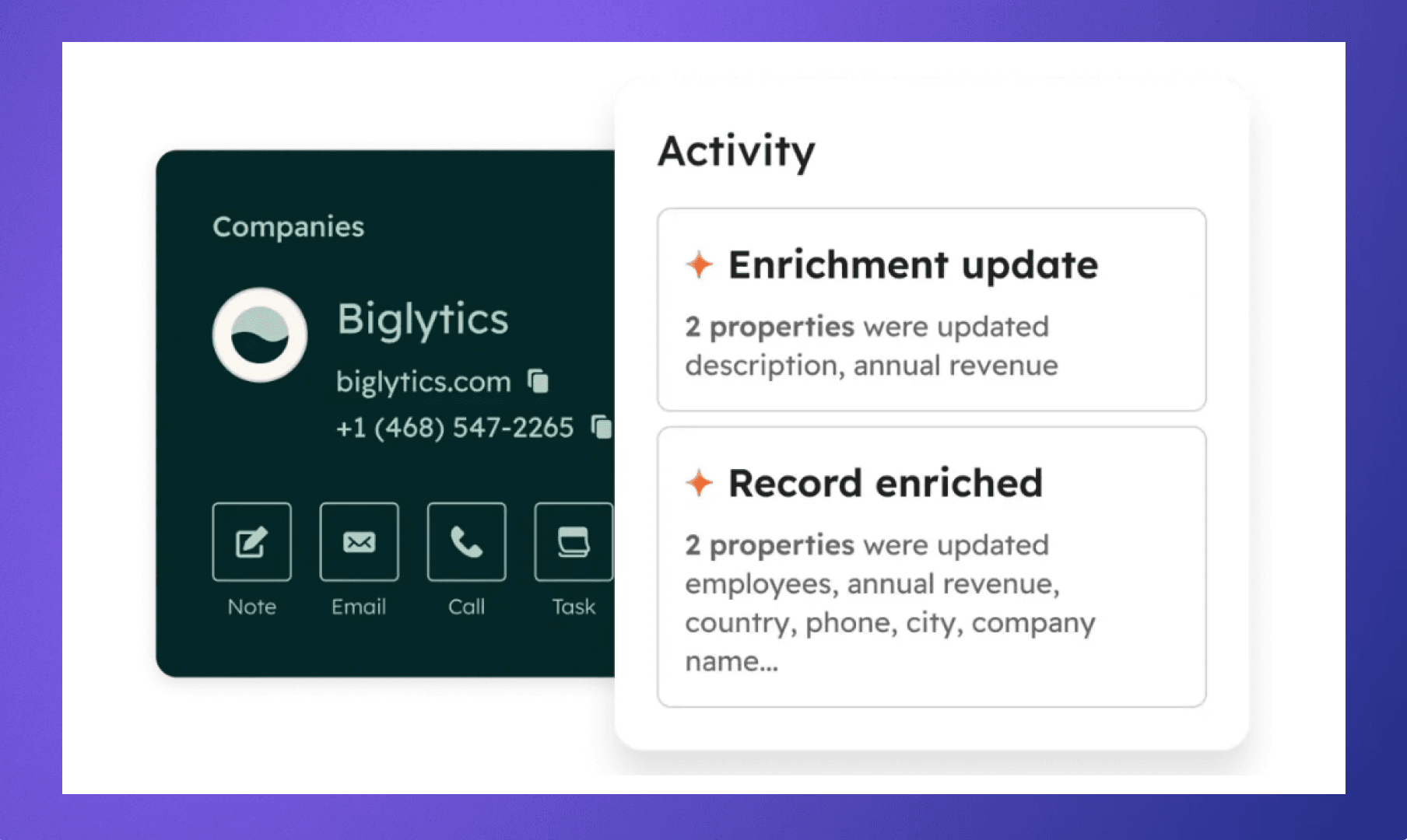
All plans support unlimited users on the CRM core, with paid “hubs” unlocking automation, reporting, and AI, making it scalable from solopreneurs to enterprises. Also, native CRM integrations with Gmail, Outlook, LinkedIn, and 1,000+ apps create seamless workflows, positioning HubSpot as a unified platform rather than a standalone service.
Key HubSpot Features
HubSpot’s strength lies in its inbound capabilities, which help teams attract leads via content and forms and nurture relationships with personalized sequences, all unified under one contact record.
Diving in further, key HubSpot features include:
Contact & company management: Unlimited contacts with 360° timelines showing emails, calls, meetings, and form submissions in chronological order.
Deal pipelines: Customizable stages, forecasting, and pipeline automation with drag-and-drop simplicity for sales visibility.
Email tracking & sequences: Open/reply tracking, personalized sequences, and meeting schedulers integrated directly into Gmail/Outlook.
Forms & landing pages: Drag-and-drop builders for lead capture, progressive profiling, and bot-powered chat on your site.
Workflow automation: Trigger-based actions for lead routing, notifications, task creation, and data enrichment across hubs.
Reporting dashboards: Custom reports, sales analytics, and performance tracking (advanced on Professional+ tiers).
Live chat & bots: Website chat, conversational intelligence, and AI-powered responses for instant engagement.
AI tools (Breeze): Content generation, lead scoring, forecasting, and meeting summaries on higher tiers.
Integrations marketplace: 1,000+ native connections, including Slack, Zoom, Shopify, and Salesforce for data sync.
Mobile app: Full access to pipelines, activities, and notifications on iOS/Android for reps on the go.
HubSpot Pricing Breakdown for 2026
HubSpot’s pricing splits between the forever-free CRM core and paid “hubs” for different functions with tiered limits on contacts, credits, and features.
Here’s a closer look at the 2026 pricing breakdown for HubSpot:
Plan | Annual billing | Key features |
Free | Free | Unlimited users/contacts, basic pipelines, email tracking, forms, live chat, and meeting tools. |
Sales Hub Starter | $20/user/month | Email sequences, basic workflows, snippets, 2-way email sync. |
Sales Hub Professional | $90/user/month | Advanced forecasting, automation limits, custom reporting, sales analytics. |
Enterprise | $150+/user/month (custom) | Predictive scoring, custom objects, hierarchies, revenue attribution. |
Bundled Hubs | Varies | Combined hubs + extra costs for contact limits (e.g., $45/additional marketing contacts). |
HubSpot Pros and Cons
HubSpot wins over users with its generous free tier and intuitive design, but it can lead to complexity as teams scale.
HubSpot strengths:
Generous free CRM with unlimited contacts/users, pipelines, and core tools, ideal for startups testing inbound strategies.
Unified inbound platform aligning marketing-sales-service with shared timelines and automation across channels.
Intuitive UX and onboarding for quick setup and mobile accessibility without steep learning curves.
HubSpot limitations:
Rapid cost escalation via contact tiers, credits, and hub bundles
Hub complexity overwhelms users navigating silos and 10+ workflow branches.
Weak on complex relationships, lacking native mapping, AI prospecting, or portfolio views vs. specialized CRMs.
Fix HubSpot’s Relationship Gaps with Rings AI
B2B teams using HubSpot may struggle when it comes to managing complex relationships. Its separate hubs don’t show shared contacts, career paths, or company insights. So VC, PE, and business development teams end up using manual workarounds as portfolios grow and compliance needs increase.
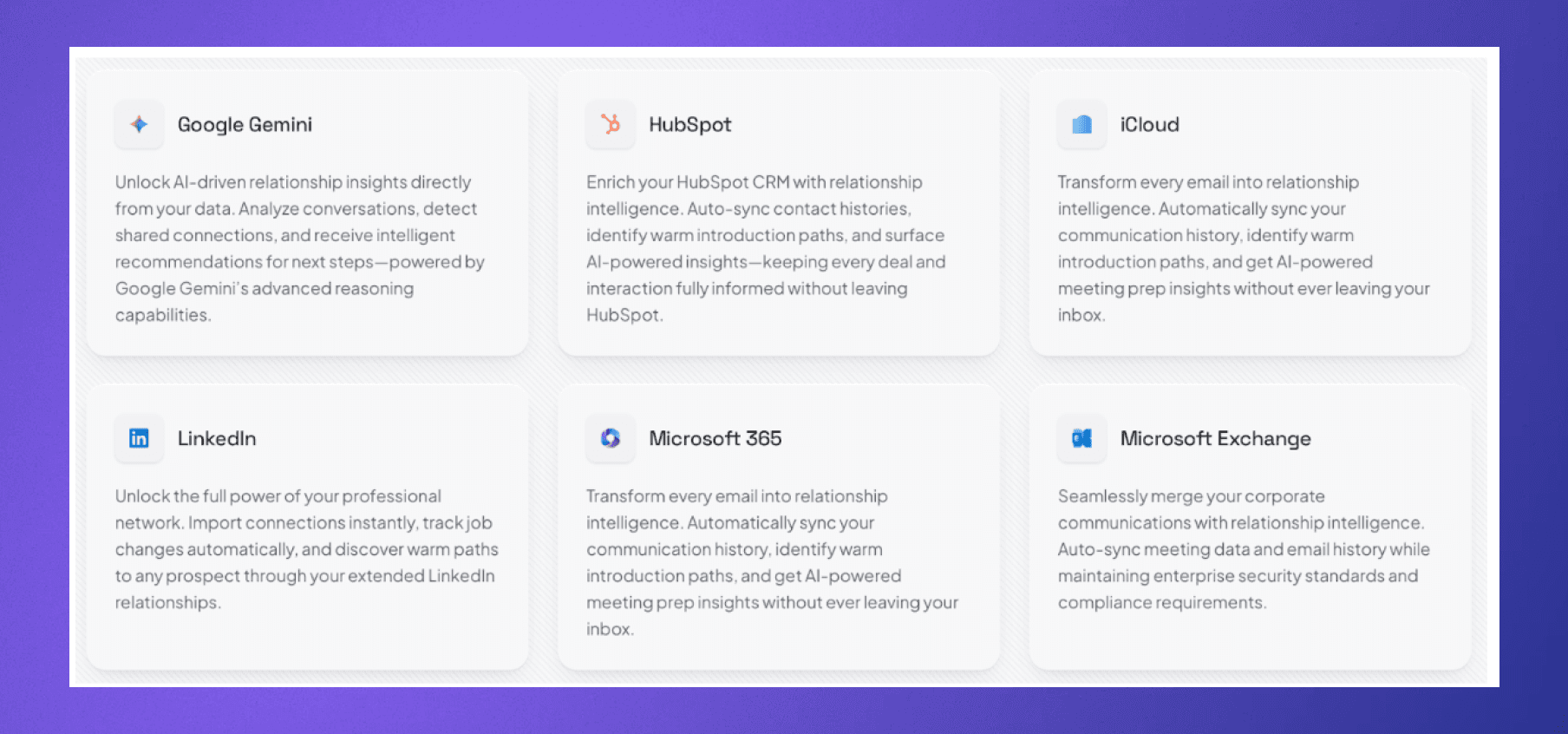
Rings AI solves this problem, mapping relationships using 100M+ data points to find hidden connections and real-time company news. Plus, Rings AI integrates directly with HubSpot to keep your marketing operation running seamlessly.
Here’s a closer look at the capabilities that make Rings AI a powerful HubSpot alternative:
Instant network visualization: See shared contacts, career progressions, and firm connections critical for high-stakes deals.
Proactive opportunity discovery: AI-driven insights and news tracking surface the warmest leads without data enrichment guesswork.
True enterprise scalability: Unlimited forecasting, portfolio oversight, and compliance controls—no caps, no workarounds.
Your Next CRM Move: From HubSpot to Rings AI
HubSpot excels for inbound-focused SMBs, but Rings AI owns complex relationship management with AI prospecting, network visualization, and portfolio tools that HubSpot can’t match natively. As a result, you might consider using HubSpot for lead generation and content in tandem with Rings AI as your go-to relationship intelligence platform: a winning combo.
After all, Rings AI delivers specialized intelligence that turns scattered connections into prioritized opportunities. With out-of-the-box relationship mapping, real-time company news, and over 7,000 integrations, Rings AI complements HubSpot’s inbound strengths while providing the depth needed for complex deal flow and portfolio execution.
Ready to unlock deeper relationship intelligence and AI-powered deal flow? Book a Rings AI demo today to see how it complements or replaces your current CRM.