
You can’t be with a client every time they think about working with you. They talk to you once, maybe twice, and after that, the proposal does most of the work. It sits in their inbox when they want to double-check something, compare options, or understand how you plan to help them. In many cases, the proposal shapes their decision more than any meeting.
That’s why it’s worth writing it well. A clear proposal answers questions you can’t answer in person and makes it easier for the client to feel confident choosing you.
In this blog, we’ll walk through how to structure and write a proposal that does that without making the process feel heavy or complicated.
What is a Sales Proposal?
A sales proposal is a document you share with a potential client that explains what you can do for them, how you plan to do it, and what it will cost. At its core, it’s a conversation in written form. The client has a problem, and the proposal shows how you can solve it in a way that feels practical, believable, and aligned with what they need.
A good proposal doesn’t try to impress with fancy language or long descriptions. It helps the client see three things quickly:
You understand their situation.
Your solution fits the outcomes they care about.
Working with you will be straightforward.
It’s not just a price sheet or a list of features. It’s a guided explanation of value. When someone reads it, they should feel like you’ve taken the time to think about their business and not just sent a template. That’s what separates a proposal that gets skimmed from one that moves a deal forward.
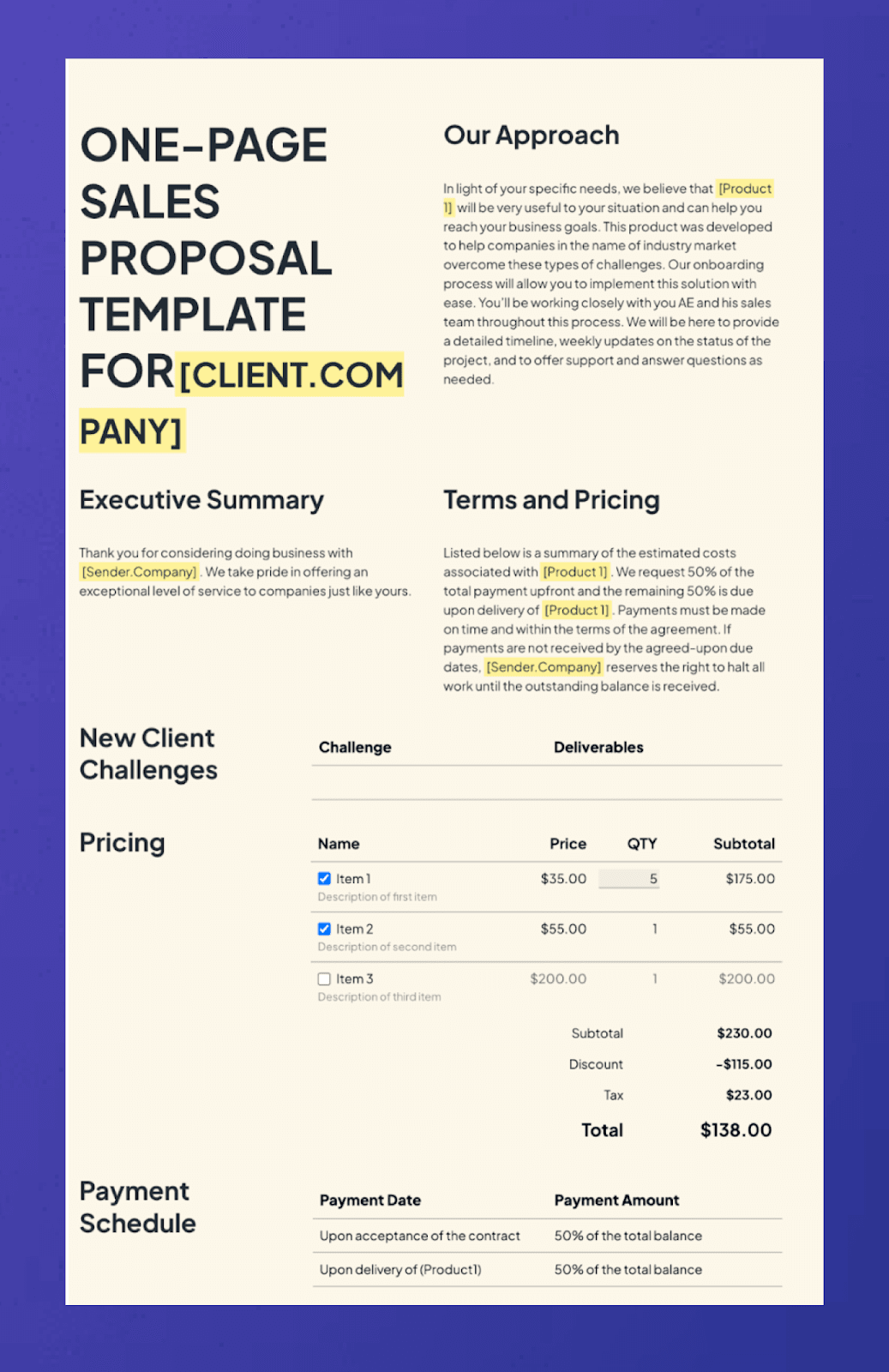
Here's an example of a one-pager sales proposal:
Proposals also play a practical role inside the client’s company. They’re often shared with teammates or decision makers who never meet you. That means the document has to stand on its own. It should answer common questions, clarify the scope, remove guesswork, and make the next steps clear.
Many teams improve their proposals simply by improving how they collect and organize client information. A CRM plays a quiet but important role here, and we unpack those advantages in our guide on the unexpected benefits most businesses don’t realize they get from using one.
How to Write a Sales Proposal
Before you start writing, think of the proposal as a guide for the client. They should be able to scan it, understand the problem you’re solving, and see exactly what working with you looks like. Below are practical tips that make your proposal stronger.
1. Start With the Problem
The easiest way to lose a client’s attention is to jump straight into your solution. Most buyers want to know one thing first: do you actually understand what they’re dealing with? When you begin by outlining the problem in clear, plain language, it signals that you’ve been listening and you’re not offering a one-size-fits-all fix.
This doesn’t need to be dramatic or emotional. Just state what they’re trying to achieve, what’s getting in the way, and why it matters to them. A short problem summary or a simple slide works well because it gives the client something they can quickly scan and share with others on their team.
Starting here also creates alignment. It shows you and the client are talking about the same issue and working toward the same outcome. Once that’s clear, everything that follows — your approach, your scope, your pricing — feels more grounded and easier for them to evaluate.
2. Make Your Offer Clear and Specific
Clients read proposals with one main question in mind: What exactly am I getting? When the offer is vague, they hesitate. When the offer is concrete, the decision feels easier and safer.
A simple way to make your offer clear is to outline the essentials in a format they can scan quickly. You don't need complicated language. Just spell out what working with you looks like.
Include things like:
What you will deliver
How long will each part of the project take
What the client needs to provide
What outcomes can they expect
Any limits, boundaries, or assumptions
After that, give a short explanation that ties it together. Show how these pieces solve the problem you outlined earlier and why this approach works. The goal isn’t to overload them with details. It’s to give them enough clarity that they feel confident saying yes — and enough structure that they can explain it internally without you in the room.
3. Show a Clear Project Timeline
A timeline helps clients understand how the work will unfold. Even if your project isn’t complicated, seeing the steps laid out gives them a sense of momentum and reduces uncertainty. It also prevents misunderstandings about when things start, when they finish, and what happens in between.
You don’t need a fancy graphic. A simple visual structure is enough. For example:
Week 1: Kickoff and requirements
Week 2–3: Implementation or creation
Week 4: Review and revisions
Week 5: Final delivery and handoff
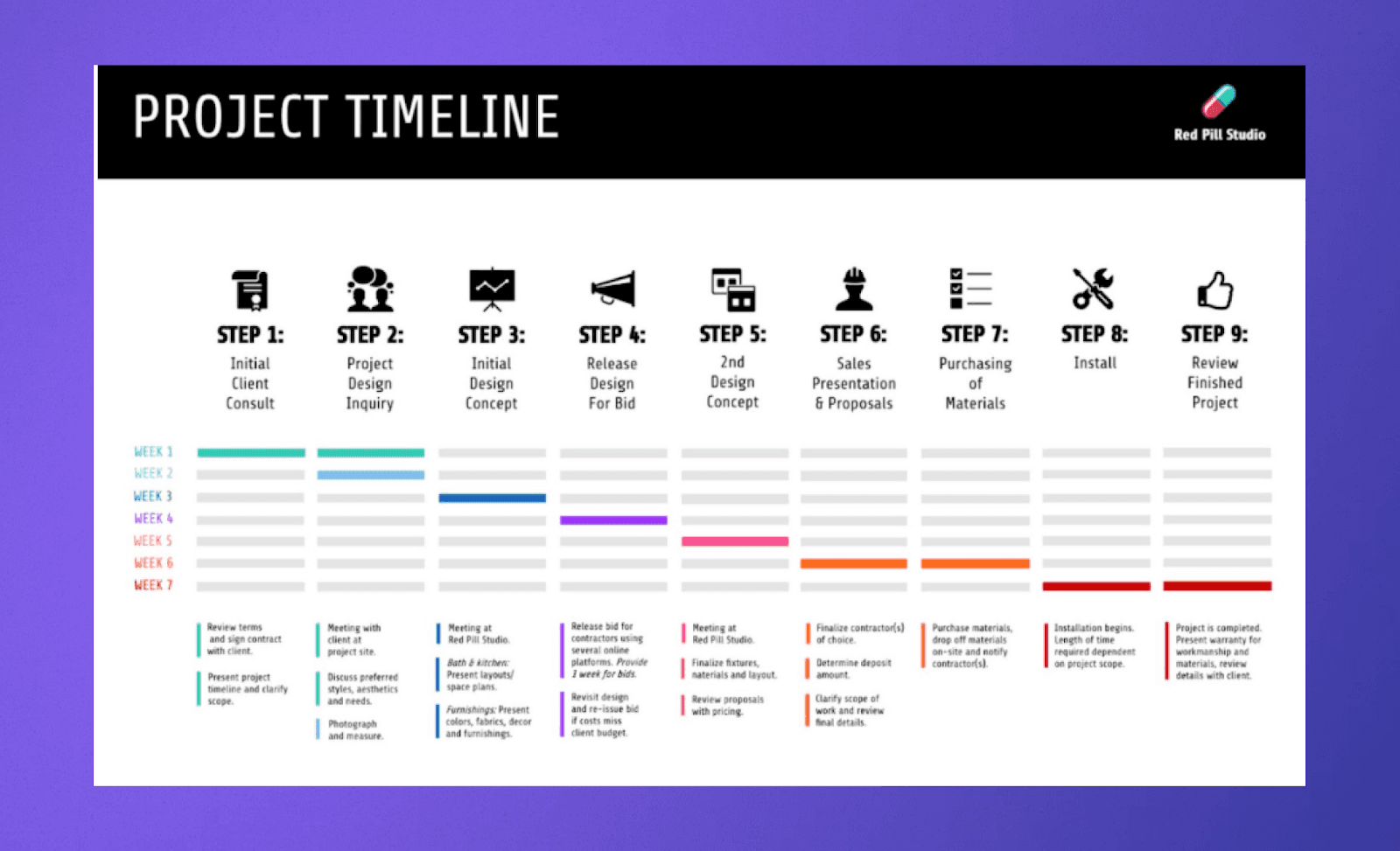
If the project is large or spans multiple months, put the timeline in a visual block or chart. This makes it easier to skim and easier for the client to share with stakeholders who weren’t part of your conversations.
A clear timeline also builds trust. It shows you’ve thought through the workload, understand dependencies, and can guide the client from start to finish without surprises.
4. Add a Clear Call to Action
A proposal should end with one simple next step. When clients reach the last page and don’t know what to do, the deal slows down. A clear call to action keeps the momentum going and removes the awkward back-and-forth of “what happens now.”
Your CTA doesn’t need to sound salesy. It just needs to give direction. Examples include:
Confirming the scope by replying to the proposal
Booking a short call to finalize details
Signing the agreement or accepting the quote
Choosing between a few package options
Pick one main action and make it easy to follow. If there’s a link, put it front and center. If they need to choose an option, label it clearly.
A good CTA helps the client take the next step without overthinking. It also signals that you’re leading the process, which makes their decision feel smoother and more structured.
Make Your Proposal Easy to Read
A proposal works best when the client can understand it without effort. Most people skim first, decide what matters, then go back and read the details. If your document feels dense, they lose interest or miss the key points you want them to remember.
The goal here is to reduce friction. Make it easy for the reader to move through the proposal and find what they need.
A few practical ways to do that:
Use short sections instead of long blocks of text.
Add clear headers so the reader can jump between parts.
Keep paragraphs light and focused on one idea.
Use simple visuals like tables, checklists, or small diagrams to break things up.
Write in everyday language and avoid jargon.
Present pricing in a clean table instead of long explanations.
Keep page layouts spacious so nothing feels cramped.
When your proposal reads smoothly, the client understands your value faster and shares it internally with less friction. Decisions move quickly simply because the document is clear.
Make Sure Your Proposal Reaches the Right People
A proposal only works when it reaches the people who can actually say yes. You can write the clearest, strongest document in the world, but if it lands with someone who isn’t the real decision maker — or if it gets stuck in an internal loop — it loses momentum. Part of winning deals is knowing who’s involved, who influences the decision, and how your relationship with them has evolved over time.
This is where relationship clarity matters, and tools like Rings.ai help you quietly in the background. It keeps your relationships, touchpoints, and warm paths visible, so you aren’t guessing who should receive the proposal or who needs a follow-up. When you pair a clear proposal with the right audience and the right timing, the chances of a yes go up fast. If you’d like to see how relationship intelligence fits into your sales workflow, book a demo and take a look at Rings.ai in action.
Learn more about deal intelligence, deal flow management or CRM strategy.