
A B2B sales supercycle sounds like a superhero blockbuster—picture explosive growth powered by AI and endless revenue streams. But hold the applause: This “supercycle” unleashes chaos on sales teams, with buyers demanding hyper-personalization and omnichannel frenzy forcing playbook overhauls.
Enter the B2B CRM: Not just a database, but the nerve center fusing data, teams, and processes across sales functions to drive concrete wins.
As McKinsey & Company reported, B2B buyers now juggle an average of ten channels per purchase, double the 2016 figure, with more than half ready to switch suppliers over clunky experiences. Meanwhile, hybrid models drive up to 50% more revenue through deeper engagement.
So nailing your CRM strategy is more crucial than ever.
This guide unpacks what B2B CRMs truly deliver, must-have features for growing sales teams, and best practices for implementation to conquer the supercycle.
What is a B2B CRM?
A B2B CRM (business‑to‑business customer relationship management system) is software designed to help companies manage and optimize relationships with other businesses across long, complex sales cycles. Unlike B2C tools, which focus on high‑volume consumer interactions, B2B CRMs support multi‑stakeholder deals, account-based selling, and high contract values where every interaction matters.
In practice, a modern B2B CRM centralizes account and contact data, tracks every touchpoint across channels, and gives teams a shared view of pipelines and key decision‑makers. The best platforms go further with AI-powered analytics and forecasting that show where deals stall and which relationships need attention.
Key B2B CRM Features You Actually Need
Not every CRM feature list is worth the hype. For B2B organizations, certain capabilities directly impact win rates, cycle time, and expansion opportunities.
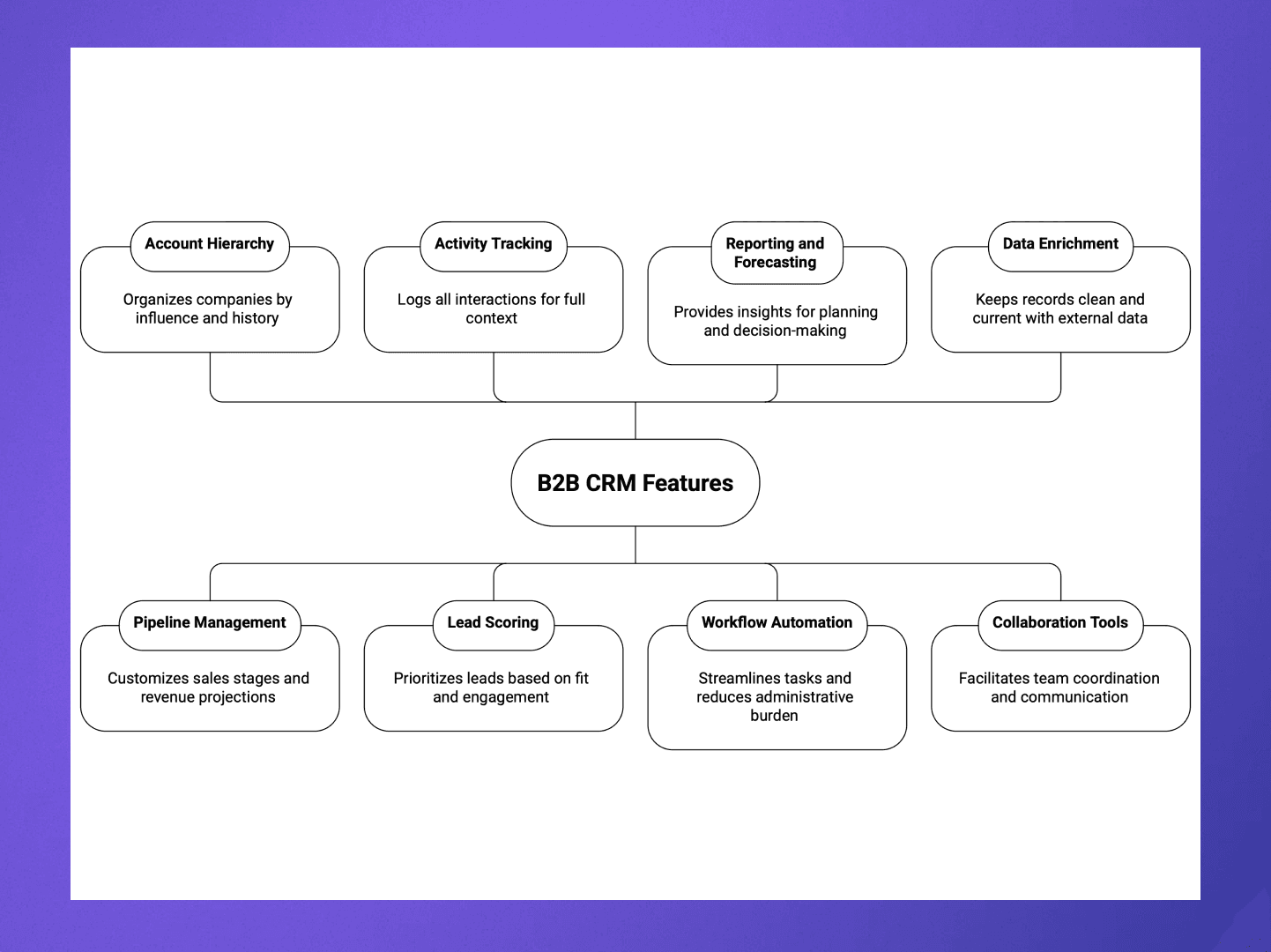
Beyond just fancy address books, essential B2B CRM features include:
Account and contact hierarchy: Ability to organize and rank companies based on influence levels and relationship history, not just maintain flat contact lists.
Pipeline and opportunity management: Customizable stages and revenue projections that reflect your sales needs across multiple pipelines.
Activity tracking and timelines: Centralized logs of emails, calls, meetings, notes, and tasks so every rep and team sees the full context before the next contact.
Lead and account scoring: Rules‑based or AI-driven scoring to prioritize accounts and opportunities based on fit, behavior, and engagement signals.
Reporting and forecasting: Dashboards for pipeline coverage, win rates, conversion by stage, and forecast accuracy that leadership can trust for planning.
Workflow automation: Triggers for assigning tasks, sending follow‑ups, and updating fields so reps spend more time selling and less time on admin.
Data enrichment: Native or API-based connections to data providers and intelligence tools to keep data clean and current.
Collaboration and notes: Shared notes, mentions, and permissions that make it easy for leadership to coordinate across key accounts.
How to Choose the Right B2B CRM
Selecting a B2B CRM is a strategic decision that can affect revenue operations and customer experience for years down the line.
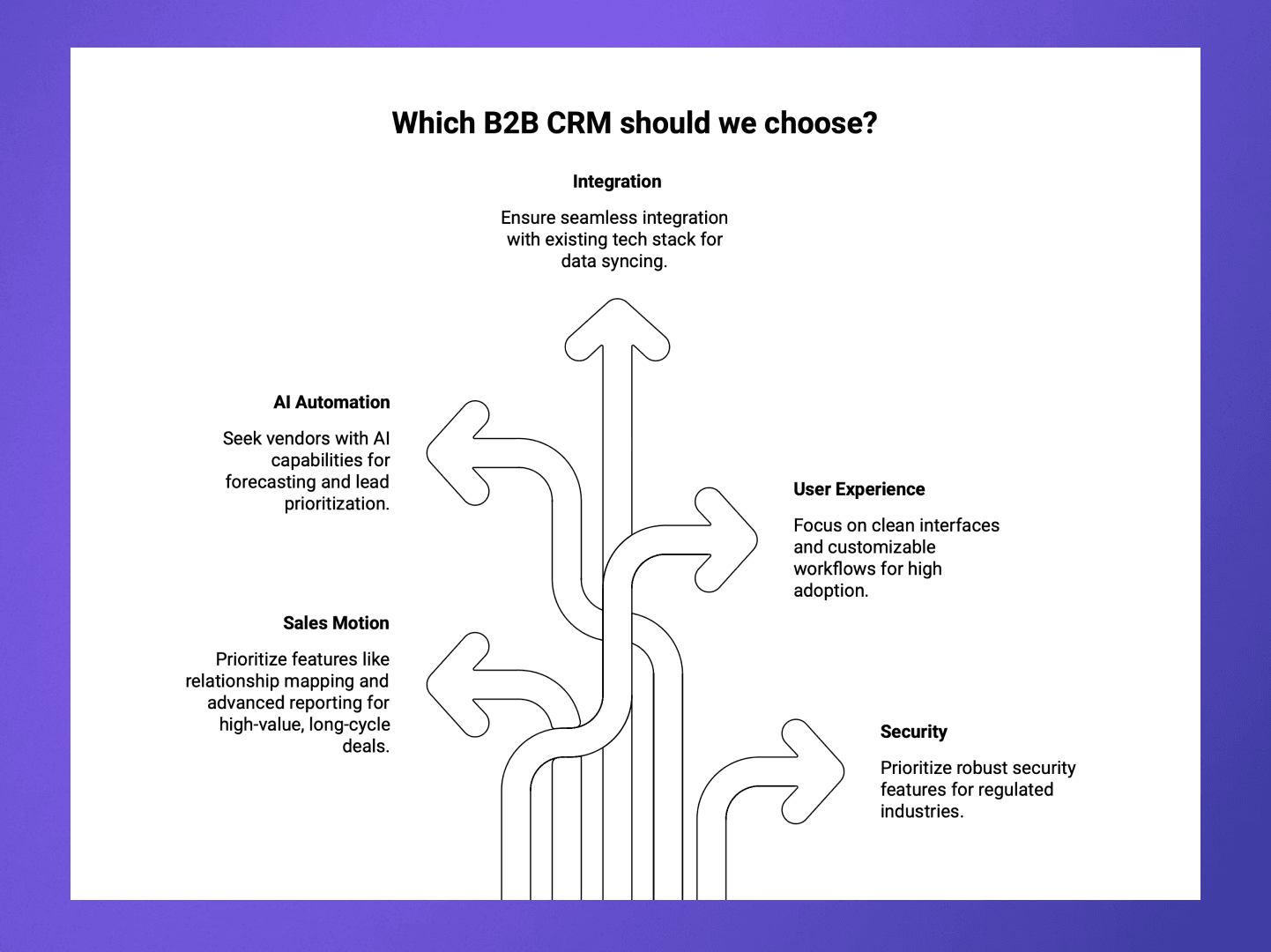
When evaluating CRM options, focus on these factors:
Your sales motion and cycle length: If your deals are high‑value with long cycles and many stakeholders (think VC, PE, enterprise SaaS, strategic partnerships), prioritize relationship mapping, account hierarchies, and advanced reporting.
AI and automation maturity: Modern B2B CRMs increasingly rely on AI for forecasting, next‑best actions, and lead prioritization. Seek vendors that can automate repetitive tasks, enrich data, and surface meaningful insights.
Integration ecosystem: Your CRM should plug seamlessly into your existing tech stack and sync data from across platforms.
User experience and adoption: Your CRM only drives value if people actually use it. Prioritize clean interfaces and customizable workflows that match how your reps already work.
Security, privacy, and governance: Especially for financial services or regulated industries, make sure your system meets compliance standards with robust security features.
Implementing a B2B CRM Without Derailing Your Team
Even the best B2B CRM will fail without proper implementation. Don’t risk leaving revenue on the table because of messy data or poorly defined processes.
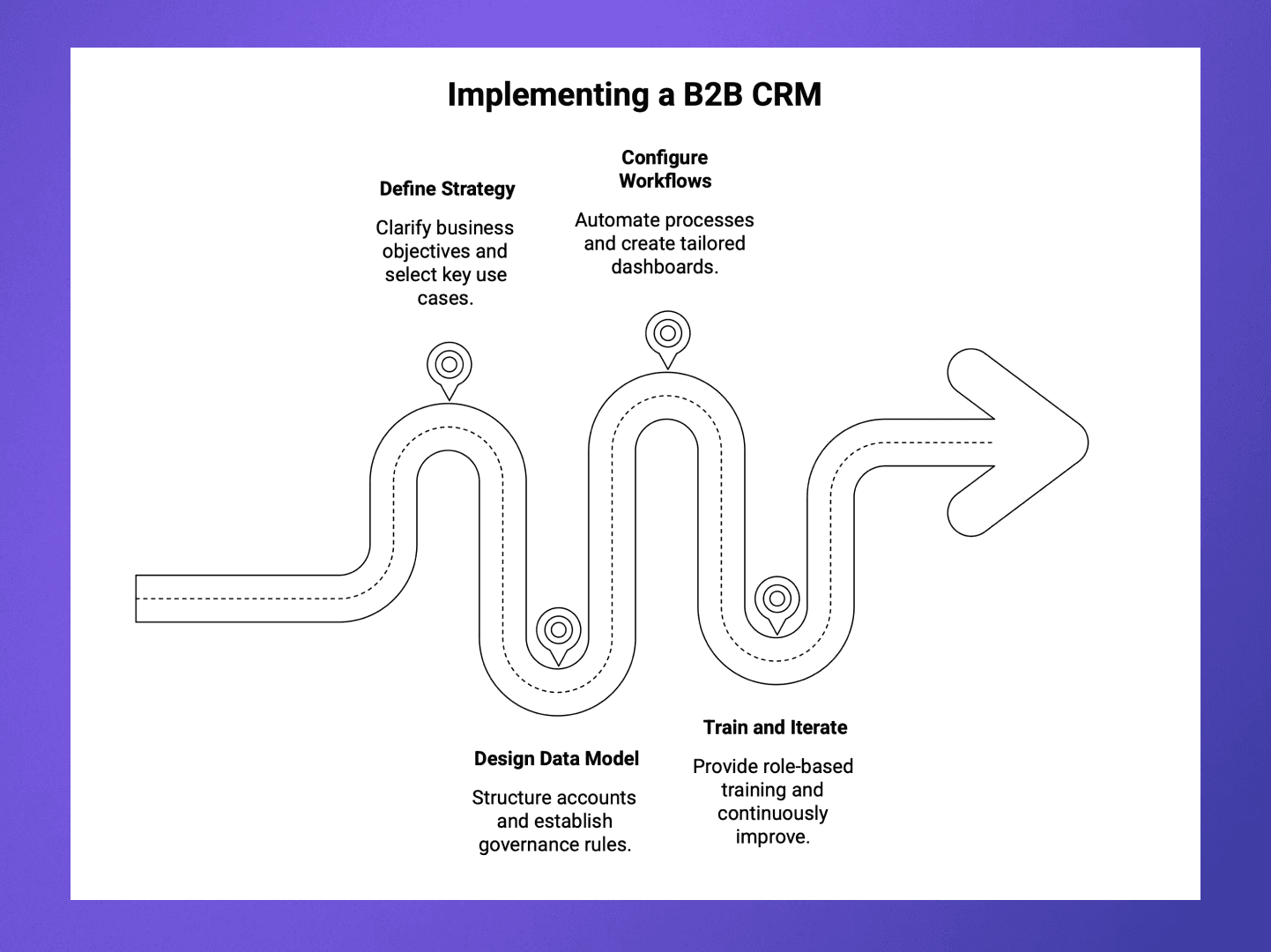
Instead, use a carefully phased rollout by following these steps:
1. Start with a clear strategy and use cases
Clarify what success looks like in business terms: higher win rates, shorter cycles, better forecasting, expanded cross‑sell, or improved investor communication. Pick 2–3 flagship use cases (e.g., new business pipeline, renewals, or key account management) rather than trying to cast a wide net on day one.
2. Design your data model and governance rules
Define how accounts should be structured, including ownership rules and which fields are mandatory at each stage. Decide who can edit what, how territories are assigned, and which data sources (like enrichment tools or spreadsheets) will feed the CRM.
3. Configure workflows, automations, and insights
Build automations for lead routing, follow‑up reminders, stage progression, and key alerts (e.g., stalled deals or at‑risk renewals). Set up dashboards tailored to roles—executives, sales managers, individual reps, and RevOps—with KPIs that map directly to your objectives.
4. Train, iterate, and enforce usage
Roll out training by role and keep it hands-on: Show reps how the CRM makes their day easier, not just how it helps leadership. Monitor adoption with usage reports, collect feedback, and iterate layouts or workflows quickly.
Why Rings AI Stands Out as a B2B CRM
Rings AI combines core CRM functions with deep relationship intelligence for organizations managing complex, high‑value networks across investors, customers, partners, and portfolios. So teams spend less time designing custom schemas and more time acting on valuable insights.
To meet complex B2B CRM needs, Rings AI bring you:
Automated relationship mapping: Build live relationship graphs across contacts, companies, and portfolios using 100M+ data points.
AI-powered prospecting and scoring: Identify and prioritize the best opportunities based on real‑time company news and network strength.
Pre‑meeting intelligence and news tracking: Get contextual briefs, updates, and talking points before every call so teams never go in cold.
Centralized knowledge base: Store notes, emails, docs, and meeting summaries in one place for every relationship and account.
7000+ integrations: Connect Rings AI to major CRMs, email, calendars, and data tools, allowing it to complement or even replace legacy systems.
Rings AI B2B CRM Helps Drive Your Business Growth
A modern B2B CRM is no longer optional; it is the strategic operating system for your revenue engine. The global CRM market is already above $110 billion and projected to more than double by 2032, largely driven by businesses shifting from static systems to AI-enabled platforms that improve productivity.
The question now isn’t, “Do we need a specialized B2B CRM?” but rather, “Can we find a CRM that genuinely reflects how our relationships work and helps elevate deals?”
If your current CRM feels more like a logging tool than a growth engine, it may be time to rethink your stack.
That’s where Rings AI comes in, standing out as a leading B2B CRM for teams where networks and trust drive revenue—helping you see who to engage, when, and why, based on live data rather than gut feel.
Book a demo with Rings AI to see how relationship intelligence can transform your CRM experience.
Learn more about CRM for venture capital firms.