

Not every CRM works for every team and use case. And if Attio isn't checking the right boxes for yours, it makes sense to see what else is out there. This guide goes through the top alternatives to Attio. We'll be breaking down their features and pricing so you can make a decision based on what actually matters to your workflow.
Why Should You Look for Attio Alternatives
Attio has a clean UI, a flexible data model, and enough customization to build almost anything. But "almost anything" comes with a catch: you're often the one doing the building.
The flexibility that makes Attio appealing on a demo can become a headache once you're actually in the product. There's no standard structure waiting for you, so teams without technical chops can spend weeks just getting their workspace to a usable state. And if the setup isn't airtight, you end up with overlapping workflows, confusing object relationships, and a system that's harder to maintain than it should be.
Then there's the integration part.
Attio connects to the basics, but if your stack goes deeper (analytics platforms, LinkedIn beyond the surface level, or niche industry tools), you'll start feeling the limits pretty quickly. The mobile app doesn't help either. It covers the essentials but drops off noticeably compared to the desktop experience, which is a problem for anyone who works on the move.
On the reporting and analytics side, Attio keeps things fairly lightweight. That works fine for smaller teams tracking simple pipelines, but the moment you need layered reporting or enterprise-grade analytics, you'll find yourself exporting data to get the answers you need.
Let's look at the top 5 alternatives to Attio.
1. Rings AI
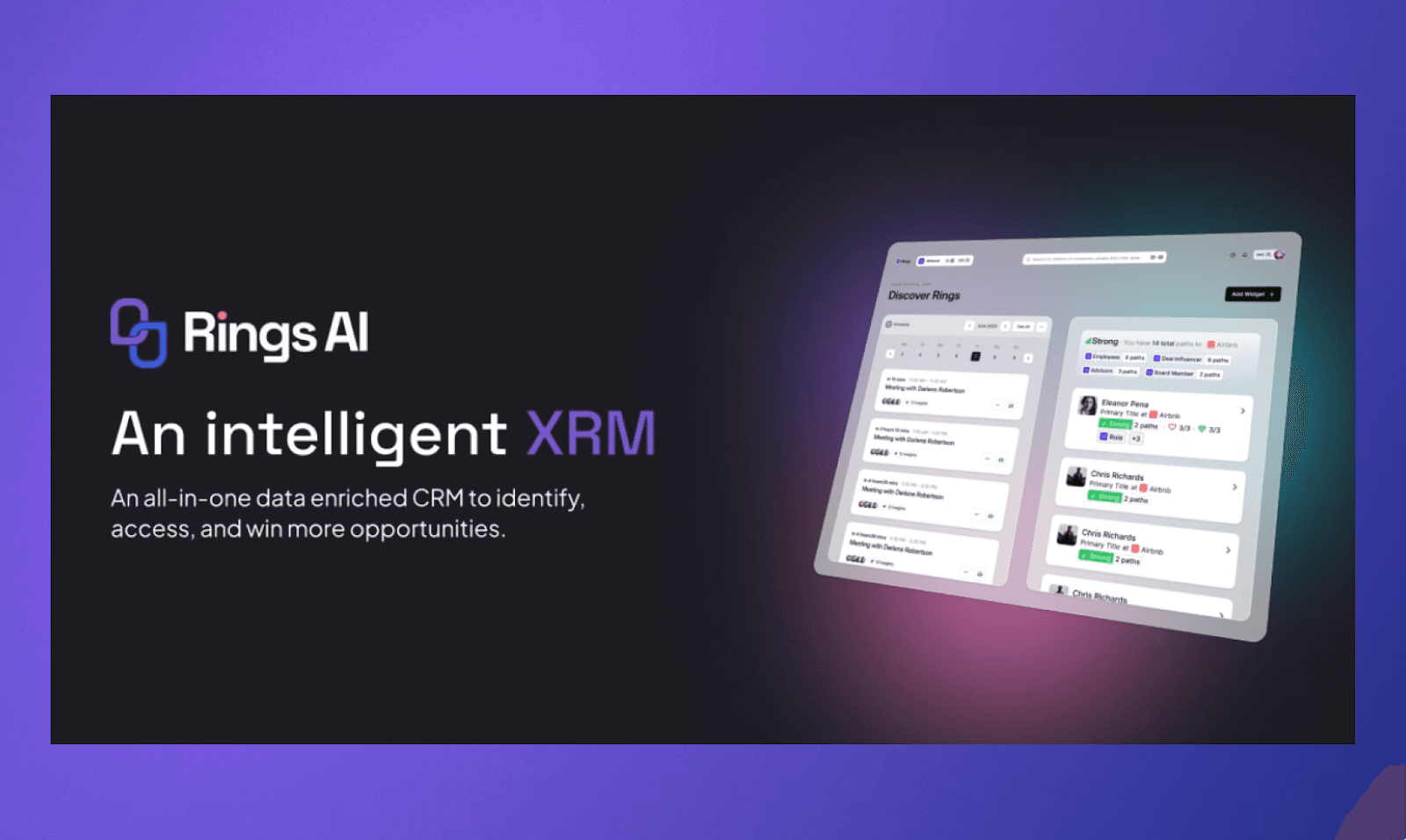
Rings AI is a CRM built specifically for investors such as venture capital, private equity, family offices, and dealmaking finance.
Where Attio gives you a flexible blank canvas and expects you to build your own workflows from scratch, Rings comes ready on day one with the structure investors actually need: deal pipelines, fundraising modules, LP tracking, and round-by-round data.
It also takes a fundamentally different approach to relationships.
Instead of just logging email volume as a proxy for connection strength, Rings maps your entire team's network across email and LinkedIn, scores relationship strength with real depth, and shows you paths to the people who matter.
Its AI copilot pulls from emails, notes, market data, and web research to generate meeting prep and answer questions about your knowledge base, which is only possible because so much context lives in one system.
Key Features
Integrated sourcing engine with millions of companies and Crunchbase deal data
Team-wide relationship mapping with scored strength across email and LinkedIn
AI meeting prep that pulls from emails, notes, market data, and web research
Native fundraising and LP management modules
Investor intelligence with fund portfolios, overlaps, and round-by-round data
Always-free data enrichment from 10+ sources
Full-featured iOS app with near web parity
Dedicated CSM, direct Slack channel, and hands-on training
Pricing
Rings AI uses an annual, per-seat pricing model that’s within the same ballpark as Attio, even cheaper with high seat counts. Unlike Attio, there is no credit system with the AI features; it’s all just included. Pricing isn't listed publicly, so you can book a demo to get a quote tailored to your team's size and needs.
2. Hubspot CRM
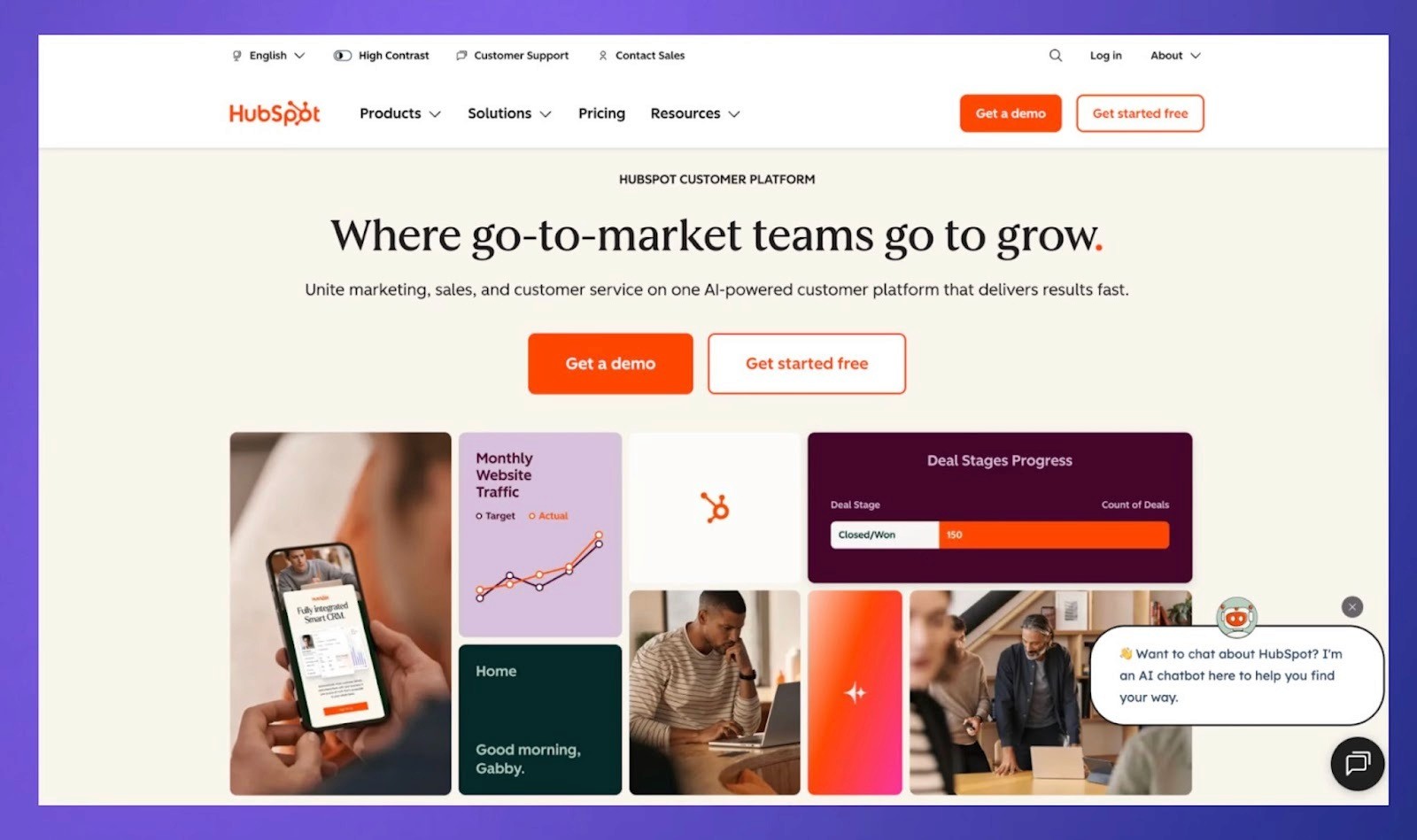
HubSpot is one of the oldest CRMs on the market. It covers sales, marketing, service, and content in a single ecosystem. It's also a generalist CRM, which means it's powerful across many use cases, but not deeply specialized for any one industry.
Where it stands apart from Attio is in its maturity: deeper reporting, a massive integration library, and built-in tools for things like email marketing and lead nurturing that Attio doesn't offer natively.
Key Features
Full marketing automation suite, including email sequences and ad management
Customizable sales pipelines with deal tracking and forecasting
Built-in reporting dashboards across sales, marketing, and service
Extensive app marketplace with 1000+ integrations
AI-powered tools for data enrichment and content creation
Pricing
HubSpot offers a free CRM plan for up to two users. Then paid tiers begin:
The Starter tier starts at $15 per user per month and bundles access to all core Hubs.
Professional jumps to $50 per user per month for the standalone CRM, or $800 per month for the Marketing Hub at that tier.
Enterprise comes in at $75 per user per month for the CRM, with the full Customer Platform starting at $4,300 per month.
Mandatory onboarding fees apply at the Professional and Enterprise levels. It's affordable to start, but the costs add up as your needs grow, especially if you need advanced marketing or reporting features.
3. Folk
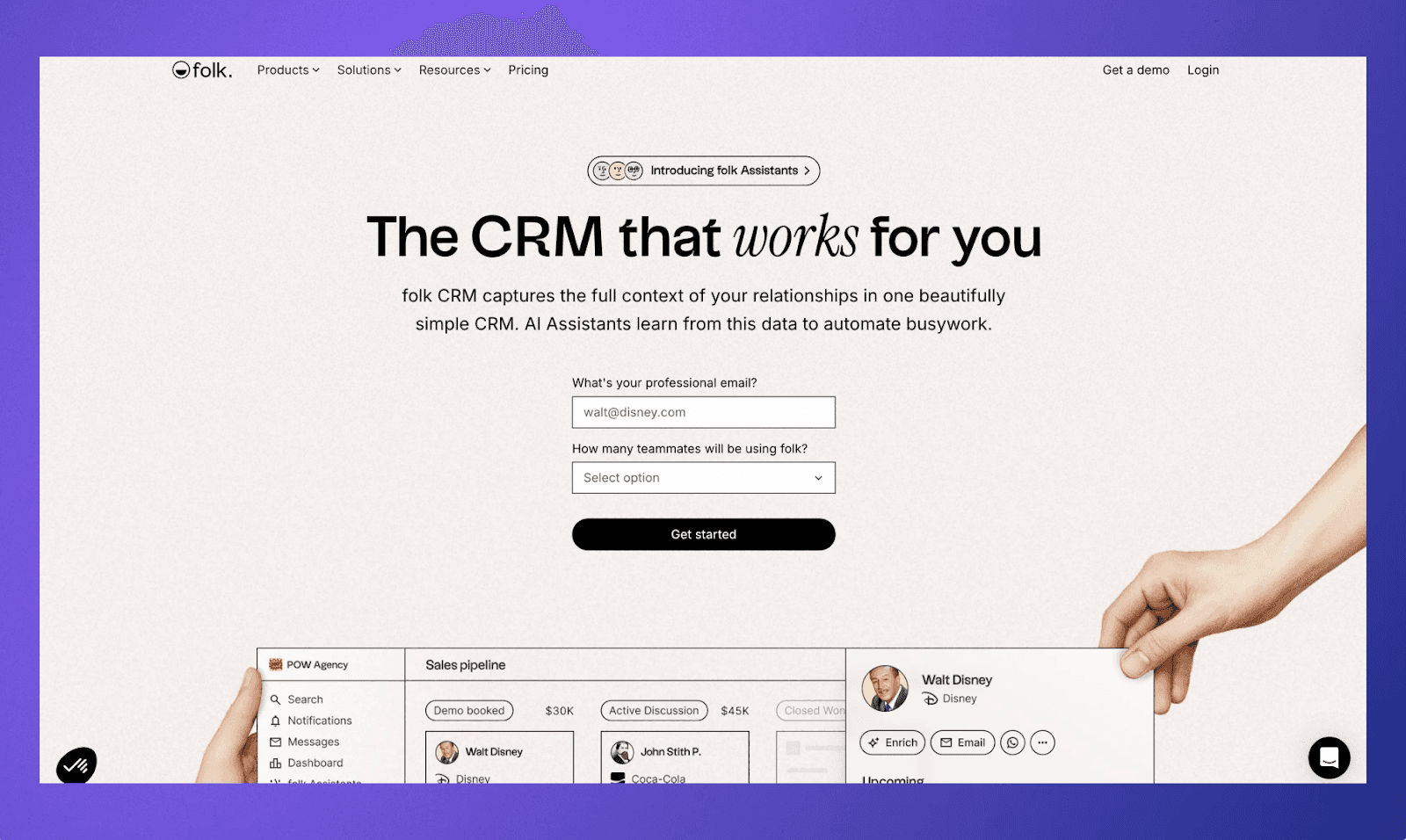
Folk is a lightweight, spreadsheet-style CRM built for small teams and solopreneurs who want something simple and fast. If Attio felt like too much setup for what you actually needed, Folk strips things down considerably.
It has a clean interface, a handy Chrome extension for pulling contacts directly from LinkedIn and Gmail, and built-in email sequencing for outreach. It's a good fit for teams that care about contact management and outreach more than pipeline complexity.
The limitation is that Folk stays fairly surface-level. There's no deep relationship intelligence, limited reporting, and the mobile experience is browser-based rather than a native app.
Key Features
Spreadsheet-like interface for fast, familiar contact management
Chrome extension to import contacts from LinkedIn, Gmail, and X
Built-in email sequences and mail merge for outreach
AI "Magic Fields" for generating personalized content across contacts
Contact enrichment is included with paid plans
Integrations with Google Workspace, Outlook, Slack, and Zapier
Pricing
Folk's Standard plan starts at $20 per user per month, which includes core CRM features and up to 2,000 emails per member per month.
The Premium plan runs $39 per user per month and unlocks unlimited messaging, 500 enrichment credits per user, and multi-step sequences.
A Custom plan is available from $100 per user per month for teams that need higher limits or API access. There's no free plan, but a free trial is available.
4. Zoho CRM
If you left Attio or don't want to choose it partly because of cost, Zoho gives you a full-featured CRM with sales automation, reporting, and even an AI assistant (Zia) at a fraction of what most competitors charge.
It also plays within the broader Zoho ecosystem (over 40 apps covering everything from invoicing to project management).
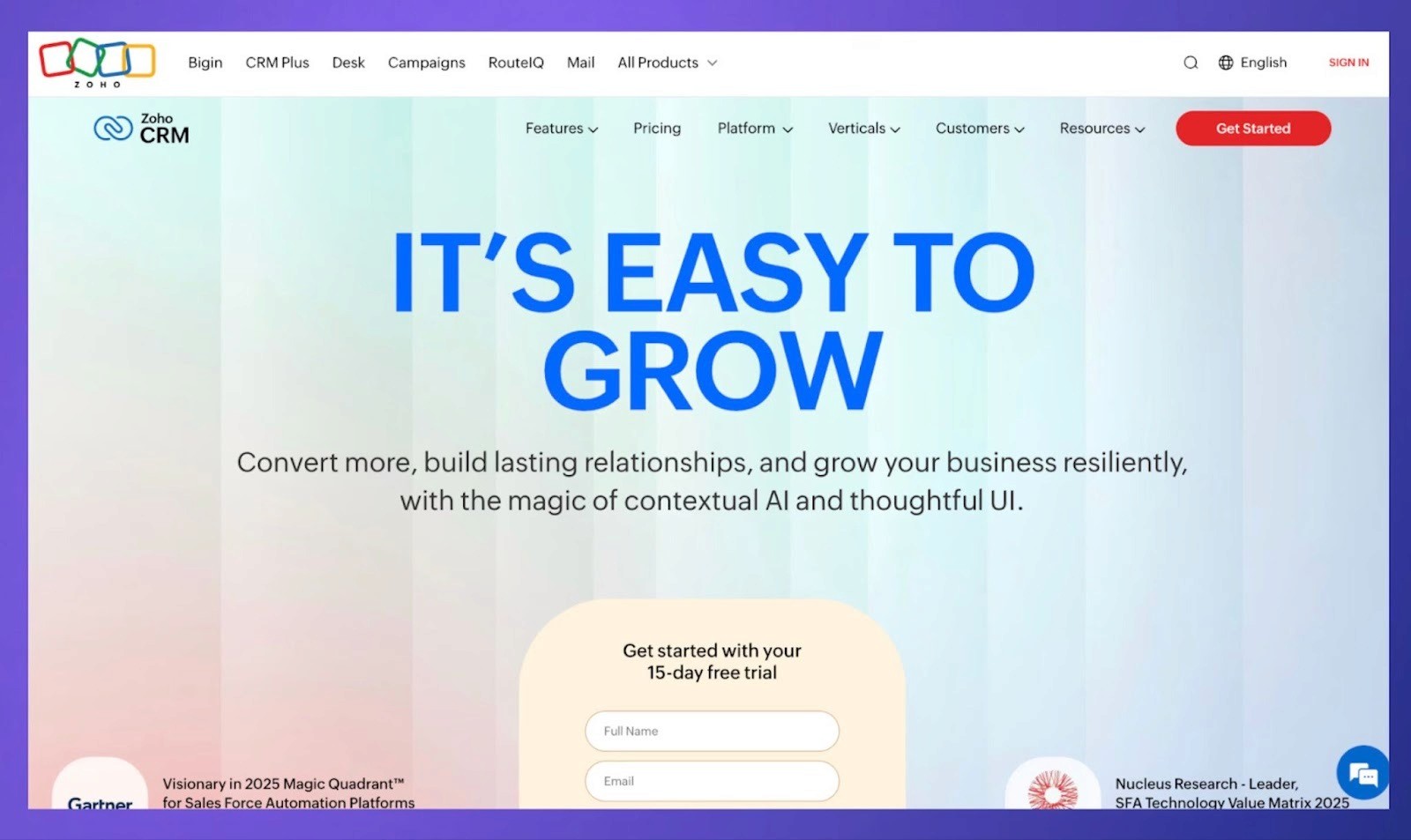
The downside is that Zoho can feel overwhelming. There are a lot of features packed into the interface, and getting the most out of it often requires some technical comfort with setup, custom modules, and workflow configuration. The lower-tier plans also lock away some of the more useful features.
Key Features
AI assistant (Zia) for lead scoring, predictions, and smart suggestions
Blueprint process management for standardizing sales workflows
Custom modules, fields, and page layouts across all tiers
Inventory management, CPQ, and territory management on higher plans
Native integrations with Google Workspace, Office 365, and Zoho's full app suite
Mobile app with offline access
Pricing
Zoho offers a free plan for up to three users with basic CRM functionality.
The Standard plan is $14 per user per month, billed annually, which gets you sales automation, web forms, and email tracking.
Professional comes in at $23 per user per month and adds Blueprint workflow management and inventory features.
Enterprise is $40 per user per month with the full AI assistant, sandbox testing, and advanced customization.
The Ultimate plan tops out at $52 per user per month.
All paid plans include a 15-day free trial. For teams that need broad CRM functionality without a large budget commitment, Zoho is hard to beat on pure value.
5. Pipedrive
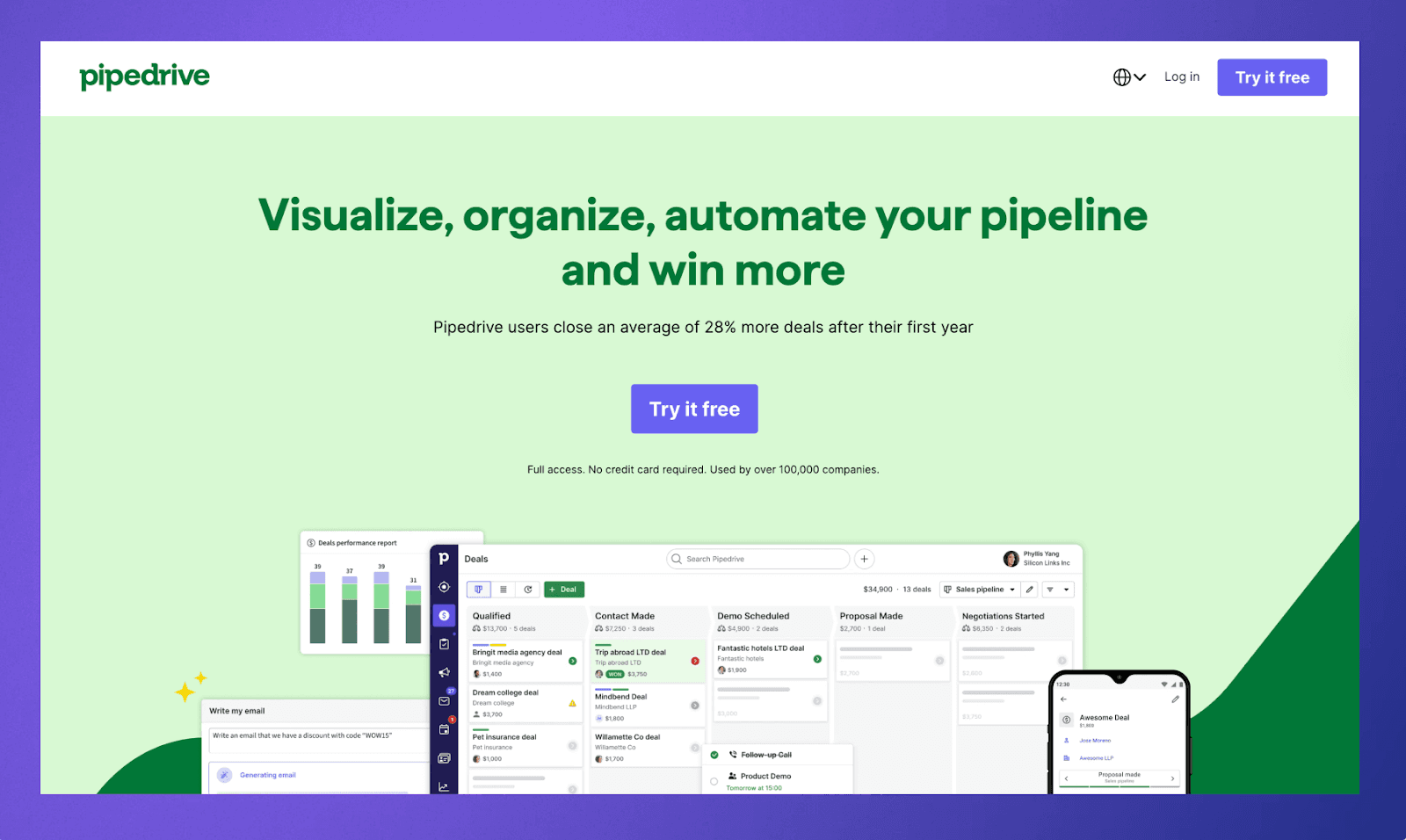
Pipedrive is a sales-focused CRM built around visual pipeline management. If you're moving away from Attio because you want something that works out of the box without heavy configuration, Pipedrive is worth a look.
It's designed for sales teams that need clarity on where every deal stands such as drag-and-drop pipelines, deal rotting alerts, and activity-based selling are baked into the product from day one. It's also one of the easier CRMs to get a team up and running on quickly, which matters if your last experience involved weeks of setup.
The trade-off is that Pipedrive is a sales tool. It doesn't try to be a relationship intelligence platform or a marketing suite, so if you need depth beyond pipeline management, you'll likely need to pair it with other tools.
Key Features
Visual drag-and-drop pipelines with unlimited pipelines on all plans
Built-in AI sales assistant for lead scoring, email drafting, and next-step suggestions
Email sync with open and click tracking
Workflow automations and nurturing sequences from the Growth plan up
500+ integrations, including Slack, Zoom, and Google Workspace
Full mobile apps for iOS and Android
Pricing
Pipedrive offers 4 plans. They come with a 14-day free trial, no credit card required.
Pipedrive's Lite plan starts at $14 per seat per month, billed annually, covering pipeline management, AI-powered reports, and basic integrations.
The Growth plan is $39 per seat per month and adds email sync, automations, and live chat support.
Premium, their most popular tier, comes in at $59 per seat per month with lead routing, e-signatures, and enhanced customization.
The Ultimate plan is $79 per seat per month and includes sandbox testing, phone data enrichment, and extended support.
Why Companies Prefer Rings AI over Attio
If your business runs on relationships and not just transactions, you need a CRM that understands the difference. Attio gives you a flexible workspace, but you're still building everything yourself. And most general-purpose CRMs treat people as leads to close, not as recurring connections that compound over time.
Rings AI wasn't retrofitted from a sales CRM or adapted from a generic platform. It was built by an investor who spent years trying to make traditional CRMs work for relationship-driven workflows and eventually decided to start from scratch. The result is a platform that consolidates what most teams piece together across five or six tools into one system. And because all of that context lives in one place, the AI actually delivers.
Why firms choose Rings AI:
Team-wide relationship mapping scored by real connection strength, not just email volume
Native deal management, fundraising modules, and LP tracking that work on day one
AI meeting prep that pulls from emails, notes, market data, and web research
Continuous data enrichment from 10+ sources at no extra cost
Dedicated CSM, direct Slack channel, and hands-on onboarding
Book a demo to see how Rings AI can replace the patchwork and give your team a single home base for relationships, deals, and fundraising.