
Pipeline CRM platform is widely appreciated for its clean interface and intuitive pipeline management, making it easy for sales teams to track deals, manage contacts, and stay on top of follow-ups without complex setup. For small and mid-sized teams that want an easy way to organize their sales workflow, this simplicity can be a major advantage.
At the same time, Pipeline CRM has some limitations. Compared to more advanced CRM platforms, it offers fewer integrations and limited customization options, which may restrict scalability for teams with more complex workflows or tech stacks.
In this Pipeline CRM review, we take a closer look at the platform’s key features, pricing, and overall strengths and limitations. We also look at the best Pipeline CRM alternatives to see how they compare with other CRM tools.
What is Pipeline CRM?
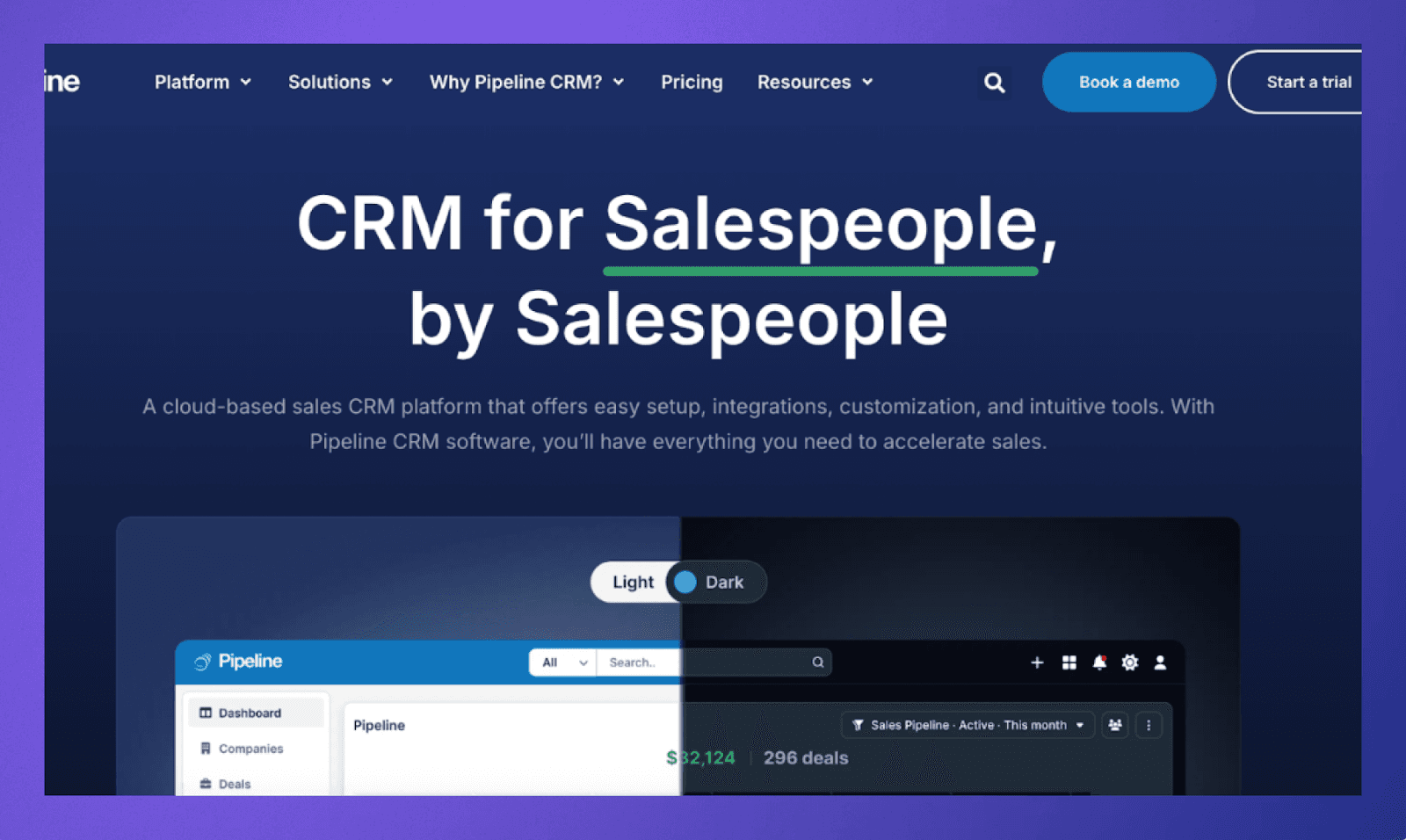
Pipeline CRM is a sales-focused customer relationship management platform designed to support the entire sales process, ranging from managing opportunities to closing deals efficiently.
It is commonly used by industries, such as consulting, construction, manufacturing, and professional services, that rely on structured sales pipelines and consistent follow-ups to manage client relationships.
Beyond pipeline visualization, the platform also includes tools for:
Contract and lead management
Email and activity tracking
Sales automation
Reporting and forecasting
Workflow management
Key Pipeline CRM Features
Pipeline CRM offers a set of core features designed to support sales teams throughout the deal lifecycle. While it doesn’t try to cover every business function, it focuses heavily on pipeline visibility and activity management.
Here are some of its most notable features.
Visual sales pipeline: A drag-and-drop pipeline view that lets sales teams track deals across stages and quickly see which opportunities need attention.
Contract management: Create, send, and sign documents directly within the CRM without switching between multiple tools, and keep them linked directly to deals and customer records.
Task management and activity tracking: Schedule calls, meetings, and follow-ups while tracking activities tied to each deal to ensure consistent engagement with prospects.
Lead management: Capture, organize, and prioritize leads so sales teams can track prospects from initial inquiry through conversion.
Customization: Customize pipeline stages, fields, and workflows to match your team’s specific sales process and operational needs.
Workflow automation: Automate routine actions, such as deal assignments, stage updates, and notifications to reduce manual work and keep pipelines updated.
Reporting and analytics: Access dashboards and reports that provide insights into pipeline health, deal performance, and overall sales productivity.
Pipeline CRM Pricing Breakdown for 2026
Pipeline CRM offers four primary pricing tiers, with a 14-day free trial available for new users.
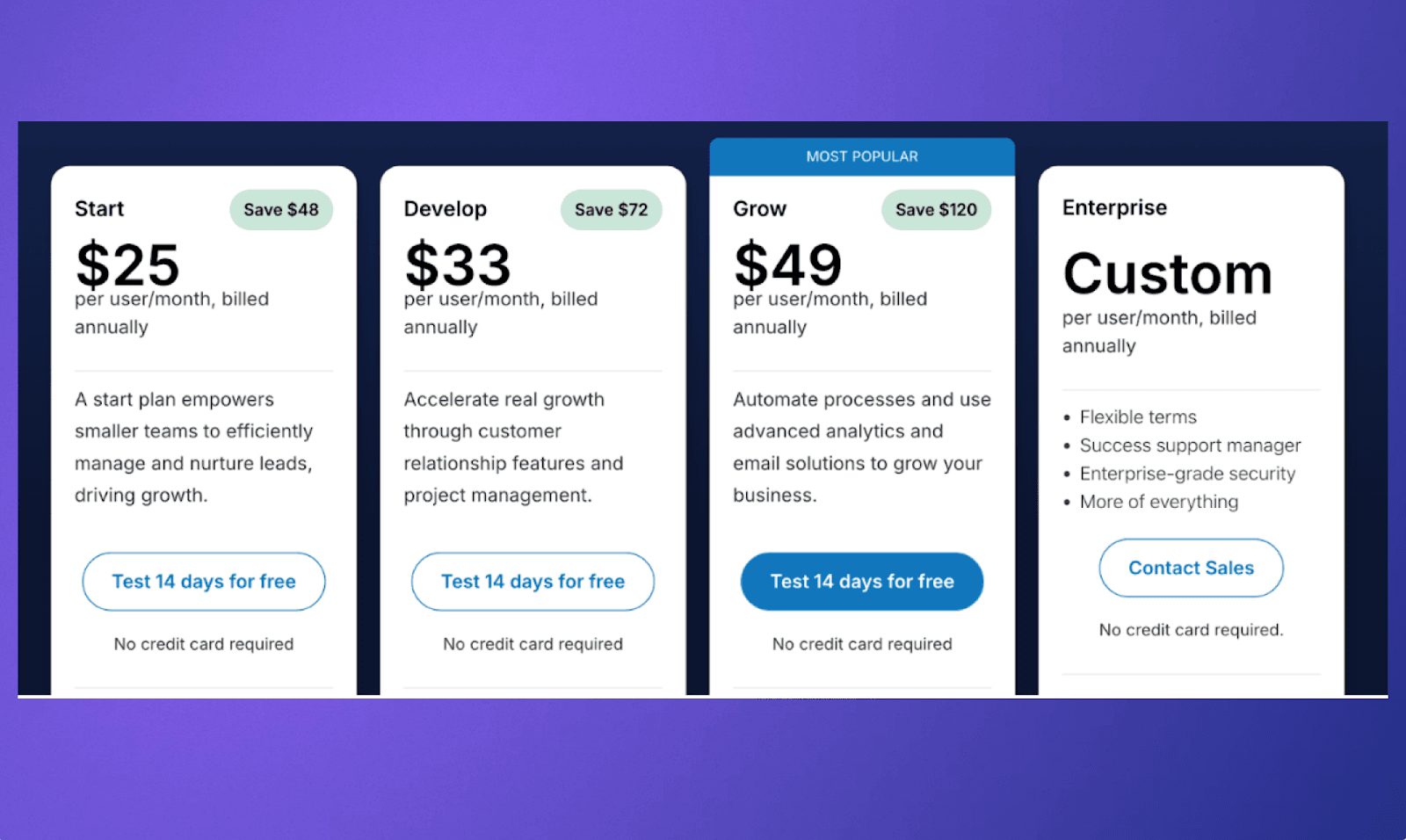
Start: Priced at $25 per user per month, this entry-level plan includes one sales pipeline, up to 250 active deals, contact and company management, basic automation, and other essential CRM features for small teams.
Develop: Designed for growing teams that need more advanced pipeline capabilities, this plan costs $33 per user per month and includes expanded automation, additional customization options, and more robust sales management tools.
Grow: Starting at $49 per user per month, this is the most comprehensive standard package. It includes advanced reporting, unlimited active deals, customizable dashboards, and additional features that support scaling sales teams.
Pipeline CRM also offers custom Enterprise plans for larger organizations with more complex requirements, including advanced permissions, integrations, and support.
Note: All pricing mentioned above is based on annual billing.
Pipeline CRM Pros and Cons
Like any CRM, Pipeline has strengths and limitations. Understanding both helps determine whether it’s the right platform for your organization.
Pipeline CRM pros
Pipeline CRM is known for its clean and intuitive interface, which makes it easy for teams to adopt quickly without extensive training.
The visual deal tracking system gives sales teams a clear view of the entire sales funnel.
Users can customize pipelines, fields, and reporting to fit their specific sales process.
Automation tools help streamline follow-ups, task management, and lead nurturing.
The CRM integrates with popular tools like Gmail, Slack, and accounting platforms, making it easier to fit into existing workflows.
Pipeline CRM cons
Compared to larger CRM platforms, Pipeline CRM offers fewer native integrations, which may require teams to rely on additional tools or workarounds to connect their full tech stack.
The platform works well for straightforward pipelines but may feel restrictive for organizations managing complex, multi-layer sales processes or enterprise deal cycles.
Some users report that the platform lacks robust systems for tracking demos or follow-ups tied to specific prospects, making it harder to monitor customer engagement over time.
While the mobile app supports basic CRM functions, it currently offers fewer features compared to the desktop version.
Top Pipeline CRM Alternatives in 2026
While Pipeline CRM works well for pipeline management, growing sales teams often need more advanced capabilities, such as deeper automation, stronger reporting, broader integrations, and better visibility into the relationships that influence deals.
If Pipeline CRM doesn’t fully support these needs, several alternatives offer more advanced tools to help teams manage pipelines, uncover opportunities, and build stronger deal networks.
1. Rings AI
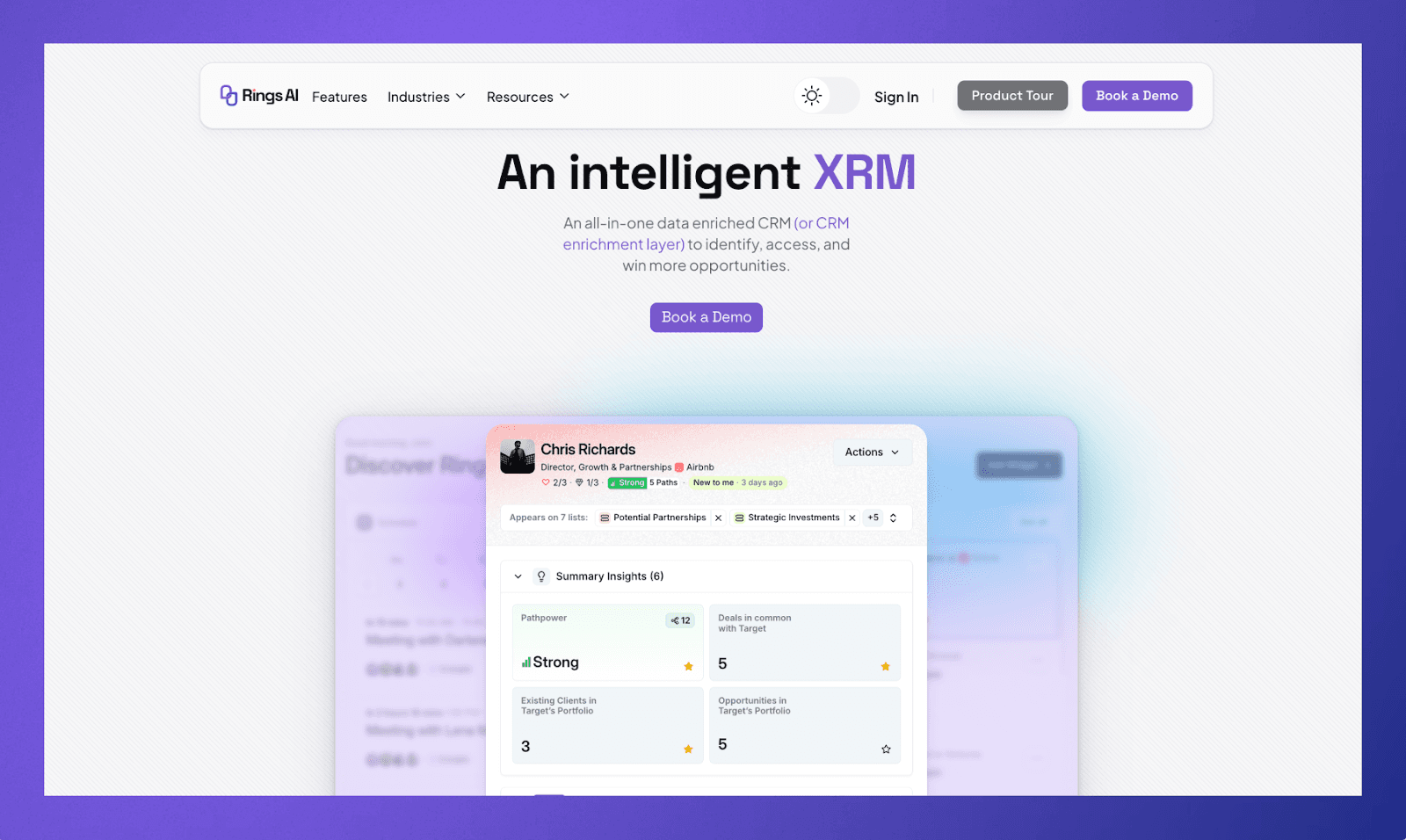
While traditional CRMs focus on storing data and tracking deals, Rings AI focuses on relationship intelligence. Instead of simply showing deals in a pipeline, Rings AI helps teams understand:
Who knows whom across their network
Which connections can unlock deals
How to prioritize the right relationships
For organizations focused on relationship-driven dealmaking, especially in industries like private equity, investment banking, and consulting, this added intelligence can significantly improve deal flow and win rates.
Rings AI also offers 7000+ app integrations to streamline your entire deal workflow.
Best for: Teams that need deeper relationship intelligence, AI-powered prospecting, and better visibility into the connections that influence deals.
2. Pipedrive
Pipedrive is a sales-focused CRM known for its intuitive pipeline interface and built-in automation features. It includes tools such as activity reminders, email tracking, customizable workflows, and a large integration ecosystem, making it easier to connect with marketing, communication, and productivity tools.
If you want a deeper comparison of how it stacks up against more advanced relationship management platforms, check out our guide on Rings vs. Pipedrive.
Pricing for Pipedrive starts at around $14 per user per month, when billed annually, with higher-tier plans unlocking advanced automation, forecasting, and AI sales assistant features.
Best for: Sales-driven organizations and growing teams that want a visual pipeline with stronger automation and reporting capabilities.
3. Zoho CRM
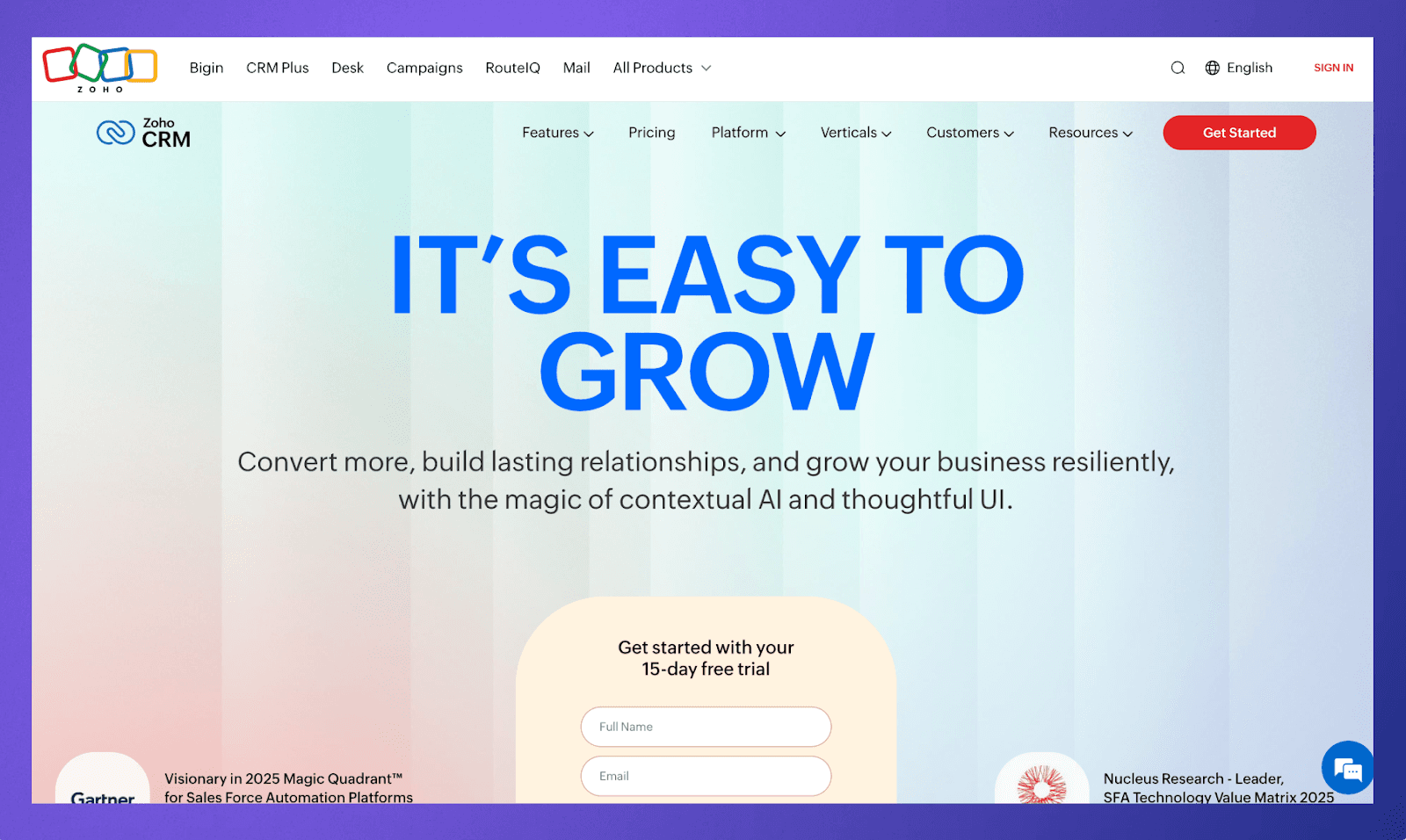
Zoho CRM is a highly customizable platform that combines sales automation, AI insights, and advanced analytics within a single ecosystem. It helps teams manage leads, automate workflows, track deals, and gain deeper visibility into pipeline performance. We take a closer look at the platform in our full Zoho CRM review.
The platform also integrates with hundreds of applications across marketing, data management, and customer support tools, making it easier for businesses to manage customer relationships from one centralized system.
Pricing starts at $14 per user per month, when billed annually, with higher tiers offering more advanced automation, analytics, and AI capabilities.
Best for: Businesses that want a feature-rich CRM with strong automation capabilities and flexible customization options.
Should You Choose Pipeline CRM in 2026?
Pipeline CRM is best suited for teams that want a simple, sales-focused system to organize deals and keep their pipeline visible without heavy setup or complexity.
Its biggest strengths include:
Easy setup and usability
Visual pipeline management
Affordable entry-level pricing
Helpful automation tools
However, businesses that need advanced relationship intelligence, deeper analytics, or AI-driven insights may find the platform somewhat limited. If your organization depends heavily on relationships to win deals, tools like Rings AI offer a more advanced approach.
Instead of just tracking deals, Rings AI helps you identify the right relationships, uncover warm introductions, and prioritize the opportunities most likely to close.
Book a demo with Rings AI today to see how an extended relationship management platform can transform your deal pipeline.
Learn more about CRM for venture capital firms.