


Closing a sale is often seen as the most difficult part of the sales process. In reality, it’s usually the point where all the earlier work comes together.
If discovery conversations are clear, the value is well-positioned, and the right stakeholders are involved, the sales close becomes far less dramatic. Instead of pushing for a decision, the salesperson simply helps the buyer confirm that the solution fits.
Modern buyers approach decisions differently than they did even a few years ago. They research vendors independently, compare options, and involve multiple people before committing to a purchase. Because of this, traditional “hard close” tactics rarely work.
Today, the most effective sales teams rely on structured closing techniques that guide prospects toward a confident decision.
In this guide, we’ll explore seven proven sales closing techniques that help modern teams move deals forward without creating unnecessary pressure.
What Does It Mean to Close a Sale?
Closing a sale simply means reaching a point where the buyer agrees to move forward with your solution.
However, the closure doesn’t happen in a single moment. In most cases, it’s the result of several smaller agreements along the way:
The buyer confirms that the problem is important to solve
The solution fits their needs
Pricing and scope are clear
Internal stakeholders approve the decision
And the final step involves sharing a sales proposal that outlines the solution, timeline, pricing, and next steps so stakeholders can review the decision internally.
When each of these pieces is aligned, closing the deal becomes a natural progression rather than a final push.
7 Proven Sales Closing Techniques
Different buyers respond to different approaches. Strong sales teams understand several closing techniques and apply them depending on the situation.
Here are seven methods that consistently help sales teams close deals more effectively.
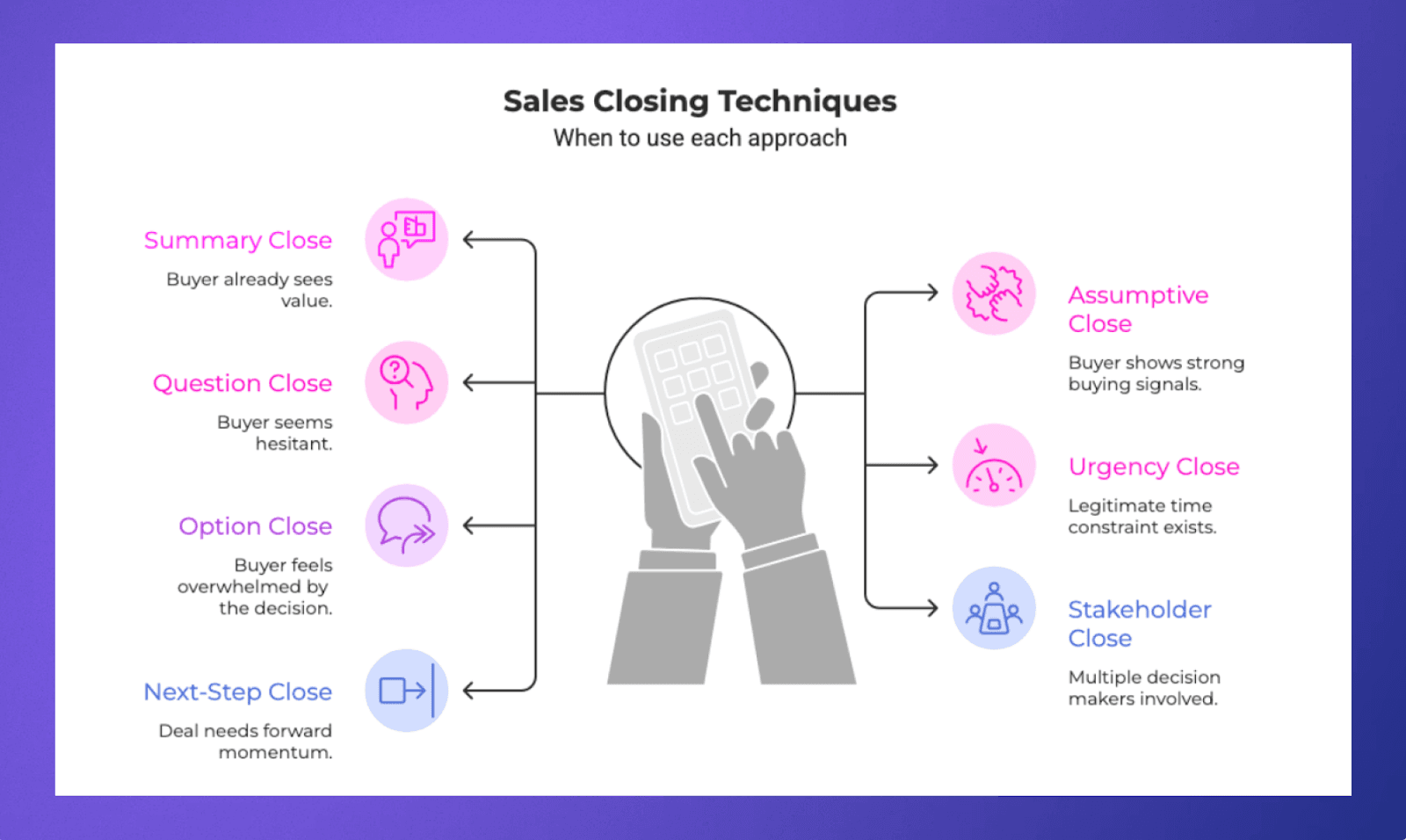
1. Summary close
The summary close technique works by reinforcing the value of your solution before asking for a decision. Instead of introducing new information, you briefly recap the outcomes discussed during the sales process.
For example:
“Based on our conversation, this platform will help your team map relationships across investors and founders and surface warm introductions for new deals, so you can source opportunities faster and prioritize the most promising investments. Does this approach feel like the right fit for how your team manages deal flow? We can move forward with the contract and begin onboarding your team.”
This technique works well because it reminds the buyer of the problems they wanted to solve and the benefits they gain by moving forward.
It also allows them to confirm alignment or raise any final questions.
2. Assumptive close
The assumptive sales technique moves the conversation forward as though the buyer has already decided to proceed. Instead of asking whether they want to move forward, you focus on finalizing the next step.
For example:
“Would you prefer to begin onboarding this week? I can send the contract today so your team can start mapping your deal network right away.”
This approach works because it naturally shifts the conversation toward next steps. However, it should only be used when the buyer has already shown a clear interest.
These signals might include:
Positive feedback about the solution
Detailed questions about pricing, implementation, or onboarding
Involving additional stakeholders in the discussion
If applied too early, before the buyer has expressed genuine interest, it can feel like the salesperson is rushing the decision. This often creates resistance and may cause the buyer to step back instead of progressing toward the deal.
3. Question-close
Sometimes buyers hesitate because they still have concerns they haven’t shared. This hesitation becomes visible when responses become vague, the conversation slows down, or the prospect mentions needing more time to review internally.
The question-closed technique invites those concerns into the conversation.
For example:
“Is there anything we haven’t covered yet that might make moving forward difficult for your team?”
This simple question often uncovers issues like:
Budget constraints
Implementation worries
Internal approvals
Concerns about switching systems
Addressing these concerns openly helps remove friction before asking for the final decision.
4. Urgency close
The urgency close, also called the now-or-never sales technique, encourages buyers to move forward by highlighting a genuine reason to act soon. This might involve:
Upcoming pricing changes
Limited onboarding capacity
Deadlines tied to the buyer’s business goals
For example:
“If we start implementation this quarter, we can have the system fully operational before your next planning cycle.”
Another urgency close based on a time-sensitive offer might sound like this:
“Our current onboarding package includes priority setup and training, but the offer ends tonight. If you'd like to take advantage of it, this would be the best time to move forward.”
The key is that urgency should always be legitimate. Artificial pressure often damages trust and delays decisions.
5. Option close
Some buyers delay decisions simply because the process feels overwhelming. The option close simplifies the decision by presenting two structured paths forward.
Instead of asking whether the buyer wants to proceed, the conversation shifts to which option works best for them. The conversation moves from evaluating the purchase to choosing the most suitable option.
For example:
"Most firms choose between the standard plan, which includes core relationship mapping and deal tracking, or the enterprise plan that adds advanced analytics and portfolio insights. Which option would work better for your team?"
This technique works particularly well when multiple packages or service levels are available.
6. Stakeholder close
Many deals stall because the salesperson is only speaking with one person in the organization, while several others influence the final decision.
The stakeholder close focuses on helping the buyer move the conversation internally.
This often includes:
Providing a summary that can be shared with leadership
Preparing documentation for finance or procurement teams
Offering a short executive briefing
A well-structured proposal can help here because it allows stakeholders who weren’t present during the sales conversation to review the solution and understand its value quickly.
Supporting the buyer internally often speeds up the decision process.
7. Next-step close
Sometimes, the most effective sales close technique is simply defining the next step. Instead of pushing for an immediate decision, you guide the prospect toward a clear action.
Examples include:
Reviewing the proposal together
Scheduling a final approval call
Beginning onboarding discussions
These small commitments build momentum and gradually move the deal toward completion.
When each conversation ends with a clear next step, deals rarely stall.
Combine Sales Closing Techniques With Relationship Intelligence
While sales closing techniques help guide conversations toward a decision, many deals stall for another reason: sales teams often lack visibility into the relationships influencing the deal.
Many deals are lost not because the solution was wrong, but because the salesperson didn’t engage the right people at the right time.
This can happen when:
A decision maker wasn’t included early enough
A champion inside the company lost influence
A competitor entered through a stronger internal relationship
Relationship intelligence tools like Rings AI help solve this problem by giving sales teams visibility into their networks and connections.
Instead of relying on scattered notes, emails, or spreadsheets, teams can see:
Who knows whom across their network
Where warm introductions exist
Which stakeholders are connected to each deal
How relationships evolve over time
This kind of visibility makes it easier to navigate complex deals.
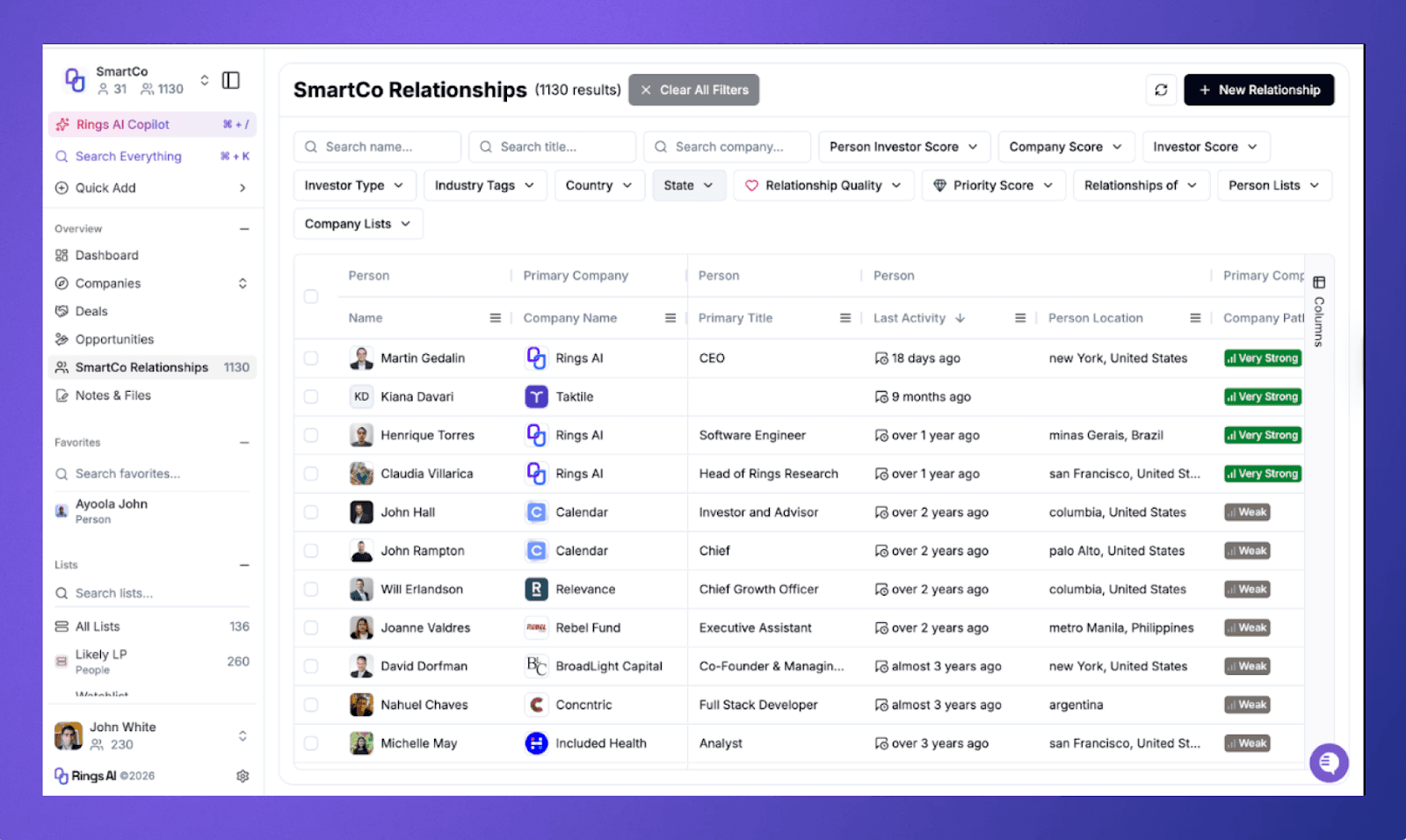
Rings AI relationship mapping dashboard
Sales teams can identify the right decision makers earlier, secure warm introductions, and maintain stronger engagement with key stakeholders throughout the sales cycle.
For organizations managing large networks of clients or partners, relationship intelligence becomes an important advantage in sales closing.
Turn Relationship Visibility Into Higher Close Rates
Closing a sale depends less on delivering the perfect final line and more on guiding buyers through a clear, confident decision process.
Modern sales teams improve their close rates by combining structured closing techniques with strong relationship visibility. Sales closing techniques guide the conversation, while relationship intelligence ensures the right people are involved at the right time.
Together, they make the closing process far more predictable and help teams move complex deals forward with greater confidence.
Book a demo with Rings AI to see how relationship intelligence helps your team identify decision makers earlier and close deals faster.